
HISTORIC ESCALATION: Israel Strikes Tehran in Daylight, Target Was Senior Leadership Meeting
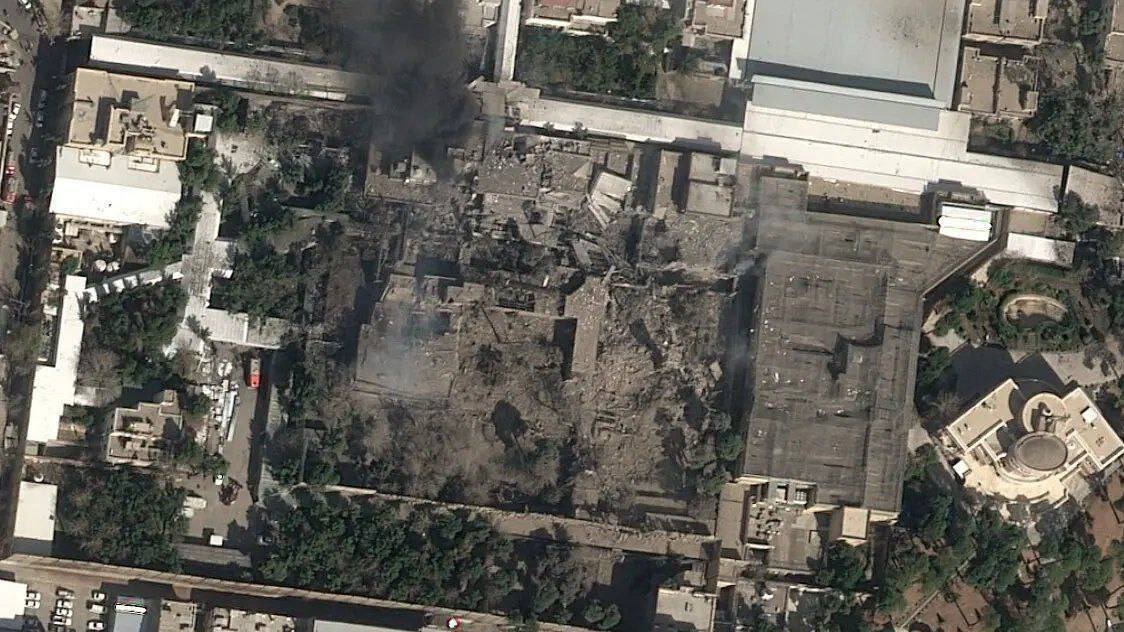
TEL AVIV, Israel — In a dramatic departure from decades of military doctrine, Israel launched a precision strike on Tehran in broad daylight on Tuesday, targeting a meeting that included the highest echelons of Iran’s political and military leadership, according to multiple senior intelligence and military officials.
The strike, which occurred at approximately 8:15 a.m. local time, represents a fundamental shift in Israeli strategy. Unlike previous strikes on Iranian soil—which occurred under the cover of darkness in June 2025, October 2024, and the April 2024 Operation True Promise—this operation was timed specifically to coincide with a gathering of Iran’s top officials.
“Every previous Israeli strike on Iran came at night. Iran’s entire air defense doctrine is built around the assumption that Israel attacks in the dark,” a senior IDF official told reporters. “We attacked in broad daylight because the target was not infrastructure. The target was a meeting.”
The Target: A Leadership Decapitation Attempt
According to reports confirmed by Reuters and CNN, the strike targeted a location where Supreme Leader Ayatollah Ali Khamenei and President Masoud Pezeshkian were gathered alongside senior commanders of the Islamic Revolutionary Guard Corps (IRGC).
The fate of the Supreme Leader remains unclear. Israeli officials confirmed that the strike successfully hit the designated meeting point, but conflicting reports have emerged regarding casualties. The central unknown currently reverberating through intelligence agencies worldwide is whether Khamenei was extracted from the location prior to the impact or rescued from the rubble afterward.
“If he was moved before the strike, it suggests someone inside Tehran’s inner circle told Jerusalem when and where the meeting would happen,” explained a former CIA station chief. “If he survived after the strike, it means the bombs hit the room and he lived. Both scenarios are catastrophic for the regime.”
Months of Intelligence, One Window of Opportunity
Officials describe the operation as the culmination of months of intense intelligence gathering, involving thousands of hours of surveillance and signal intercepts. The U.S. and Israel engaged in joint planning for months, leading to the strategic positioning of assets across the region.
In the weeks leading up to the strike, satellite imagery confirmed a massive buildup: F-22 Raptors stationed at Ovda Airbase in southern Israel, aerial tankers positioned at Ben Gurion Airport, and the complete evacuation of Al Udeid Air Base in Qatar. Analysts tracking over 270 military transport flights in the region now confirm these movements were not preparations for a wide-scale war, but the delivery architecture for a single, high-value strike.
“This was a scalpel, not a sledgehammer,” a U.S. defense official stated. “In June 2025, Israel killed 30 generals in the opening minutes across dispersed targets. Today, they traded one morning of precision for the permanent destruction of Iran’s command cohesion.”
A New Middle East Coalition
The attack triggered a swift and unprecedented retaliation from Tehran. Iran launched a barrage of missiles at six different countries simultaneously. While the majority were intercepted by Israeli and coalition defenses, debris from the attack resulted in one civilian fatality in Abu Dhabi.
The widespread retaliation appears to have backfired spectacularly. In a move that would have been unthinkable just 48 hours ago, Saudi Arabia has pledged its full military capabilities against Iran, effectively forming a new Gulf coalition dedicated to countering Tehran’s aggression.
“The Gulf coalition that did not exist yesterday exists today because Tehran built it by attacking everyone simultaneously,” a Gulf diplomat commented.
The Aftermath: A Regime’s Trust Destroyed
While the physical damage from the strike may be contained to a single location, the psychological and institutional damage to the Iranian regime is incalculable.
Iran’s leadership now faces three undeniable truths: Israel knew where they were meeting, Israel knew when they were meeting, and Israel knew who would be in the room. Every secure facility in Tehran has been proven insecure. Every future meeting of Iran’s senior leadership now carries one question: does Israel know about this one, too?
“This is not a military operation. This is the destruction of institutional trust inside a regime,” a senior Israeli intelligence official said. “Every general who sits with Khamenei tomorrow will wonder who told Jerusalem about today. Every IRGC commander who receives a meeting summons will calculate whether attendance is duty or a death sentence.”
As of this writing, the White House has called for an emergency session of the UN Security Council, while Israeli Prime Minister Benjamin Netanyahu is scheduled to address the nation later this evening.
The question of whether Ayatollah Khamenei is alive or dead remains the most consequential unknown on the planet.
About The Author