
The Paradox of Power: Why Muhoozi’s Weakness is Uganda’s Opportunity
In the shifting sands of Ugandan politics, a curious consensus is emerging among political observers: General Muhoozi Kainerugaba, for all his bluster and brash displays of power, may actually be a weaker opponent than his father. This is not a dismissal of the real dangers he poses, but rather a cold-eyed strategic assessment of what his succession could mean for the country.
The Perpetual Waiting Room
Muhoozi finds himself in a uniquely frustrating position. As the son of President Yoweri Museveni, he has been positioned as the heir apparent in a system where his father has systematically emasculated or obliterated all other potential candidates . Opposition figures who haven’t been thoroughly humiliated are in jail or exile, living in a state of fear that prevents them from building a thorough political profile .
Yet Muhoozi himself languishes in what political theorist Yusuf Serunkuma calls a “perpetual waiting room” . Now 53, he has grown impatient, exercising presidential powers as a way of demonstrating his presence . From orchestrating the overthrow of AAA to influencing the ascension of JOO as Speaker of Parliament, and now the abduction of Erias Lukwago, one can feel Muhoozi’s pain of having to wait in the woods for a presidency he feels is rightfully his .
Not Like Father
The fundamental argument that Muhoozi would be a weaker president rests on several pillars. First, he struggles to craft his own identity, deriving all his powers from his father . Unlike Museveni, who can speak to a personal history of valor and sacrifice, Muhoozi can only speak about the sacrifices of his father . This is a crucial distinction: Museveni’s direct engagement brought him alliances and connections at home and abroad; Muhoozi, with the exception of Israel and Rwanda, has no comrades in the region .
Second, Muhoozi’s approach to power is fundamentally different from his father’s. While Museveni committed more wrongs, he worked hard to eliminate all evidence, denying his association with specific crimes or throwing subordinates under the bus . His son, by contrast, sees breaking the law as a privilege to be savored—a chance to exhibit power and accomplishment . This obsessive exhibitionism means he not only publishes but confirms his crimes .
He showed us a tortured Eddie Mutwe in his basement, the stomped and battered Barbie Kyagulanyi, and has sent us images of a distressed Erias Lukwago . You don’t need to hire an investigator; you just follow his online footprint .
The Contradiction of Power
Herein lies the paradox. Muhoozi’s weakness—his compulsive need for public validation, his inability to control his impulses—is also his strength. He lives in an era of Wi-Fi and affordable Chinese smartphones, where he can broadcast his power to millions. He is less like a traditional autocrat and more like an influencer or movie star .
His online jabs at Bobi Wine, threats to hang Dr. Kizza Besigye, and fascination with big-bummed women all play out in public view . This obsessive need for attention makes him predictable and exposes him to scrutiny in ways his father never faced .
Yet this same digital visibility is eroding the mystique of absolute power. The era of presidents lasting four decades is ending, and the time for absolute autocracy is behind us . Leaders today commit their crimes in the open, unable to control their itchy fingers from sharing their deeds with the world .
A Weakness to Exploit
For opposition groups, Muhoozi’s presidency, if it comes, represents a strange opportunity. In boxing terms, it would be “going down the weights”—challenging a boxer who, despite his very big muscles, is tactless and almost unprepared, reliant only on his physical presence .
Muhoozi has also shown poor strategic judgment, alienating western powers in ways his father never did. Misled by Andrew Mwenda’s academic positions, he hit out at the western world on Russia-Ukraine, went against the American ambassador, threatened to deport him, and clashed with the German ambassador . Western capital appears content with Museveni but entirely unsure about his son . His cultivation of ties with Israel may also prove problematic given the shifting geopolitical landscape .
The Path Forward
If Muhoozi is to succeed, he must first break free of the waiting room—whether through patience or by hastening the process . As Serunkuma suggests, he could insist on being made Vice President, officially becoming “president-in-waiting” . Remaining simply as CDF is living dangerously; if the old man suddenly left this world, he might wrestle his way to the top, but this is a dangerous gamble .
The opposition would do well to recognize that Muhoozi, for all his bluster, represents a less formidable opponent than the wily patriarch who has ruled for four decades. His weakness is not a reason for complacency but a strategic opportunity. In the long wait for Uganda’s transition, Muhoozi’s presidency could be the beginning of the end of the kingdom—not its consolidation .
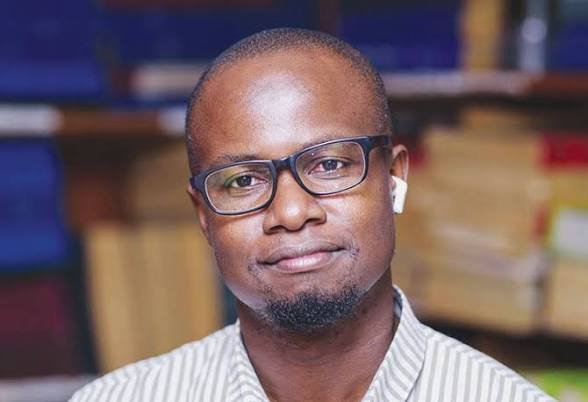
Yusuf Serunkuma is a political theorist based at Makerere University.
About The Author