
South Africa Introduces Electronic Travel Authorisation (eTA) System for Ugandan Passport Holders
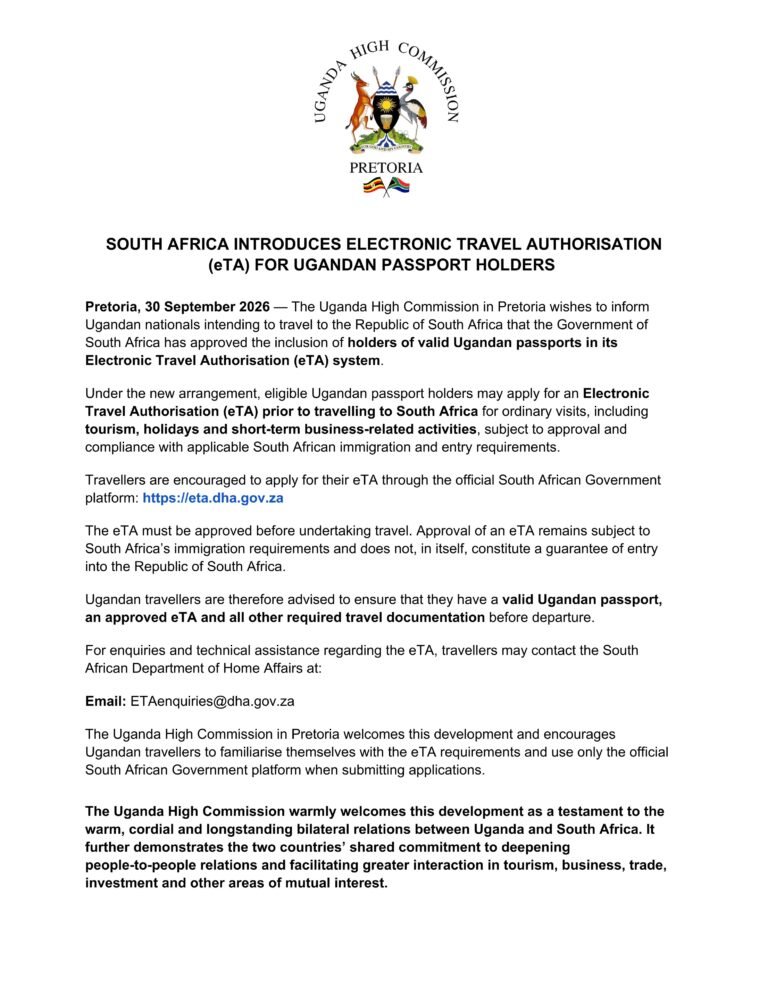
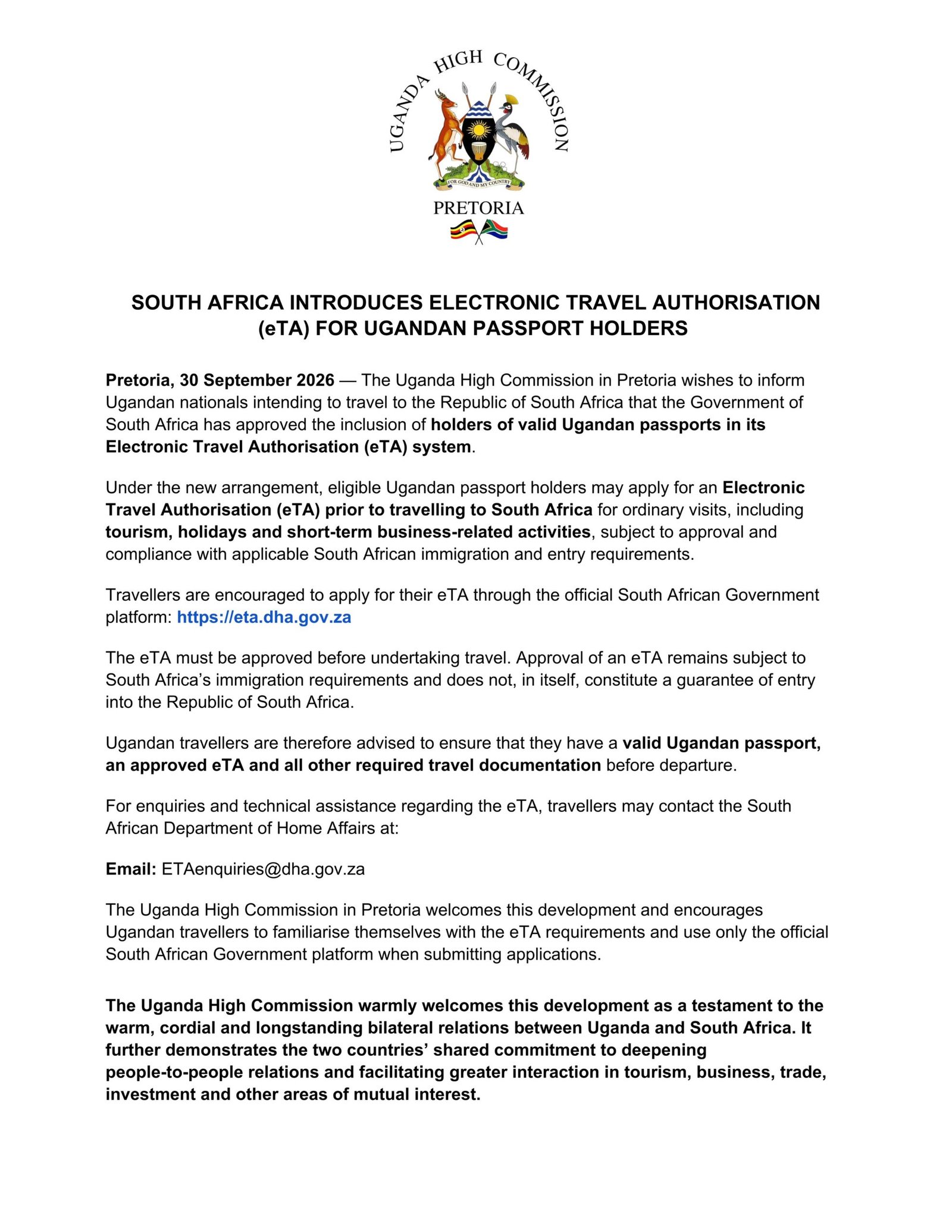
Kampala/Pretoria — In a significant development aimed at strengthening bilateral ties and facilitating easier movement, the Government of South Africa has officially approved the inclusion of Ugandan passport holders in its Electronic Travel Authorisation (eTA) system. The landmark announcement was communicated via a diplomatic note from the South African High Commission in Kampala to Uganda’s Ministry of Foreign Affairs, dated 29 September 2026, and subsequently publicized by the Uganda High Commission in Pretoria on 30 September 2026.
Diplomatic Welcomes and High-Level Endorsements
The move has been warmly received by Ugandan officials. Ambassador Paul Amoru, Uganda’s High Commissioner to South Africa, hailed the development as a positive step for bilateral relations.
“I warmly welcome the inclusion of Ugandan passport holders in South Africa’s Electronic Travel Authorisation (eTA) system,” Amb. Amoru stated. “This is a positive development for our people and a further reflection of the warm and cordial bilateral relations between Uganda and South Africa. It will facilitate greater movement and interaction between our two countries, while supporting tourism, business, trade, investment and people-to-people ties.”
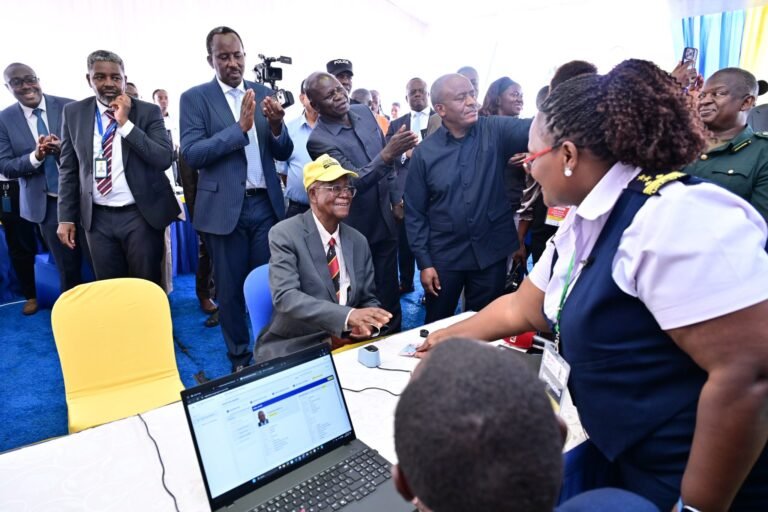
Echoing this sentiment, Uganda’s Foreign Minister Adonia Ayebare took to social media to thank the South African Government for simplifying visa issuance for Ugandans. He noted that he looks forward to leading a Ugandan delegation to South Africa for the Joint Permanent Commission meeting later this month.
Understanding the eTA: What It Means for Travelers
The eTA is a pre-travel digital clearance designed for short ordinary visits, including tourism, holidays, and short-term business activities. Once approved and all other entry requirements are satisfied, the holder may fly to South Africa and seek admission at a designated port of entry.
Crucially, the eTA is not a visa waiver. It does not authorize employment, study, or long-term residence. Furthermore, diplomatic and official passport holders, who already enjoy visa exemption, remain unaffected by this new regime.
Operational Features and Benefits
The new system introduces several key operational changes designed to streamline the travel process:
· Application Process: The application is entirely online from any location. Applicants create a profile, verify their telephone and email, scan their passport, and submit a live selfie. The system matches the face to the passport photograph and runs automated checks. No appointment at VFS Global in Kampala or at the High Commission is required for this category of short visit.
· Processing Speed: Decisions are typically issued within 24 hours, a stark contrast to the previous 5–10 working days, which often stretched longer when files were queried.
· Validity and Stay: The authorization is usually valid for up to six months from the date of issue, allows multiple entries, and permits a maximum stay of 90 days per entry. The authorization may be stored in a mobile digital wallet.
· Cost-Effectiveness: The new model features an electronic processing fee of R500 plus the standard visitor visa fee of R425, a combined figure of approximately R925. This is substantially lower than the previous outsourced VFS-plus-visa model, which often exceeded R1,900.
· Ports of Entry: Presently, the eTA is limited to O.R. Tambo International, Cape Town International, Lanseria, and King Shaka International Airports. Land borders and other airports are not yet open to eTA holders.
Conditions and Limitations
While the system offers significant improvements, authorities emphasize that an approved eTA does not guarantee admission into South Africa. The immigration officer at the port of entry retains the final decision.
Travellers must still present a valid passport (generally with at least seven months remaining from the intended date of travel), a return or onward ticket, proof of funds and accommodation, a yellow-fever certificate where required, and a genuine short-visit purpose. The eTA does not regularize persons already inside South Africa in an irregular status, and work, study, and longer residence continue to require the appropriate visa category.
A Shift from the Previous Arrangement
Historically, ordinary Ugandan passports required a visitor visa for South Africa. Applications were lodged in person at VFS Global in Kampala or through an older e-Visa channel, demanding extensive supporting papers such as bank statements, itineraries, and invitations. This process was characterized by slow processing, high service fees, and refusal rates that generated repeated public complaint.
The eTA replaces this paper-heavy route for eligible short visits with a biometric, automated pre-clearance system. South Africa has not, however, granted ordinary Ugandan passport holders a full visa exemption like some other African nationalities. The eTA functions as a digital substitute for the traditional visitor visa, with stronger identity and risk checks built in.
Assessment and Implications
The measure is a practical improvement for genuine tourists, holidaymakers, and short-term business visitors. It is expected to reduce processing time and costs, alleviate congestion at VFS Kampala, and lessen pressure on Mission consular capacity for routine short-visit applications.
However, the limitation to four airports, the continued discretion of the immigration officer on arrival, and the exclusion of work, study, and long-term stay must be clearly communicated. The public is advised not to treat the eTA as visa-free travel or as a remedy for irregular presence. Ugandan travellers are encouraged to apply through the official South African Government platform and familiarize themselves with the eTA requirements to ensure a smooth travel experience.
About The Author