
The Paradox of Ancestral Veneration and Christian Relic Worship: An African Perspective
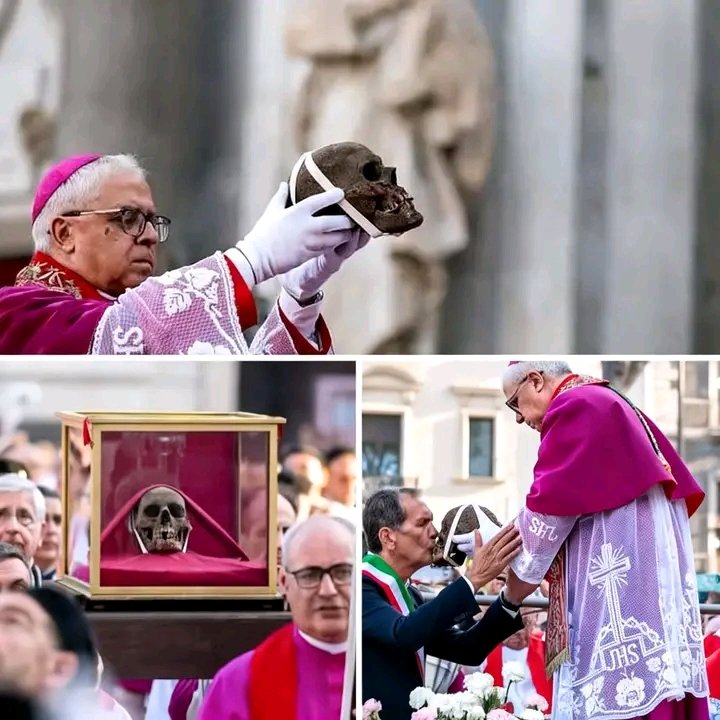
The story of Agatha, a young Christian virgin who suffered martyrdom around AD 251, presents a fascinating lens through which to examine the contradictions inherent in how religious traditions approach the dead. According to Christian tradition, Agatha remained steadfast in her faith despite persecution, imprisonment, and torture—even receiving a miraculous visitation from Saint Peter who healed her wounds in prison. Today, Catholics preserve and venerate her physical remains: her head and bust, hands and arms, femurs, feet and legs, breast, and sacred veil.
This practice of preserving and venerating relics raises profound questions, particularly when examined alongside how African traditional religious practices have been historically treated by missionaries and colonial powers.
The Double Standard
A Christian may look upon an African who honours their deceased parent, grandfather, or grandmother and declare that they are committing a serious sin—that they are worshipping demons. Yet the same religious tradition allows, even encourages, the preservation and veneration of physical remains of people who died many centuries ago. Christians are reminded of what Scripture says about the dead and the living, and they are encouraged to invoke the names of these long-deceased figures and pray for their intercession before God.
But how can one look at the beliefs and practices of their own ancestors and declare them demonic simply because those ancestors are dead, while simultaneously preserving the bones and physical remains of people who died more than a thousand years ago, venerating those relics, and praying for their intercession?
If you do the same with your own father or grandfather—someone whose blood still runs through your veins—you are told that you are worshipping demons. Yet at the same time, you may be encouraged to invoke the names of people who died centuries ago, even though they were not your relatives.
The African Context
This is precisely what I have always argued: Christianity, as it was introduced and spread in Africa, was used to undermine the faith that Africans already had in their own God. Africans already worshipped God, prayed to Him, and believed that they received help from the God in whom they placed their trust. The understanding of God was not absent from African soil—it was present, vibrant, and deeply integrated into every aspect of life.
Europeans and Arabs went on to produce and spread religious writings such as the Bible and the Quran, and these religious traditions came to challenge and replace many indigenous African beliefs about God. African religious beliefs and practices were often portrayed as primitive, pagan, or demonic, with the result that Africans were encouraged to abandon the beliefs of their ancestors and embrace foreign religious traditions.
A Unified Understanding of God
Religion is ultimately about culture and God. There is only one God; what differs is the way different peoples understand and worship Him. These differences in religious practice and interpretation have, over time, divided Africans—creating rifts between families, communities, and nations that were once united in their understanding of the divine.
The veneration of Christian saints and their relics is not fundamentally different from the honouring of African ancestors. Both traditions acknowledge that the dead continue to have a relationship with the living and with God. Both traditions preserve physical remains and invoke the names of those who have passed on. Both traditions seek intercession and guidance from those who have gone before.
Conclusion
The paradox is clear: what is condemned as demonic in one cultural context is celebrated as holy in another. The Christian tradition venerates the relics of Agatha and countless other saints, preserving their physical remains for centuries and seeking their intercession. Yet the African who honours their own ancestors is accused of worshipping demons.
This double standard reveals a deeper truth: the condemnation of African traditional religions had less to do with theological purity and more to do with the politics of colonialism and cultural domination. If we can look honestly at these contradictions, we may find that the God whom Africans worshipped long before the arrival of missionaries is the same God who hears the prayers of both Christian saints and African ancestors—and that neither tradition has a monopoly on the divine.
About The Author