
Ugandan Parliament Approves New Cabinet Structure, Vice President, and Prime Minister
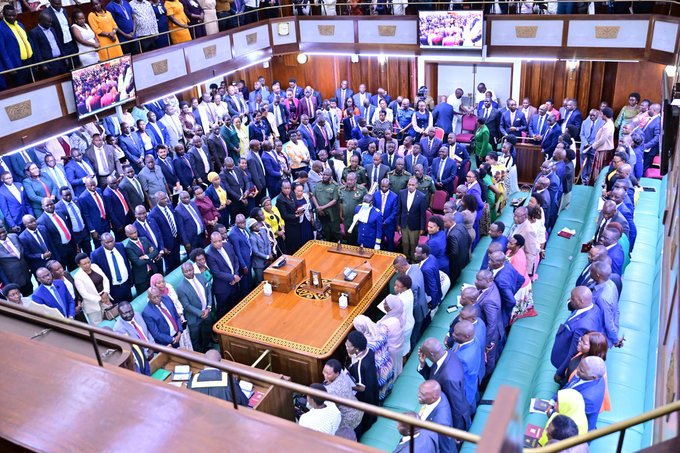
The 12th Parliament of Uganda has moved swiftly through a series of key executive appointments, beginning with the approval of the Vice President and Prime Minister, before moving to reshape the size and structure of the Cabinet.
In a session marked by both debate and decisive votes, legislators cleared the constitutional hurdles required to align the new administration with the President’s recently announced team.
Alupo Confirmed as Vice President
Parliament’s first major approval item was the confirmation of H.E. Jessica Alupo, the Woman MP for Katakwi District, as Vice President. The motion was moved by Hon. Ephraim Kamuntu, MP for Sheema County North, in accordance with Article 108(2) of the Constitution.
The motion was unanimously seconded by a cross-section of legislators, including Hon. Minsa Kabanda (Kampala Central), Hon. Catherine Lamwaka (Omoro District Woman MP), and Hon. David Calvin Echodu (Soroti City West). Following the vote, the Chair declared, “Congratulations, Your Excellency the Vice-President.”
Nabbanja Returns as Prime Minister
Shortly after, Parliament approved Rt. Hon. Robinah Nabbanja, the Woman MP for Kakumiro District, for another term as Prime Minister and Leader of Government Business.
Hon. Dr. Jane Ruth Aceng Ocero (Lira City Woman MP) moved the motion under Rule 58 of Parliament’s Rules of Procedure and Article 108A of the Constitution. It was seconded by Hon. Dennis Namara (Buyaga West County), Hon. Esther Anyakun (Nakapiripirit District Woman MP), and Hon. Fredrick Ruhindi (Nakawa East).
The result was a resounding endorsement: 320 votes in favour, 6 against, with 2 abstentions.
Debate Over Cabinet Size
With the top executive posts filled, Parliament turned to a motion moved by Prime Minister Nabbanja herself, seeking approval to vary the number of ministers. The proposal sought to increase Cabinet Ministers from 21 to 30 and other Ministers (Ministers of State) from 21 to 51.
This followed the President’s recent appointment of 30 Cabinet Ministers and 51 Ministers of State.
Prime Minister Nabbanja defended the proposed structure, arguing it did not represent an increase. “Members, the number of Ministers and Ministers of State that have been carrying out duties is the same number we have brought. We have not changed,” she said. She explained that the move was about rationalisation, noting that agencies like UNRA had been duplicating the work of the Ministry of Works.
However, the motion sparked vigorous debate. Hon. Betty Nambooze (Mukono Municipality Woman MP) urged caution, invoking the intent of the Constitution’s framers. “We should think about the framers of this Constitution, what they thought about when they came out to limit the number of Ministers,” she said, suggesting the goal was to prevent leaders from using appointments to “patronise the country.”
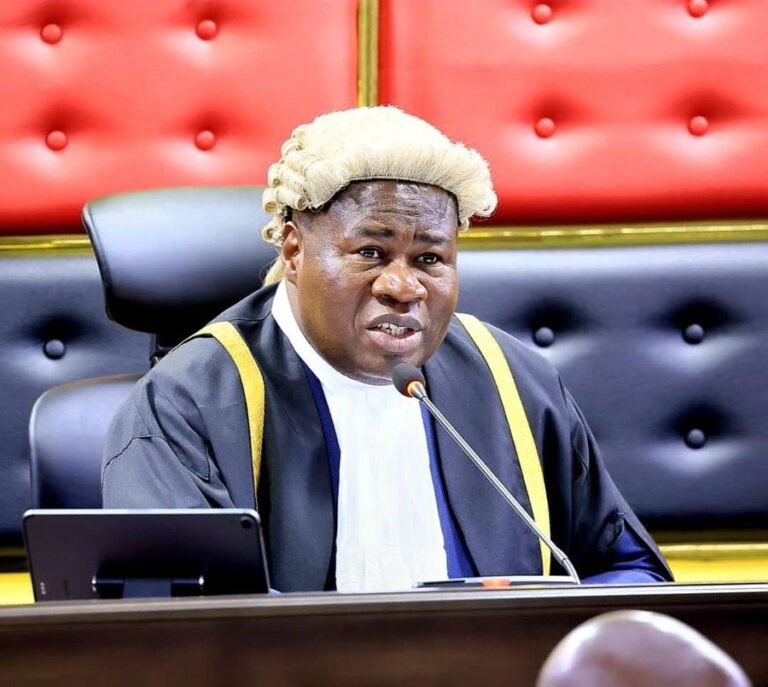
Speaker Jacob Marksons Oboth pressed the Prime Minister for clarity on whether any ministries had been merged or downgraded, asking if the government would need to return to Parliament to “reactivate them.”
Government Defends Expansion
Deputy Attorney General, Hon. Jackson Kafuuzi (Kyaka South County), provided the government’s constitutional justification for the expansion. He argued that the President, having received a new mandate based on a manifesto Ugandans approved, requires a team to implement it.
He cited Article 111 of the Constitution, which establishes the Cabinet and allows for “such other Ministers” as may appear necessary for the efficient running of the state. “It is our mandate as MPs to approve the variation,” he stated.
After deliberations, Parliament adopted the resolution to vary the ministerial numbers in line with Articles 113(2) and 114(2) of the Constitution, effectively clearing the way for the new, larger executive structure.
Next Steps: Committee on Appointments
With the executive structure approved, Parliament has now moved to the next item on the Order Paper: designating members to the Committee on Appointments. This is the critical committee that will scrutinise all presidential nominees requiring parliamentary approval, including ministers and other senior public appointments.
About The Author