

HIV Numbers Chart Shows Uganda’s Progress and Regional Trends
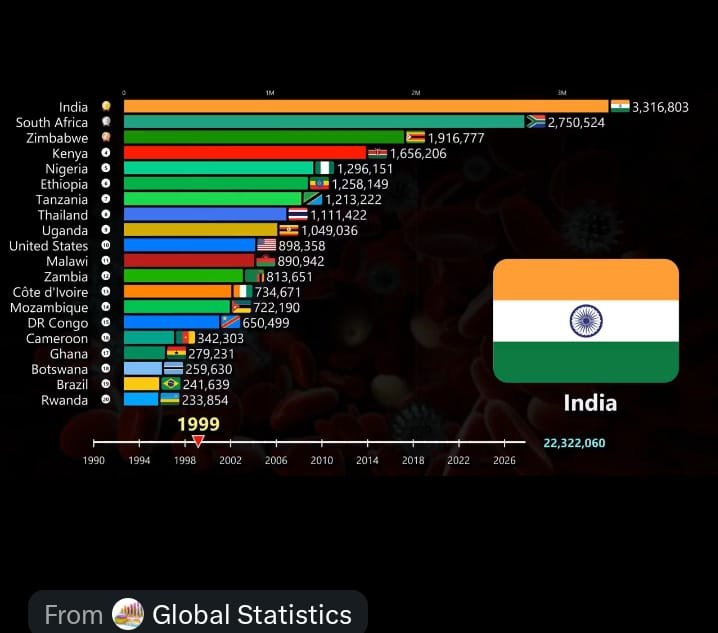
A recently circulated data visualization tracking HIV cases from 1990 to 2026 is drawing attention to Uganda’s progress in combating the epidemic, while simultaneously highlighting stark regional disparities across the African continent. The chart, which sparked discussion after being shared by media personality Douglas Lwanga on X (formerly Twitter), projects Uganda’s caseload at 906,241 in recent estimates.
The data visualization places Uganda among the countries with the highest raw numbers of people living with HIV, alongside Zimbabwe, the United States, Tanzania, and Ethiopia. However, the accompanying analysis emphasizes that Uganda has demonstrated notable declines in recent years. The country has achieved a significant milestone with a 75% reduction in mother-to-child transmission, a testament to sustained public health interventions.
Regional Contrasts: Zimbabwe’s Success and South Africa’s Struggles
The chart serves as a mixed picture for the region. Zimbabwe has emerged as a success story, showcasing steep drops in infection rates attributed to strong policy implementations. Conversely, South Africa continues to face persistently high figures. The data highlights particular concern in the KwaZulu-Natal province, where prevalence rates hit 39.9% among men and 62.4% among women aged 25-44 in certain areas.
Data Caveats and Ongoing Needs
Public health observers reviewing the data have emphasized a crucial caveat: the chart utilizes raw counts rather than rates. This means that countries with larger populations will naturally show higher absolute numbers, even if their prevalence rates are lower relative to their population size.
Despite the progress shown in Uganda and Zimbabwe, viewers and analysts stress the ongoing need for robust testing, Antiretroviral Therapy (ART) treatment, and prevention strategies to build on these gains. The discussion surrounding the chart underscores that while progress is being made, the fight against HIV requires sustained regional and international commitment to address both high caseloads and high prevalence rates.
About The Author