
Headline: Alternate Historical Narrative on Hutu-Tutsi Origins Circulates, Contradicting Academic Consensus
Subtitle: Detailed but Unverified Account Claims Tutsi as Migrant Assimilationists, Scholars Point to Established Anthropological and Colonial Research
A detailed narrative purporting to describe the “true” origins of the Hutu and Tutsi ethnic groups and their historical conflicts is circulating online. While presented as a revelation of hidden history, its central claims diverge significantly from the established consensus of historians, anthropologists, and genocide scholars. The account, which frames Tutsi as assimilating migrants who gained power through royal intermarriage and betrayal, offers a perspective not found in mainstream academic texts.
🔍 The Core Claims of the Narrative
The narrative presents a sequential history with several key assertions:
- Tutsi as Migrant Assimilators: It claims the Tutsi were originally nomadic people who entered the Great Lakes region from the north, integrating into existing Bantu agricultural communities (the Hutu) in present-day Rwanda, Burundi, and Congo. Their strategy was not conquest but assimilation and intermarriage with royal families.
- Seizure of Power via Royal Betrayal: A central plot describes the “Nyiginya” clan using marriage to Hutu royalty, followed by betrayal and regicide, to usurp the Rwandan kingdom. This event is labeled “the first conflict.”
- Centuries of Tutsi-Led Expansion: It alleges a centuries-long campaign by the Nyiginya dynasty to conquer and subjugate over 30 independent Hutu kingdoms to form a unified state with Hutu as subjects.
- Colonial Alliance for Supremacy: The narrative states German colonizers actively sided with the Tutsi aristocracy, promoting a false “Hamitic hypothesis” (the idea that Tutsi were a Caucasian-related, superior race) to justify their joint rule and the oppression of Hutu through forced labor.
- Direct Line to Modern Conflict: It draws a direct line from these ancient royal expansions to modern politics, stating that “grandsons and daughters of royals… are behind all the Hutu/Tutsi conflict in the region,” explicitly naming President Paul Kagame as a descendant.
📚 The Established Academic Consensus
Scholarly research on the region’s pre-colonial history, while acknowledging complexities and debates, does not support the above narrative’s foundational premises.
· Ethnic Origins and Distinctions: Mainstream anthropology holds that Hutu, Tutsi, and Twa have shared the same territory, language (Kinyarwanda/Kirundi), religion, and culture for centuries, making them socio-professional categories rather than distinct ethnic groups with separate origins. The physical differences cited in colonial times were stereotypes, not absolute markers. The “migrant” theory aligns with the widely discredited “Hamitic hypothesis” used by colonists, which falsely claimed Tutsi were outsiders from the Horn of Africa.
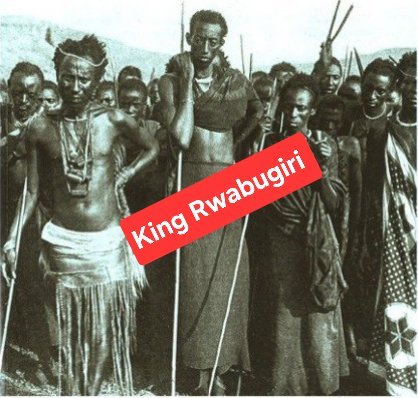
· Nature of the Pre-colonial Kingdom: Historians like Jan Vansina describe the Kingdom of Rwanda as a complex, gradual centralization process over centuries. While Tutsi elites (chiefly of the Nyiginya clan) dominated the monarchy and cattle-based patronage system (ubuhake), Hutu could also be chiefs, and social mobility existed. The notion of a sudden betrayal creating a unified kingdom of subjugated Hutu kingdoms is not supported by evidence.
· The Colonial “Revolution”: Academics agree that German and later Belgian colonizers did radically harden and racialize the Hutu-Tutsi distinction. They favored Tutsi elites for administrative roles, propagating the false “Hamitic” ideology to justify indirect rule. This colonial “divide and rule” policy institutionalized inequality and laid the groundwork for later violent conflict, a point the narrative gets partly right but frames as a Tutsi-led conspiracy rather than a colonial instrument of control.
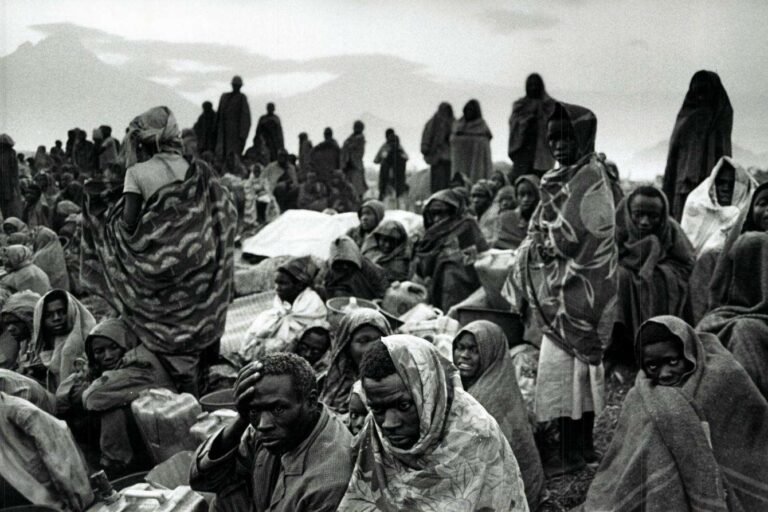
· Link to the 1994 Genocide: Scholars unequivocally state the 1994 genocide against the Tutsi was not an ancient “revenge” but a modern political project. It was planned by extremist Hutu politicians and militias in response to a civil war (initiated by the Tutsi-led Rwandan Patriotic Front) and a peace process that threatened their power. It mobilized populations using colonial racial theories and decades of post-independence propaganda and state-directed violence.
⚖️ Analysis: Narrative vs. History
The circulating narrative is significant not for its historical accuracy, which is low, but for its structure and purpose. It presents a mirror image of the extremist “Hamitic” ideology: instead of Tutsi as superior civilizers, they are framed as cunning infiltrators. This flips the script but retains the core, dangerous idea of Tutsi as perpetual, manipulative outsiders.
It also collapses centuries of complex social, economic, and political evolution into a single story of ethnic conspiracy, ignoring factors like land pressure, climate, and pre-colonial statecraft. By drawing a direct line from medieval royal politics to Paul Kagame, it serves a clear contemporary political function: to delegitimize the current Rwandan government by casting it as the latest manifestation of an ancient, predatory ethnic project.
In summary, while the narrative speaks to real grievances and the profound consequences of colonial racism, it is itself a form of historical revisionism. It replaces one set of racialized myths with another, obscuring the well-documented colonial origins of the ethnic polarization that led to genocide.
About The Author