

ATTORNEY GENERAL ISSUES LEGAL OPINION ON TOORO SUCCESSION CRISIS
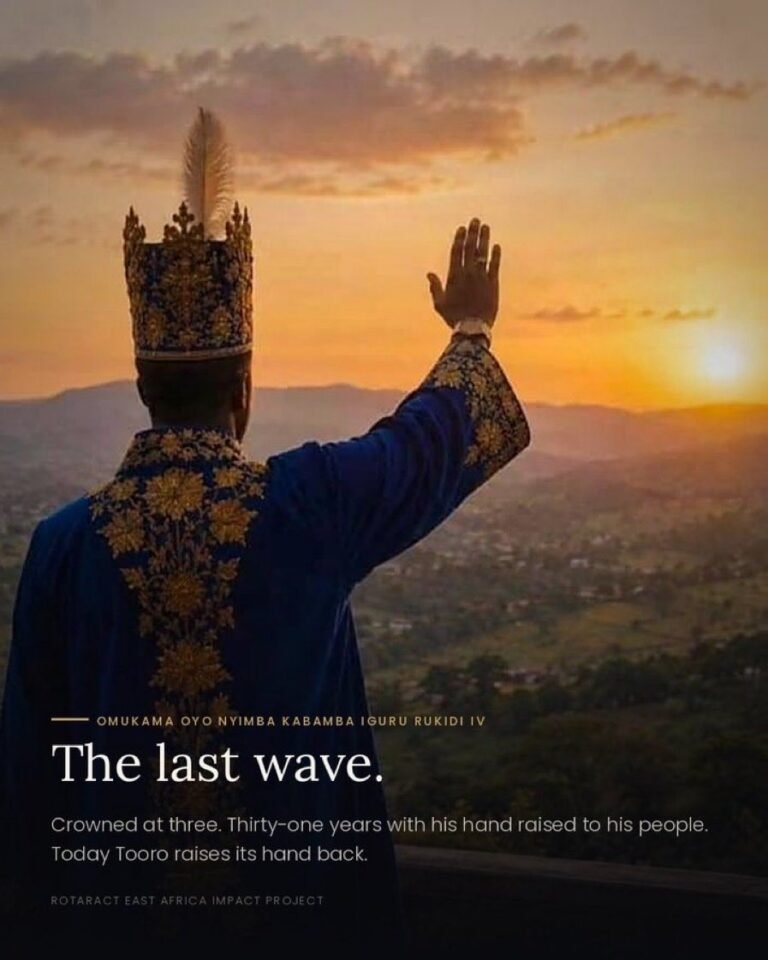
Kampala, Uganda – In a significant legal development regarding the future of the Tooro Kingdom, the Attorney General’s Chambers has issued a formal opinion addressing the succession question following the death of King Oyo.
The document, dated 12th September 2026 and addressed to His Excellency the President of Uganda, outlines the legal framework governing the selection of the next Omukama (King) of Tooro.
According to the opinion, the succession process is governed by Article 246 of the Constitution of the Republic of Uganda and the Institution of Traditional or Cultural Leaders Act.
Legal Pathways for Succession
The Attorney General’s letter cites Section 3 of the Institution of Traditional or Cultural Leaders Act, which provides two distinct pathways for instituting a traditional leader:
- In accordance with the customs, cultures, and traditions of the people to whom it applies.
- In accordance with the wishes and aspirations of the people, through a resolution of not less than two-thirds of all members of the district local councils and sub-county local government councils in the area.
Furthermore, Section 4 of the Act stipulates that a person may only be installed if they are not a member of any other traditional or cultural leadership and are accepted by the people according to their customs.
The Role of the Will and Lineage
The legal opinion places heavy emphasis on the late King’s will and the Kingdom’s constitution. The document notes that the Tooro Kingdom promulgated a Constitution in 1999, though its observance was suspended in 2013. The opinion states that “Clearly, the law recognizes that in ascending to the throne, allegiance principally is derived from birth and subsequently by descent.”
Citing Article 10 (1) of the King Oyo’s will dated 14th September 2022, the Attorney General notes that the late King declared that at the time of his death, he was survived by a son. The will states: “I hereby declare and direct that if at the date of my death, I am survived by a son, Tooro as the case may be in accordance with the customs and traditions of Tooro Kingdom.”
The Contingency Clause
The opinion highlights a critical clause in the late King’s will regarding the age of the heir. The will stipulates that if at the time of death the son has not yet reached the age of 18, a regent should be appointed to assume duties until the heir comes of age. The document explicitly names “his cousin Prince Komwiswa Owesigire Omusuha of Tooro” as the successor to the throne and heir to the assets, should the son be unable to serve.
Customary Law and Dispute Resolution
The Attorney General also addressed the role of customary law in determining the heir. The opinion cites Section 15(1) of the Institution of Traditional or Cultural Leaders Act of 2011, which states that any conflict or dispute within the traditional institution shall be determined by a council of elders or clan leaders.
The document concludes by emphasizing the importance of the late King’s will, noting that “decided cases in Uganda where a will of a former King was held as being critical in determining who an heir to the kingdom may be determined.”
The opinion is signed by the Attorney General and is intended to guide the President and the relevant stakeholders in navigating the constitutional and cultural complexities of the Tooro succession.
About The Author