
COSASE Demands Answers: How Did an Airport Fire Truck Cost UGX 5.4 Billion?
Parliament’s Public Accounts Watchdog Scrutinizes UCAA Procurement
Entebbe, Uganda – Parliament’s public-accounts watchdog, the Committee on Commissions, Statutory Authorities and State Enterprises (COSASE), has demanded the complete procurement file for a Shs5.3985 billion aircraft rescue and firefighting (ARFF) vehicle acquired by the Uganda Civil Aviation Authority (UCAA). The committee is questioning whether the specialized equipment was procured at a price that represents value for public money.
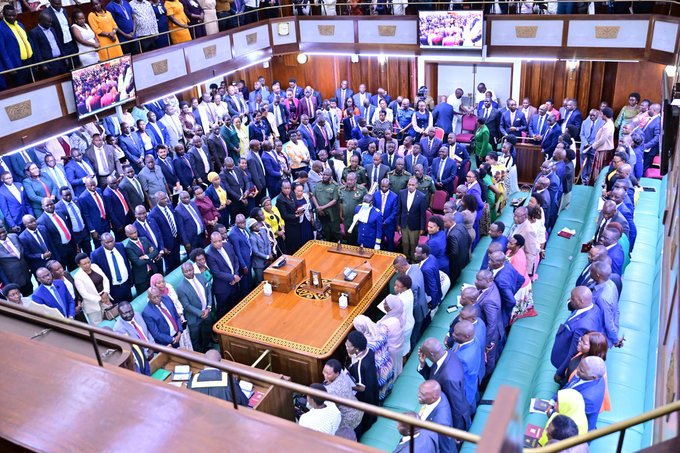
The committee raised the concerns on Tuesday, September 8, 2026, while interrogating UCAA officials over issues arising from the Auditor General’s audit of the aviation regulator. The investigation was triggered following a physical inspection of the vehicle at Entebbe International Airport, during which MPs noted that UCAA initially failed to produce documentation establishing the vehicle’s ownership and procurement history. UCAA later submitted a registration book for the motor vehicle (UA38070AA), indicating it was registered on June 22, 2026, with the authority listed as the owner.
The scrutiny has turned what might ordinarily be a routine aviation-safety acquisition into a wider accountability question regarding the procurement process and delivery verification.
Questioning the Price Tag
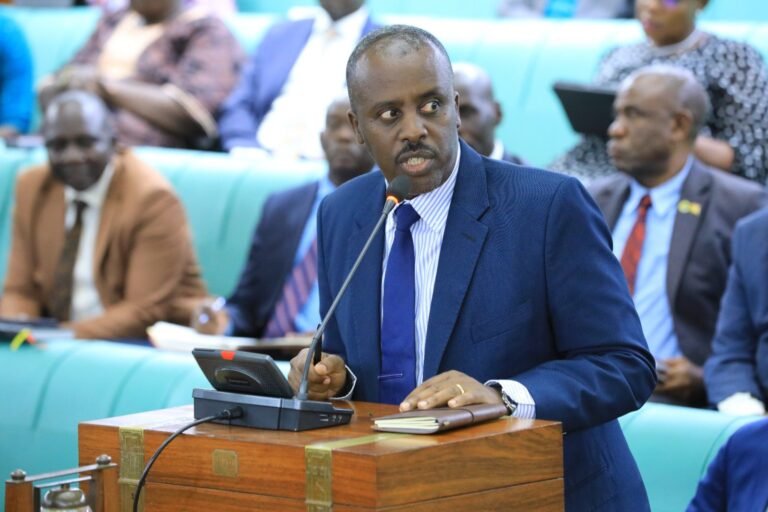
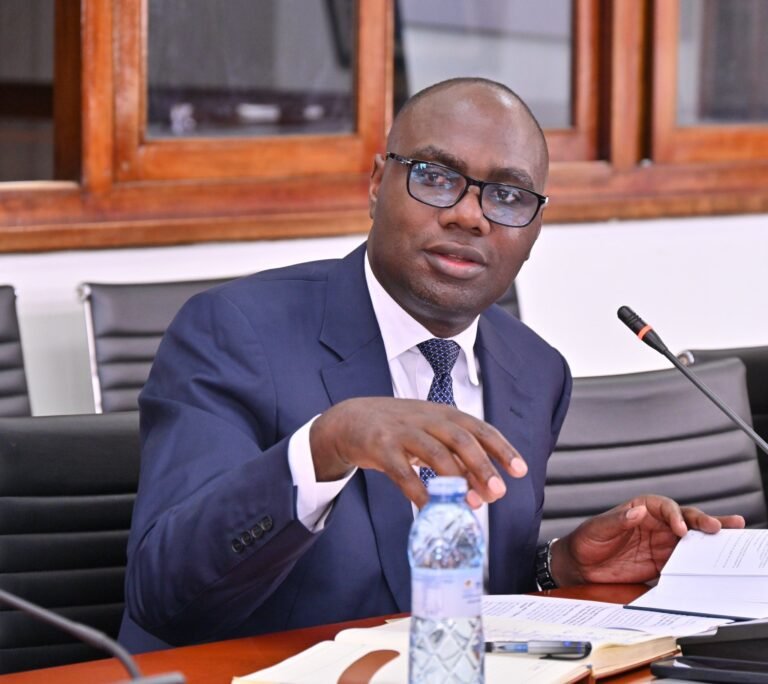
COSASE Chairperson Muwada Nkunyingi expressed concern over the delay in producing the vehicle’s documentation, pressing officials to account for its acquisition and cost.
“We want to know how yours cost Shs5.3 billion. What is the uniqueness? How did you arrive at this cost?” Nkunyingi questioned.
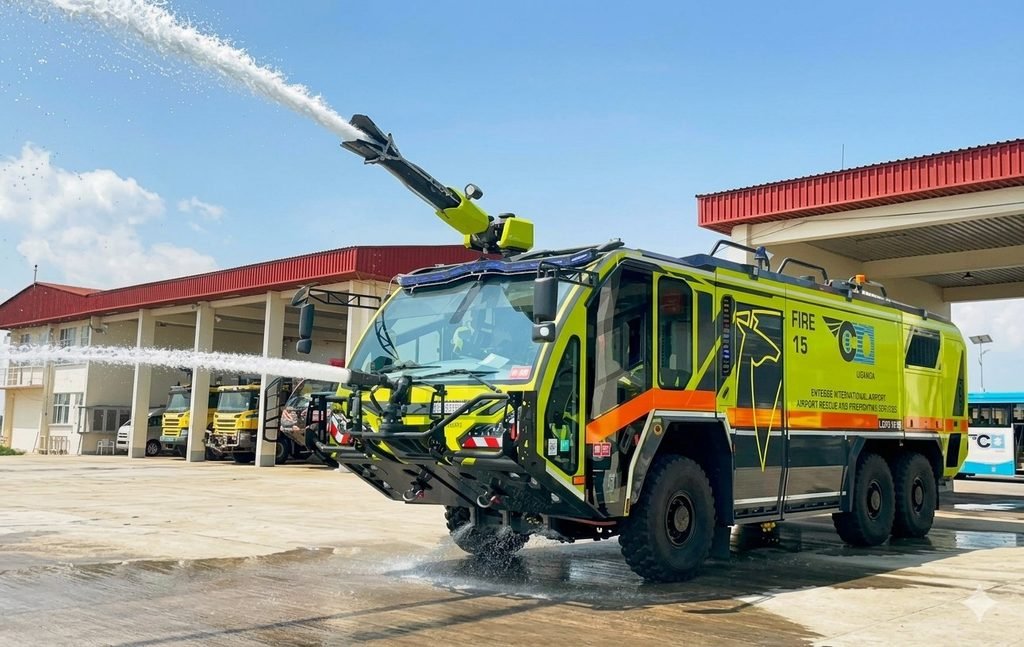
UCAA Director General Fred Bamwesigye defended the acquisition, telling MPs that the equipment should not be assessed against the price of a conventional fire engine. The vehicle is identified as a Lion 6×6 Aircraft Rescue and Fire Fighting (ARFF) truck, manufactured in Turkey and powered by a Scania engine. Its registration documents classify it as an engineering plant.
Acting Director of Airports Samuel Wonekha explained to the committee that the vehicle carries approximately 12,500 liters of water, along with foam-fighting equipment and specialized rescue tools designed for aircraft emergencies. Officials stated that the truck has a specialized generator capable of powering equipment used to cut through damaged aircraft and assist in evacuating trapped passengers.
Safety Necessity vs. Procurement Value
Officials argued that airport rescue and firefighting systems are not conventional municipal fire services. International Civil Aviation Organization (ICAO) standards under Annex 14 require aerodromes to maintain sophisticated rescue and firefighting capabilities appropriate to the aircraft and operational category they serve.
However, COSASE signaled that while the equipment is a legitimate safety necessity, it does not automatically answer the procurement question. UCAA officials claimed the vehicle was obtained at a comparatively lower price than similar equipment acquired by other airports in the region, following negotiations with suppliers. This explanation failed to satisfy MPs.
Committee Directives
Instead of accepting the explanation, the committee issued several immediate directives:
· Market Research: Instructed its researchers to establish the prevailing market price of comparable Lion 6×6 ARFF vehicles to determine if UCAA’s Shs5.3985 billion price falls within a defensible market range.
· CID Investigation: Directed the Criminal Investigations Directorate (CID) to verify the authenticity of the registration documents and establish the ownership of the vehicle.
· Procurement File: Ordered UCAA to submit the complete procurement file by close of business, including the procurement method, tender documentation, technical specifications, evaluation records, supplier details, negotiation records, and final contract price.
Broader Procurement Concerns
The fire truck was not the only procurement to attract scrutiny. COSASE also questioned a transformer reportedly procured from Vietnam at about Shs1 billion, which had not been delivered by the time MPs conducted their inspection.
Together, the two cases raise broader questions about procurement planning, contract management, delivery verification, and asset accountability within an institution responsible for one of Uganda’s most strategically important pieces of infrastructure. The scrutiny comes against the backdrop of wider issues identified by the Auditor General concerning UCAA’s management, utilization of assets, and procurement processes.
The Road Ahead
The public-interest question now hinges on the documentary trail. If UCAA’s procurement file establishes that the vehicle was competitively sourced, appropriately specified, successfully negotiated, and delivered in accordance with the contract, the inquiry could potentially validate the expenditure.
However, if the records reveal unexplained price escalation, inadequate competition, weak negotiations, or gaps in ownership documentation, the Shs5.3985 billion acquisition could become a much more serious procurement-accountability case.
The question before COSASE is no longer simply how much the fire truck cost, but whether UCAA can prove why it cost that much, and prove that the public got its money’s worth.
About The Author