
EU Backs Nigeria’s Sovereignty, Rebuts Trump’s Religious Persecution Allegations
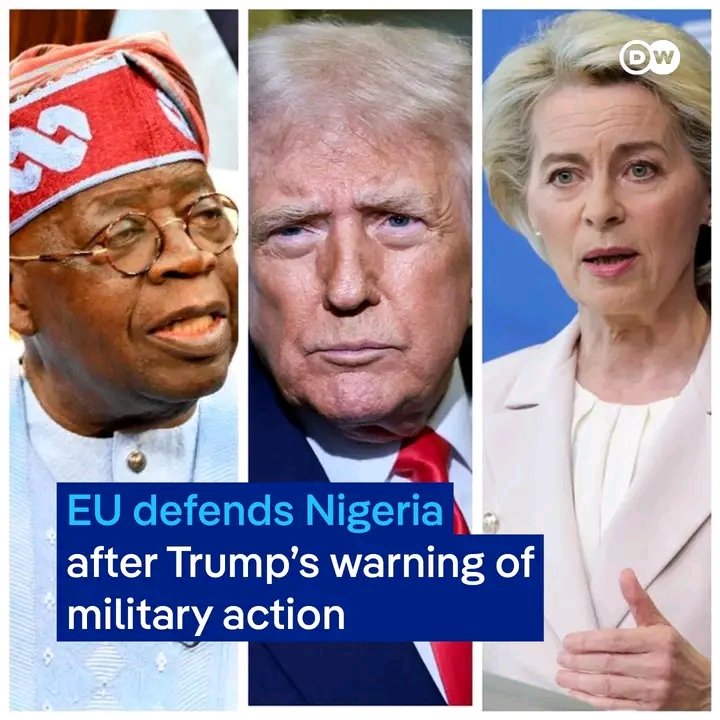
ABUJA, Nigeria – The European Union has thrown its weight behind the Nigerian government, offering a firm defense against recent allegations of religious persecution made by former US President Donald Trump, which included a threat of military action.

The EU’s stance, articulated by its Ambassador to Nigeria, Gautier Mignot, emphasizes respect for Nigeria’s sovereignty and a commitment to dialogue and human rights. This public support comes in direct response to Trump’s designation of Nigeria as a “Country of Particular Concern” over claims of widespread religious intolerance.
“The EU wishes to reiterate its respect for the sovereignty of Nigeria and its commitment to promoting peace, interfaith dialogue, and human rights,” Ambassador Mignot stated. He further outlined the Union’s practical support, noting, “The EU is prepared to enhance support for peace and security in Nigeria and will continue its peacebuilding initiatives to foster unity.”
The former US President’s accusations and the implied threat of foreign military intervention have ignited a significant diplomatic row. The Nigerian government has responded with a stern warning of its own, cautioning Trump against stirring instability in the West African nation.
In a strongly worded rebuke, Nigerian officials warned the former president not to “create another Sudan” through what it termed “false allegations of religious persecution.” The reference to Sudan, a nation that fractured after prolonged conflict, underscores the depth of Abuja’s concern that such claims could inflame existing domestic tensions.
The EU’s intervention positions it as a key diplomatic actor seeking to de-escalate the situation, advocating for cooperative engagement over confrontation. The public support for Nigeria highlights a divergence in approach between the EU and the stance taken by the former American administration, championing sovereignty and collaborative peacebuilding as the path forward in the complex Nigerian context.
About The Author