
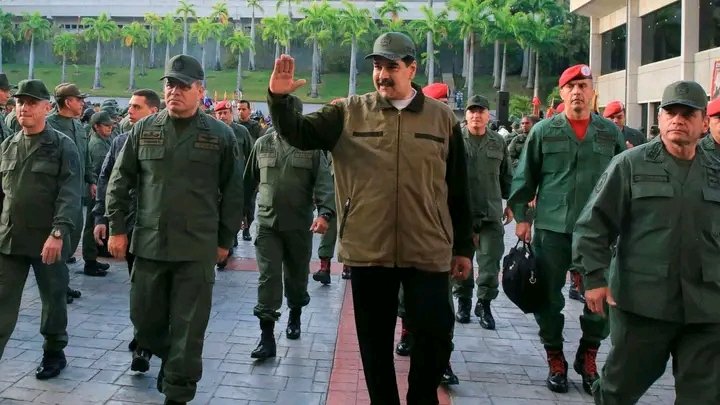
ANALYSIS: Maduro’s Capture Reveals Fragility of Power as Military Fails to Intervene

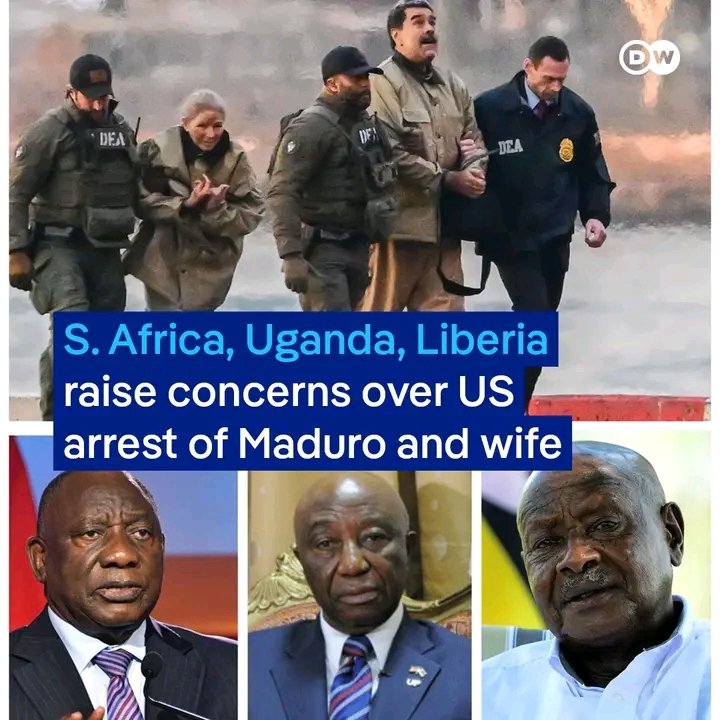
CARACAS—The dramatic extraction of Venezuelan President Nicolás Maduro by United States forces was not merely a lightning military raid. It was, according to security analysts and geopolitical observers, a stark demonstration of a regime collapsing from within, betrayed by the very military apparatus that had long guaranteed its survival.
Maduro, who appeared in a U.S. courtroom on January 5th, 2026, declared, “I am the President of Venezuela and I consider myself a prisoner of war. I was captured in my home in Caracas.” His words followed an operation that U.S. officials have framed as a mission to bring a sanctioned leader to justice. But the seamless execution of the raid—reportedly lasting only 30 minutes—points to a more profound truth: the coercive core of the Venezuelan state either stood down, cooperated, or calculated that defending Maduro was a lost cause.
The Silent Military: A Calculated Betrayal
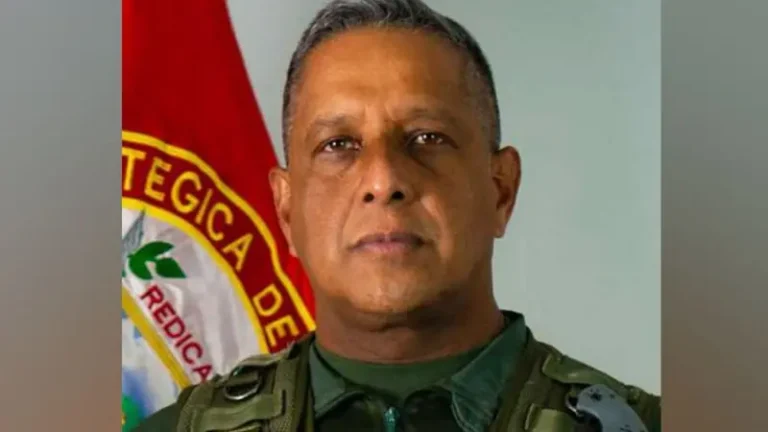
The central, unanswered question is: Where was Venezuela’s military? In a highly militarized state under prolonged sanctions, the swift capture of a head of state from his residence suggests a catastrophic failure—or deliberate withdrawal—of protection.
“A regime can be unpopular, corrupt, even hated, and still survive if its armed institutions remain cohesive and willing to fight,” the analysis notes. “Conversely, a regime can appear entrenched, until the day the generals decide the leader is a liability rather than an asset.”
The reported involvement and death of Cuban security officers in the operation further underscores the depth of mistrust. “If the innermost security ring around the president depended heavily on foreign allied personnel, that is not a sign of strength. It is a sign of mistrust at the heart of the state,” the analysis argues, suggesting Maduro’s reliance on external guards signaled fatal weakness vis-à-vis his own military.
This follows a recurring pattern where militaries abandon leaders for reasons of survival, institutional continuity, and elite bargaining. The swift collapse of other regimes has shown that the tipping point often begins not with public revolt, but within the officer corps.
The Unvarnished Intent: Resources and Hegemony
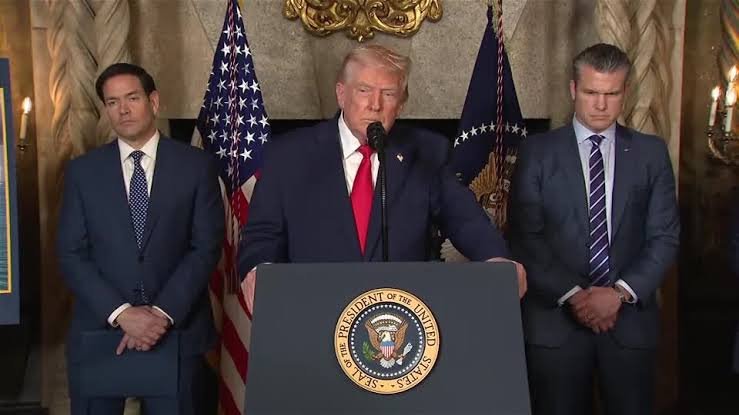
While U.S. allies will frame the operation in terms of “accountability” and “democracy,” former President Donald Trump, whose administration oversaw the action, reportedly laid bare a rawer motive. “We’re in the oil business,” he stated, adding that the U.S. was “going to run the country.”
“That is not the language of democratic solidarity. That is the language of ownership,” the analysis states, connecting the action to a long history of U.S. hemispheric intervention. It frames the event as part of a broader geopolitical project to secure critical resources, control supply chains, and roll back Chinese influence in Latin America, pointing to recent pressure over port assets in Panama as a parallel.
A Dangerous Precedent and a Hollow “Democracy”
International law experts have raised alarms over the abduction of a head of state without United Nations authorization, warning it sets a perilous precedent that treats sovereignty as conditional on alignment with great power interests.
“The danger is not only what was done to Venezuela. The danger is the precedent that sovereignty is conditional and the condition is alignment,” the analysis warns. It critiques the Western “democracy” narrative as a performance that wears thin when coupled with military intervention, suffocating sanctions, and electoral meddling.
“True democracy cannot thrive under permanent coercion… If politics is a chessboard on which one player can flip the table whenever it loses, the game is not democracy. It is domination.”
What Comes Next: Chaos and the Shadow of Empire
The immediate future for Venezuela risks chaos, factional fighting, and a paralyzed population. The longer-term implication, the analysis suggests, is a hemisphere where “sovereignty is treated as a privilege granted by Washington.”
The fall of Maduro is ultimately a case study in modern regime change. It demonstrates that in an era of hybrid warfare and great power competition, a state’s ultimate fragility may lie not in the streets but in the calculated decisions of its military elite. As the analysis concludes, “Today it is Venezuela. Tomorrow it could be any country whose resources are strategic, whose alliances are inconvenient, or whose leaders refuse to kneel.”
About The Author