
Trump Administration Enacts Sweeping Visa Restrictions, Adds Bond Requirement for Dozens of Nations
January 8, 2026 | WASHINGTON, D.C.
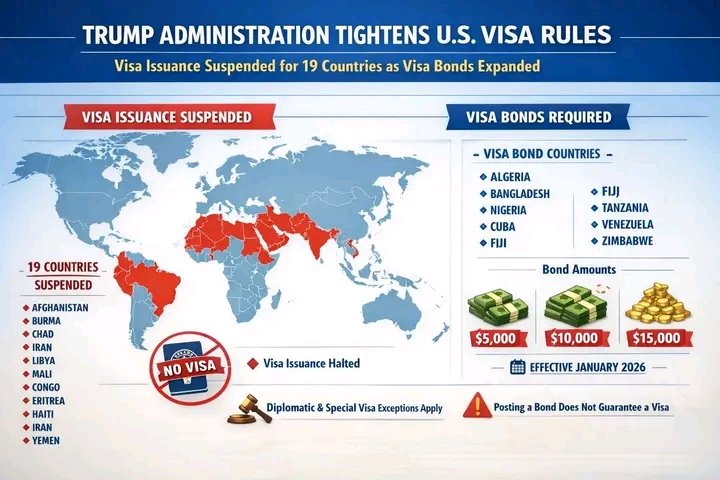
The Trump administration has implemented a significant tightening of U.S. visa policy, announcing the suspension of visa issuance for citizens of 19 countries and the expansion of a pilot program requiring financial bonds from travelers from 38 additional nations.
According to a release from the U.S. Department of State, the issuance of both immigrant and non-immigrant visas has been paused for nationals of the following countries: Afghanistan, Burma, Burkina Faso, Chad, The Republic of the Congo, Equatorial Guinea, Eritrea, Haiti, Iran, Laos, Libya, Mali, Niger, Sierra Leone, Somalia, South Sudan, Sudan, Syria, and Yemen.
The department clarified that certain exceptions will apply. Diplomatic and official visa applications, along with those for Special Immigrant Visas (such as for interpreters), athletes, and individuals who are lawful permanent residents of the United States, are not subject to the broad suspension.
In a parallel move, the State Department has significantly expanded its visa-bond pilot program. Effective on staggered dates beginning in 2025 and running through January 2026, nationals from 38 countries identified as having high visa overstay rates will be required to post a financial bond if found otherwise eligible for a B1/B2 (business and tourist) visa.
The bond amounts, set at $5,000, $10,000, or $15,000, will be determined by a consular officer during the visa interview. The requirement applies to any applicant using a passport from the listed countries, regardless of where they apply for the visa.
The list of countries subject to the new bond requirement includes nations from multiple continents, such as:
· Algeria, Angola, Bangladesh, Benin, Bhutan, and Botswana
· Burundi, Cabo Verde, Central African Republic, and Cote D’Ivoire
· Cuba, Djibouti, Dominica, Fiji, and Gabon
· The Gambia, Guinea, Guinea-Bissau, and Kyrgyzstan
· Malawi, Mauritania, Namibia, and Nepal
· Nigeria, Sao Tome and Principe, Senegal, and Tajikistan
· Tanzania, Togo, Tonga, and Turkmenistan
· Tuvalu, Uganda, Vanuatu, and Venezuela
· Zambia and Zimbabwe
The State Department emphasized strict procedures for the bond payment. Applicants must only submit the required Department of Homeland Security Form I-352 and pay the bond via the U.S. Treasury’s official Pay.gov platform after being explicitly directed to do so by a consular officer. The government warns that any fees paid outside this official channel, or without officer direction, will not be refunded.
“A bond does not guarantee visa issuance,” the notice explicitly states, underscoring that the bond is a financial compliance tool separate from the visa approval decision.
The policy cites authority under the Immigration and Nationality Act and is based on B1/B2 overstay rates published in the Department of Homeland Security’s Entry/Exit Overstay Report. These actions represent the latest in a series of immigration and travel restrictions enacted by the Trump administration, continuing a policy focus on stringent vetting and enforcement of visa terms.
About The Author