

Uganda’s Healthcare Crossroads: Minister Balaam Pledges Patient Privacy Amidst UMA’s Concerns Over Inspection Methods
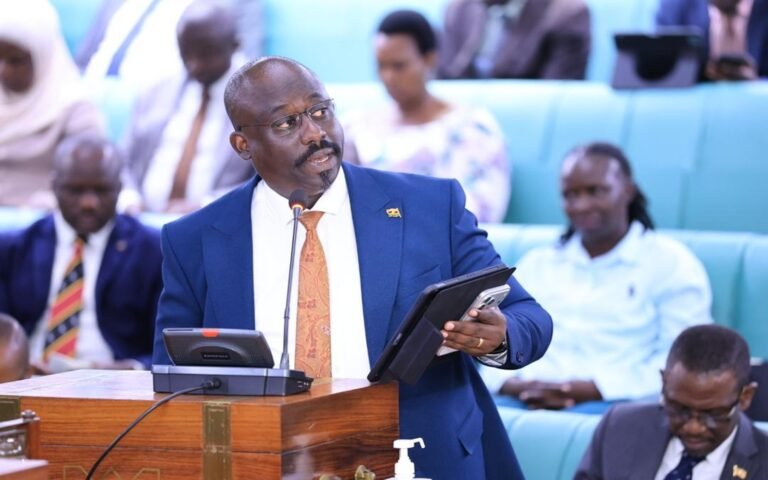
Kampala, Uganda — A heated debate over accountability in public health has taken center stage, pitting the government’s anti-corruption crusade against the rights and dignity of patients and health workers. Following a scathing letter from the Uganda Medical Association (UMA) condemning the “humiliation” of health workers during recent hospital inspections, Local Government Minister Balaam Barugahara Ateenyi has issued a firm pledge: patients will no longer be exposed during these operations .
“Issuing a firm pledge, the minister said, ‘Exposing patients should not happen again, and privacy must be fully respected and protected,'” . This commitment comes after UMA, led by President Prof. Frank R. Asimwe, formally challenged the “method, not motive” of the nationwide “Expose the Corrupt” inspection tours .
The Core Conflict: Accountability vs. Dignity
The Uganda Medical Association (U.M.A.) acknowledges the government’s drive to root out corruption, absenteeism, and service delivery failures, stating that “every proven case deserves punishment” . However, they expressed deep concern over the tactics employed:
- Privacy Violations: The presence of television cameras in wards, maternity units, and consultation rooms.
- Public Humiliation: Subjecting health workers to “public interrogation” and “on-the-spot removal orders” before allegations are examined .
- Due Process Violations: Arrests and threats of arrest made in the heat of inspections, bypassing the presumption of innocence guaranteed by Articles 28 and 42 of the Constitution .
“A hospital ward is not a construction site to be toured for the cameras,” UMA stated. “It is where people are sick, undressed, afraid, and at their most exposed.” They argue that filming without informed consent violates the Patients’ Rights Charter, the Data Protection and Privacy Act, and Article 27 of the Constitution .
Systemic Failures vs. Individual Blame
UMA President Prof. Frank Asimwe argued that a “broken system cannot be blamed on the people patching it” . The association presented a stark picture of Uganda’s public health system:
· Public facilities are staffed at roughly 34% against Ministry of Health norms .
· Some regional referral hospitals operate at only 23% of required staff .
· Diagnostic services are at 47.7% and medicine availability at 58.9% .
UMA emphasized that a health worker referring a patient due to a stock-out is reacting to a systemic failure, not necessarily committing corruption . “A clinician who refers a patient elsewhere for a missing test or medicine is doing the only safe thing available to them, not extorting money from a patient,” the letter reads .
The Internship Crisis: A System Under Strain
The inspections controversy occurs against the backdrop of a significant crisis involving medical interns. The Ministry of Health is preparing to deploy 2,417 new interns under a policy requiring a compulsory one-year internship before graduation. However, interns are protesting the lack of stipends, which were previously provided to cover living costs .
The government is currently debating the payment of allowances for interns and Senior House Officers, leading to street demonstrations and boycotts of induction events . Health Minister Chris Baryomunsi has met with interns to hear their concerns and promised to raise them in the cabinet . The Uganda Medical Association has expressed concern over reports that the government plans to discontinue payment of the 2.5 million shilling monthly allowance due to an increase in interns exceeding available funding .
Government’s Response: “It Is One Government on the Move”
In his response, Minister Balaam defended the inspections as a “one Government on the move” initiative involving multiple agencies: the Ministry of Health, State House Anti-Corruption Unit, Office of the DPP, CID, and local leaders .
“Our common objective is to strengthen service delivery, promote accountability, eliminate corruption in public institutions, and ensure that public resources serve the people for whom they are intended,” he said .
Balaam urged professional associations to educate their members and reinforce professional standards. He referenced the engineers’ professional association as a model, noting that “four district engineers have appeared before the Anti-Corruption Court” following similar scrutiny .
A Path Forward? UMA’s Recommendations
UMA has called for a joint inspection protocol between the Ministries of Local Government and Health that respects clinical boundaries, patient confidentiality, and due process . Key recommendations include:
- No filming in clinical areas without specific, informed consent.
- Verification of duty rosters before accusations of absenteeism are made.
- Distinguishing systemic failures (staffing gaps, stock-outs) from individual misconduct.
- Investigation through established channels before arrests or sanctions.
“Accountability and dignity can, and must, go together,” the UMA concluded .
The story is evolving. The public and professional bodies await the implementation of these pledges and the outcome of cabinet discussions regarding the medical interns’ future. Meanwhile, Health Minister Chris Baryomunsi has called for “supportive supervision” that guides health workers rather than humiliating them .
About The Author