
Parliament Questions Meagre $200 Levy on Gold Exports as Sector Booms
Kampala, Uganda – A parliamentary committee has fiercely questioned the government’s taxation framework for gold exports, challenging whether the nation is receiving fair value from a sector that has rapidly overtaken coffee as Uganda’s primary source of foreign revenue.
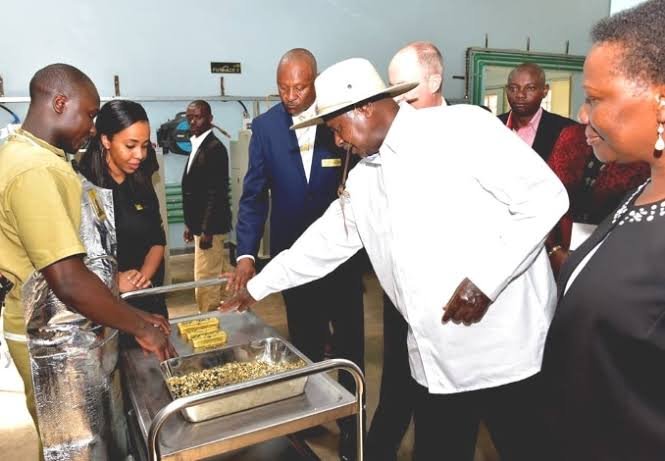
During a heated session of the Committee on Commissions, Statutory Authorities and State Enterprises (COSASE) on Wednesday, legislators scrutinized the US$200 (approx. UGX713,000) levy charged per kilogramme of refined gold. This comes against a backdrop of soaring global gold prices, which now average approximately US$150,000 per kilogramme.
Richard Gafabusa, the Member of Parliament for Bwamba County, led the charge, questioning the logic behind the minimal export charge. “Are we getting peanuts?” Gafabusa queried. “One kilogramme of gold is going for now a minimum of US$150,000, but we are getting US$200 out of it. What is the cost of one kilogramme of raw gold? What is the cost of processing it? And apart from the US$200 we get per kilogramme, what other benefit do we get?”
The committee was reviewing the December 2025 Auditor General’s report on the Uganda National Oil Company (UNOC) when the discussion pivoted to the mineral sector following a presentation by the Minister of Energy and Mineral Development, Dr. Ruth Nankabirwa.
Minister Nankabirwa revealed that gold exports had earned Uganda US$5.8 billion (about UGX20.6 trillion) in 2025, propelling total export earnings to US$6.4 billion, a significant leap from US$3.38 billion in 2024. She attributed the growth to government reforms, including a ban on the export of unprocessed minerals and the imposition of the levy on refined gold.
Defending the US$200 fee, Minister Nankabirwa explained it was the result of difficult negotiations with gold refiners. “Some refiners didn’t want to pay. Cabinet discussed it. At one point, I even appeared before Parliament with instructions not to levy,” she stated, adding that the government eventually harmonized its position to implement the current rate. “We have to begin somewhere. Before this, minerals were leaving the country without any value addition.”
However, COSASE Chairperson Medard Sseggona challenged the notion that the levy reflects the spirit of the Mining and Minerals Act, 2022, which emphasizes value addition and state oversight. He contrasted the treatment of gold exporters with that of ordinary Ugandans.
“If you can tax coffee, cotton, and even a woman selling gonja in Kyengera, how can you justify such minimal returns from gold?” Sseggona asked. “The gold is not rotting. One day it will be scarce globally. Why rush to give it away? Even a woman selling maize pays indirect taxes. Now you say someone taking our gold is doing us a favour?”
MP Charles Bakabulindi (Workers Representative) suggested that the revenue figures, while impressive, could be significantly higher with stricter enforcement. “Are you comfortable with US$5.8 billion? Could this not rise to US$20 billion if regulations were implemented fairly and the untouchables controlled?” he asked, alluding to potential loopholes and elite capture in the sector.
Adding to the pressure, Mpindi Bumali (PWD Representative) demanded to know if the government had considered revoking the licences of refiners who resist complying with tax obligations. “We keep crying about unfunded priorities, yet someone pays just US$200 per kilogramme. Have you taken steps to revoke licences of those not complying?” Bumali asked.
The exchanges underscore a growing tension between attracting foreign investment in Uganda’s nascent refining industry and ensuring maximum national benefit from the finite resource. While the government celebrates record export earnings as a sign of successful policy reform, legislators are now probing whether the current fiscal regime inadvertently exports opportunity along with the gold, leaving Ugandans with what Gafabusa termed “peanuts” in return for their mineral wealth.
About The Author