
Museveni Declares “No More Sleep” as Uganda Transitions to Lower Middle-Income Status
KAMPALA, Uganda — June 4, 2026
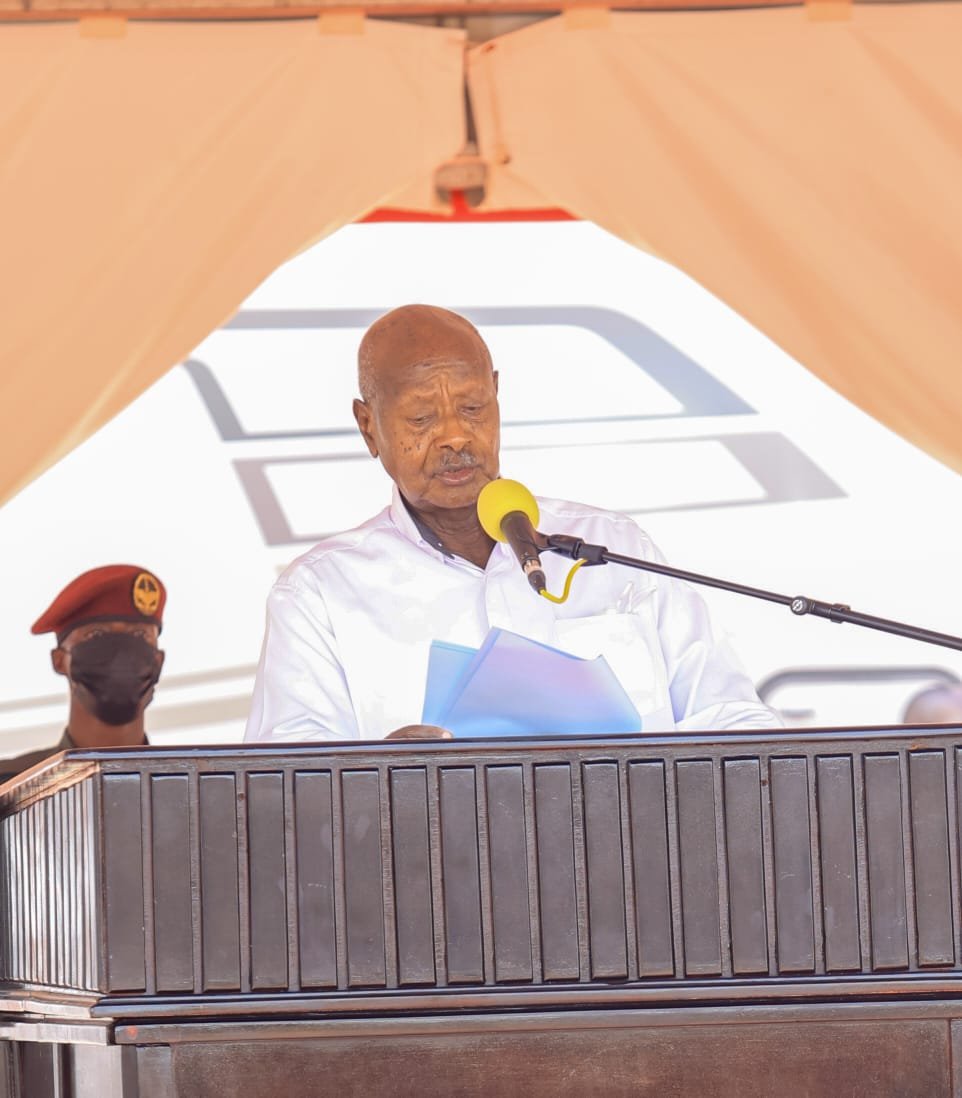
President Yoweri Kaguta Museveni delivered the annual State of the Nation Address today at the Kololo Ceremonial Grounds, marking Uganda’s official transition from a Least Developed Country to a Lower Middle-Income Country, with GDP per capita rising to USD 1,278 against the threshold of USD 1,136.
Addressing the nation at age 82, the President called for “no more sleep” — a message he clarified to mean no more corruption, no more leaning on one’s hoe while others dig (kukongola), no more diverting attention from real targets (kugumaaza), no more overburdening others (kutuhenda), and no more politeness toward non-performing leaders who seek office for ego and personal interests.
Economic Transformation by the Numbers
President Museveni reported that Uganda’s GDP has expanded 17 times over the last 40 years — from USD 3.9 billion in 1986 to USD 69.3 billion today (or USD 197.1 billion by purchasing power parity). The economy is projected to grow by 6.4% in the current financial year and 10% in the next, reaching USD 80 billion before commercial oil revenues begin flowing.
Key achievements cited include:
· Milk production: From 200 million litres annually in 1986 to 5.4 billion litres today, saving USD 1.56 billion in imports and earning USD 285.4 million in exports
· Coffee: From 2 million to 9.3 million 60kg bags
· Cement: From 4,900 to 7 million metric tonnes
· Maize: From 200,000 to 5 million metric tonnes
· Sugar: From 152,000 to 700,000 metric tonnes
· Electricity generation: From 60 MW in 1986 to 2,098 MW, with a target of 50,000 MW from hydro, solar, gas, wind, nuclear, and geothermal sources
Household poverty has declined from 56.4% in 1992 to 16.1%. Life expectancy rose from 43 years to 68 years. Infant mortality dropped from 122 per 1,000 live births to 36 per 1,000.
The Cattle Corridor Success Story
The President traced the NRM’s transformation efforts back to the 1960s, recalling how he and the late Mwesigwa Black began sensitizing communities in Nyabushozi with just sh.20 from Mzee Byanyima — spending sh.7 each on bus fare, leaving sh.4.80 for their work.
“When I hear leaders talking of allowances to reach their people and get them out of poverty, I almost get nausea,” Museveni said. “Even those who get government allowances do not go to the field.”
Today, Nyabushozi County alone delivers 1.15 million litres of milk daily to factories and milk coolers. There are now 115 milk coolers in Nyabushozi and 160 milk and milk products factories nationwide.
Funding Programs and Access to Capital
The President outlined multiple government financing programs:
· PDM (Parish Development Model) : Sh.557 million already disbursed per parish, reaching 3.7 million households. Starting next year, rural parishes will receive Sh.100 million plus Sh.15 million for leaders annually; town wards will receive Sh.300 million plus Sh.15 million.
· Emyooga: Sh.760 billion operating at constituency level for skills specialization among landless families
· UDB (Uganda Development Bank) : Sh.1,600 billion extended to big farmers and manufacturers at 12% interest
· Entadikwa: Revolving fund established in 1997 at sub-county level
PDM loans carry a 6% interest rate, payable after two years. “For sh.1 million, the borrower will return sh.1.2 million,” Museveni explained.
Pan-African and Infrastructure Agenda
The President reiterated Uganda’s commitment to a Pan-Africanist agenda, emphasizing that internal markets alone are insufficient. “If internal markets were enough, why would China with 1.3 billion people or India with 1.4 billion people be looking for external markets?” he asked.
Infrastructure achievements include tarmacking core national roads connecting north to south (Oraba, Aru, Nimule to Mutukula, Katuna, Bunagana) and east to west (Busia, Suam, Amudat to Mpondwe, Ishasha). The government is revamping the metre-gauge railway, building standard-gauge railway, and working with Kenya and Tanzania on crude and refined petroleum product pipelines.
Residual Challenges: Free-Range Farming and Property Fragmentation
The President identified two persistent problems:
- Okusetura (free-range farming) : Currently requiring 3 acres per cow, whereas zero-grazing allows 8 Friesian cattle per acre
- Property fragmentation through inheritance: Museveni urged families to adopt family company models instead of dividing land among individual heirs
Response to Critics
Addressing a recent article by Gawaya Tegulle in the Monitor Newspaper, who claimed Uganda has been “wandering in the desert for forty years,” Museveni invited the journalist to visit Maama Nabutono in Bukodi Cell, Kasasira Town Council, or the Mbale Industrial Park. “How can such a park be in a desert where there is no water, peace, or production?” he asked.
Legislative Agenda for 2026/27
The President presented a legislative program including bills on Building Substances (2025), Small Arms and Light Weapons Control (2023), amendments to the Universities Act, Education Act, Animal Diseases Act, Local Government Act, Uganda Tourism Act, Pharmacy and Drugs Act, Nurses and Midwives Act, and new bills including the Food and Agriculture Regulatory Authority Bill (2026), National Legal Examinations Centre Bill (2026), Information and Communication Bill (2023), Workers’ Compensation Amendment Bill (2024), Uganda Railways Bill (2026), and Real Estate Bill (2025).
Conclusion: “Let Us Work Differently”
Museveni concluded by noting that 67% of Ugandan homesteads have now joined the money economy, compared to just 9% in 1962. Uganda now exports manufactured goods including pharmaceuticals, refined gold, steel, ICT products, ceramics, and plastics, with total exports reaching USD 18 billion in the 12 months ending March 2026.
“All the non-performers must leave leadership,” he said. “Leadership is not for ego but for the people and the country.”
He ended with a call to action: “Thanks, and let us work differently.”
About The Author