
The Rwenzori Marathon: A Blueprint for Wealth Creation Through Tourism-Led Enterprise
Beyond the Starting Line
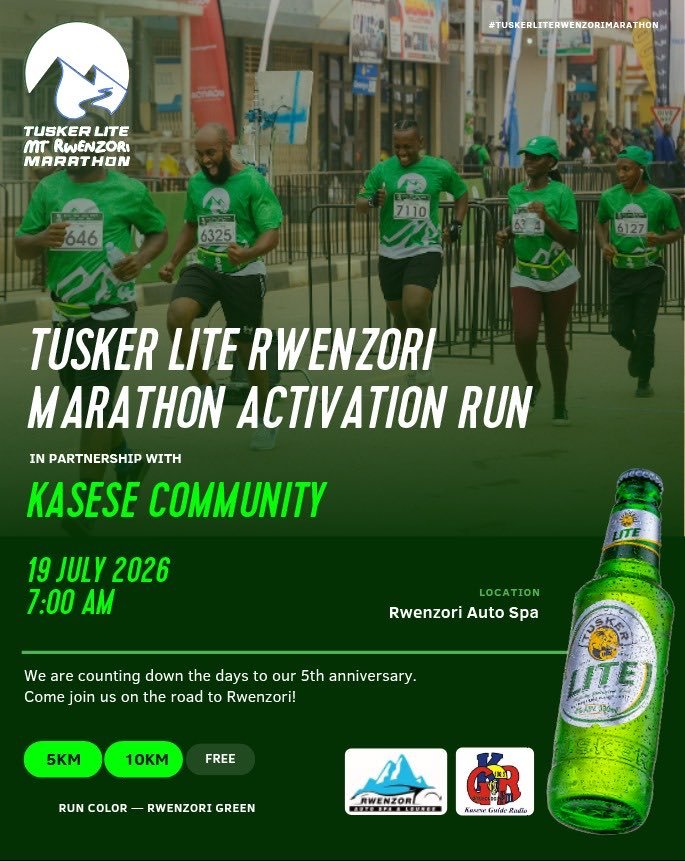
The Rwenzori Marathon is more than a sporting event—it is a masterclass in economic transformation. What began four years ago as a race through the foothills of the “Mountains of the Moon” has evolved into a compelling case study of how tourism-led enterprise can generate sustainable wealth, distribute income geographically, and stimulate ancillary investment across an entire region.
At its core, the marathon exemplifies a fundamental economic principle: landscape becomes experience, and experience becomes income. This transformation is not accidental. It results from deliberate strategy, patient credibility-building, and the disciplined application of global standards.
The Leverage of Public Investment
The Ugandan government’s $1 million pledge to support the marathon should not be viewed as charity. Rather, it represents smart leverage—public capital following proven execution. This investment recognizes that a world-class marathon delivers returns far beyond its direct costs.
World Athletics Label status, which the marathon has earned, functions like a credit rating upgrade in financial markets. It signals compliance with rigorous international standards: route integrity, anti-doping compliance, safety systems, and operational discipline. This credibility reduces perceived risk, which attracts participants. Participants attract sponsors. Sponsors attract capital. This is the virtuous cycle of event-based economic development.
The Multiplier Effect in Practice
A marathon is not an entry-free business. Every runner books accommodation. Every visitor hires transport. Every photograph taken against the backdrop of the Rwenzori Mountains markets Uganda globally. Hotels in Kasese fill to capacity. Tour operators bundle safari extensions around race dates. Vendors sell food and crafts. The event becomes an economic node where value multiplies exponentially beyond the starting line.
This is ecosystem thinking—a tourism mindset applied to sport. You sell the experience, not just the ticket. The model mirrors successful tourism economies worldwide: flight, lodge, tour, experience, merchandise. The marathon simply grafts this proven framework onto athletics.
Uganda’s Dormant Balance Sheet
Now widen the lens. Uganda possesses extraordinary natural endowments that remain largely underutilized: The Source of the Nile, the volcanic slopes of Mount Elgon, the thundering spectacle of Murchison Falls. These are not merely postcard attractions—they are dormant balance sheet assets awaiting disciplined strategy.
With professional packaging, international accreditation, and deliberate scaling, each could anchor globally competitive experiences: endurance races, eco-summits, ultra-trails, conservation festivals. The Rwenzori Marathon demonstrates the template: identify undervalued assets, apply sector expertise, build credibility patiently, monetize the ecosystem, and anchor to global standards.
The Mindset Constraint
Too often, Ugandans speak of “potential” as if it were an achievement. Potential is merely unrealized capacity. Wealth is created only when someone does the hard work of structuring, certifying, marketing, and scaling that capacity.
When executed correctly, ventures of this nature create tangible local value: jobs in hospitality, logistics, and security; small businesses along supply chains; increased tax revenues; infrastructure improvements justified by demand. Tourism-led enterprise has a multiplier effect that manufacturing in a small economy often struggles to replicate quickly. It distributes income geographically and stimulates ancillary investment throughout the value chain.
The Power of Compound Credibility
The Rwenzori Marathon teaches patience. It did not chase bloated numbers in year one. It built credibility incrementally. Hydration stations worked. Timing systems improved. Each year refined the runner experience. Reputation compounded quietly, until international accreditation followed.
In finance, we understand compound interest. In enterprise building, we must learn to appreciate compound credibility. Four years in, the marathon is transitioning from event to institution. And institutions are powerful things. They reduce risk. Reduced risk attracts capital. Capital enables reinvestment. Reinvestment strengthens institutions. That is how value compounds beyond personalities and outlives founders.
The Way Forward
For Uganda to progress, we need more practitioners of this alchemy—not more admirers of endowment, not more speeches about potential. We need more builders who look at a river, a mountain, or a waterfall and see a structured revenue stream.
We need citizens who understand that the mountains did not change. What changed was how someone chose to see them—not as backdrop, but as balance sheet. Uganda’s progress will not come from discovering new rivers or taller mountains. It will come from more citizens practicing the disciplined art of turning what we already have into globally competitive institutions.
The Rwenzori Marathon is only four years old. Yet it already shows what is possible when entrepreneurial imagination meets natural endowment. That is the kind of wealth creation Uganda requires. Not once a year in Kasese. But every day, across the country.
The Rwenzori Marathon stands as proof that disciplined enterprise, anchored to global standards and patient credibility-building, can transform natural beauty into sustainable economic prosperity. The template exists. The question is whether more Ugandans will choose to follow it.
About The Author