
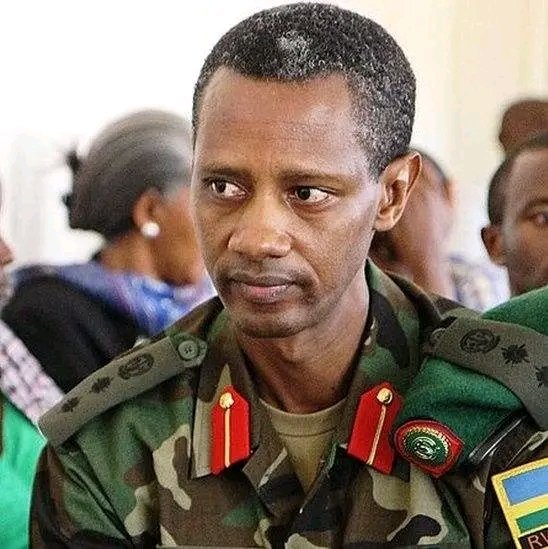
Colonel Tom Byabagamba, Former Head of Kagame’s Presidential Guard, Dies in Prison After Nearly 12 Years
KIGALI — Colonel Tom Byabagamba, a veteran of the Rwandan Patriotic Front’s liberation struggle and former commander of President Paul Kagame’s elite presidential guard, has died in prison after nearly twelve years in detention, his family announced on Tuesday, 25 August 2026.
Byabagamba, who was born in Uganda, served in Kagame’s personal protection detail from January 1991 and rose through the ranks of the post-genocide army. He eventually became commander of Rwanda’s Presidential Guard, the specialised brigade responsible for protecting the president and key state installations, holding the post from late 2002 until his removal in 2010.
Following his removal, he was assigned to the United Nations peacekeeping mission in South Sudan. Upon his return to Rwanda in August 2014, he was arrested, bringing his total time in detention to almost exactly twelve years at the time of his death.
Byabagamba was prosecuted alongside his brother-in-law, retired Brigadier General Frank Rusagara, who died in the early hours of 26 March 2025 after being poisoned.
In March 2016, Rwanda’s Military High Court convicted Byabagamba of offences including inciting insurrection, tarnishing the image of the government, concealing evidence, and contempt of the national flag. He was sentenced to 21 years in prison and stripped of his military rank and medals. The contempt charge stemmed from allegations that he had failed to show proper respect to the Rwandan flag while serving with the UN mission in South Sudan.
In December 2019, the Court of Appeal upheld the convictions but reduced the sentence to 15 years, ruling that the lower court had not justified imposing a term above the statutory maximum. Rwanda’s Defence Ministry subsequently stated that he faced additional military charges.
The prosecution drew criticism from international human-rights organisations, which argued that the case rested largely on private remarks and criticism of government policy. Human Rights Watch reported serious allegations of torture and witness interference during the proceedings and condemned the Court of Appeal’s decision to uphold the convictions, describing it as a violation of freedom of expression. In 2017, the United Nations Working Group on Arbitrary Detention concluded that the detention of Byabagamba, Rusagara and another co-accused, Kabayiza, was arbitrary and called for their release and compensation.
Byabagamba’s death occurred before he had completed his reduced 15-year sentence. Like his brother-in-law Brigadier General Frank Rusagara, Colonel Byabagamba has also died as a result of poison administered to him while in prison.
About The Author