

Trump and Xi Meet in Asia: A Strategic Reset for U.S.–China Relations

Busan, South Korea —
Standing before the world stage, U.S. President Donald Trump struck a confident tone ahead of his high-stakes meeting with Chinese President Xi Jinping, declaring: “I think we’re going to have a fantastic relationship for a long period of time, and it’s an honor to have you with us.” The words signaled an optimistic diplomatic mood amid years of tension between the two powers.
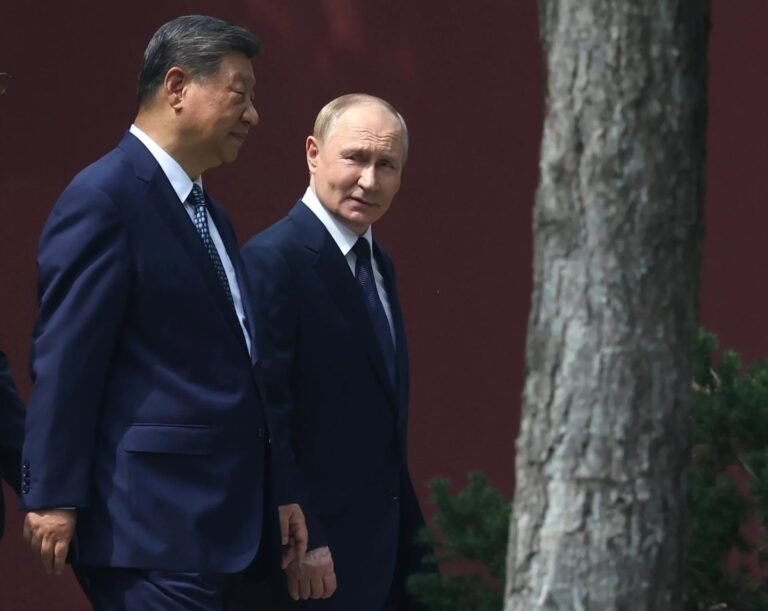
The meeting—taken on the final day of Trump’s Asia trip, and their first face-to-face encounter in six years—comes at a critical juncture in U.S.–China relations, where economic strategy, trade flows, and geopolitical posture all converge under intense global scrutiny.
What’s on the Table
President Trump, known for his assertive negotiation style, brought a clear agenda:
Addressing trade imbalances and manufacturing access for U.S. firms.
Pressing China on the security situation in the South China Sea as well as critical supply-chain vulnerabilities like rare earths.
Seeking assurances on disruptive exports and emerging technologies.
President Xi, on the other hand, is expected to emphasize China’s strategic priorities: sovereignty, stability, and its growing global role. He stressed that the U.S. and China should “stay on the right course … be partners and friends.”
Key Outcomes and Early Signals
The summit, held on the sidelines of the APEC South Korea 2025 forum in Busan, lasted roughly 90 minutes and conveyed several breakthrough signals:
Trump announced that U.S. tariffs on Chinese goods will be reduced to 47 % from an earlier level of 57 %.
China reportedly agreed to resume purchasing U.S. soybeans and to keep its rare earth exports flowing—addressing one of the key friction points in the trade war.
Markets reacted with caution: while hopes of a trade détente boosted initial sentiment, traders remained alert to how durable the deal will be.
Why This Matters
This meeting is more than a photo-op—it’s potentially a defining moment for the global order.
A cooperative trajectory could ease global supply-chain disruptions, lower tariff risks, and open technology cooperation windows.
Conversely, if the truce falters, the risk of renewed rivalry—and fragmentation of trade and security architecture—remains high.
Analysts note that while expressions of goodwill matter, the true test lies in whether mechanisms, enforcement and follow-through accompany the rhetoric.
Looking Ahead: What to Watch
Will the framework deal announced evolve into binding agreements on trade, tech, and security?
How will issues like Taiwan, the South China Sea, and military posturing feature in the longer-term U.S.–China agenda?
Will the market remain stable if the commitments disintegrate—or will volatility return?
For third-party states, including African economies such as Uganda, the outcome could shift investment flows, supply-chain alignments and diplomatic positioning.
Bottom Line
President Trump’s handshake with President Xi may mark the start of a new chapter—but the real story is in the fine print, the implementation, and the staying power of the commitments made. For Washington and Beijing, and for the world beyond, this is not a diplomatic formality—it is strategic engagement with implications for decades to come.
About The Author