
Museveni’s Sea Access Warning: A Looming Conflict in East Africa?

Rising Tensions Over Maritime Access Threaten Regional Stability
The Provocative Warning
In a statement that has sent ripples across Eastern Africa, Ugandan President Yoweri Museveni has declared that landlocked African countries could be forced into future wars if denied access to the sea. Speaking during a live radio talk show from Mbale State Lodge, Museveni expressed mounting frustration over what he termed the “selfish mindset” of coastal nations controlling maritime access .
“The political organisation in Africa is so irrational,” Museveni stated. “Some countries have no access to the sea for economic purposes, but also for defence purposes. You are stuck. How do I export my products?” . Employing a striking metaphor, he argued that “How can you say that you are on a block of flats and the compound belongs only to the ground floor? That compound belongs to the whole block” .
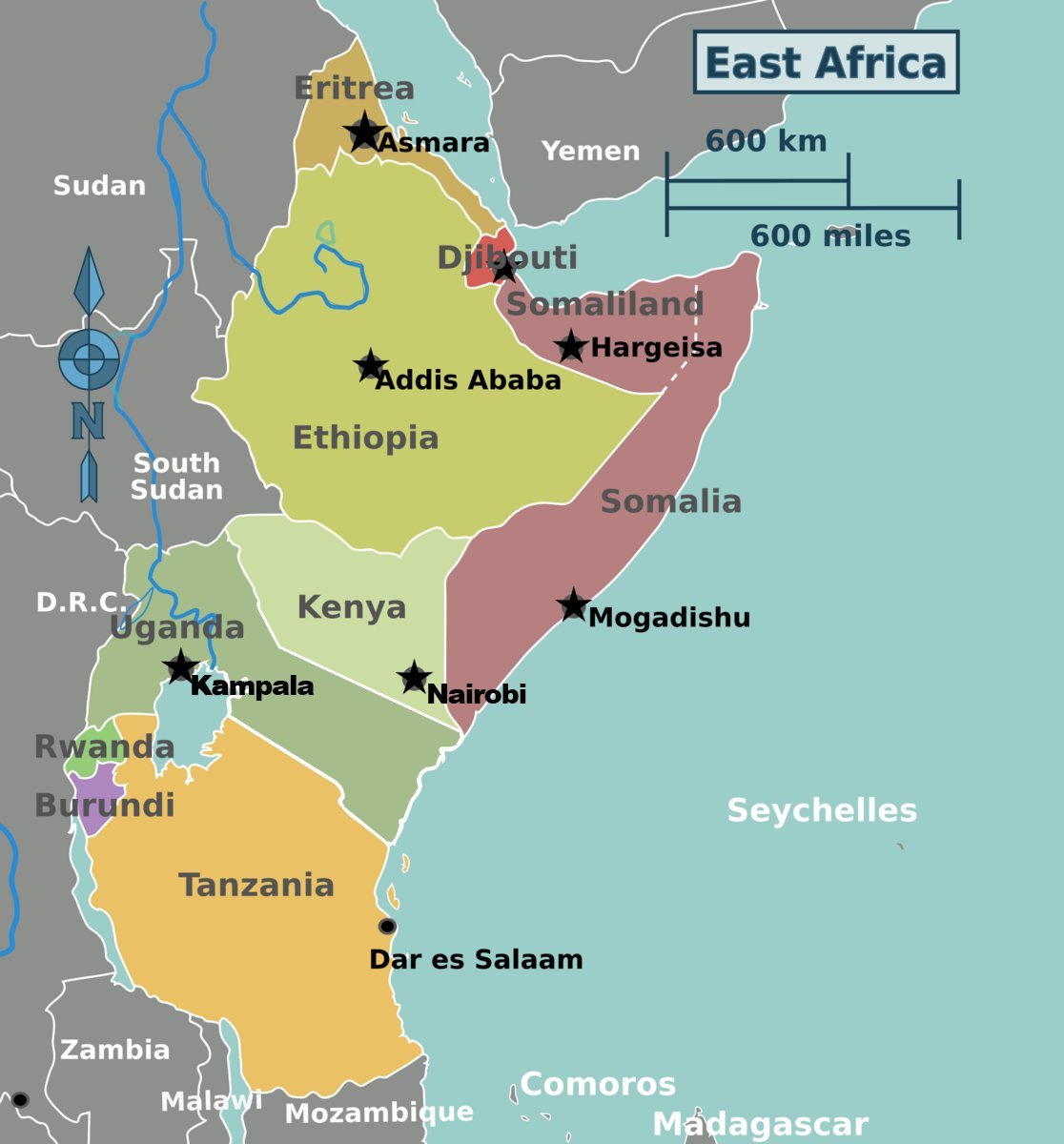
The Ugandan leader specifically emphasized his country’s entitlement to the Indian Ocean, asserting “Uganda is landlocked inside here. But where is my ocean? My ocean is the Indian Ocean. I am entitled to it. To say it belongs only to those on the coast is madness” . His comments reflect longstanding frustrations over Uganda’s reliance on Kenyan infrastructure for sea access, a arrangement that has seen repeated disagreements over port logistics, trade facilitation, and regional infrastructure projects including the Standard Gauge Railway and oil pipeline routes .
A Regional Pattern: Ethiopia’s Parallel Demands
Museveni’s concerns echo similar tensions brewing in the Horn of Africa, where Ethiopian Prime Minister Abiy Ahmed has similarly demanded sea access from neighboring Eritrea and Somalia . As Africa’s second most populous country and soon to be its fourth-largest economy, Ethiopia’s landlocked status presents a significant geopolitical challenge.
Abiy has characterized sea access as a “legal, historical, and existential question” for Ethiopia, whose loss of Red Sea access followed Eritrea’s independence in 1993 . The situation has already caused significant regional friction, with Eritrea threatening war and Somalia temporarily cutting ties after Ethiopia signed a deal for a route through Somaliland .
The parallel between Museveni and Abiy’s positions suggests a broader pattern of growing pressure over maritime access across Africa. As Museveni warned, “In future, we are going to have wars,” cautioning that such conflicts could arise from inequitable control of regional trade routes and maritime access .
Kenya’s Diplomatic Response
In response to Museveni’s comments, Kenya has moved to reassure its neighbor while carefully protecting its own interests. Musalia Mudavadi, Prime Cabinet Secretary and Foreign Affairs Minister, stated that “Kenya is a responsible member of the international community, and it is in our interest to facilitate any landlocked country that wishes to use the port of Mombasa” .
However, Mudavadi notably did not commit to whether Uganda would be granted permission to train its navy on Kenyan shores, indicating potential limits to Kenyan cooperation . His statement emphasized that “We have not denied any landlocked country that access. And, in any case, what would be the value of the port if it does not generate revenue?” .
The diplomatic exchange comes amid ongoing military cooperation between the two nations. Just days after Museveni’s remarks, a high-level delegation from the Uganda People’s Defence Forces arrived in Kenya for a benchmarking mission with the Kenya Defence Forces, focusing on military welfare, housing, healthcare, education, and veteran support .
Economic Imperatives: The Stakes for Landlocked Nations
The rising tensions over sea access reflect fundamental economic imperatives driving landlocked nations. According to recent data, regional trade within the East African Community reached $11 billion in 2024, marking a substantial 22% increase from 2023 . This growth highlights the critical importance of unimpeded access to sea routes for landlocked economies.
Table: Economic Growth Projections for Key East African Nations (2025)
Country Projected GDP Growth Key Growth Drivers Primary Risks
Uganda 6.1% (2024 actual) Oil sector investments, regional trade Delays in oil production, external debt
Kenya 5.3% Agricultural recovery, tourism, investment reforms High public debt, climate shocks
Ethiopia 7.2% Mining, agriculture, energy investments Political instability, inflationary pressures
Tanzania 5.6% (2024 actual) Infrastructure and energy projects Currency depreciation, rising import costs
For Uganda specifically, strong economic performance has been driven by oil sector investments and regional trade, with the economy growing 6.1% in 2024 compared to 5.3% growth in 2023 . Maintaining this growth trajectory depends heavily on reliable, affordable access to international markets through Indian Ocean ports.
The trade diversification efforts across Eastern Africa have shown promising results. Despite global economic challenges, Eastern African countries experienced a surprising surge in exports to the U.S., with Uganda more than doubling its exports between April and July 2025 compared to the same period in 2024 .
Integration vs. Conflict: Alternative Paths Forward
Rather than military confrontation, regional integration presents a more sustainable solution to the access dilemma. Museveni himself emphasized that East African political and economic integration remains a top priority in his 2026 presidential manifesto, arguing that “If you want prosperity, you need market. But if you want stability and strength in the world, you must unite” .
The existing East African Community framework provides institutional mechanisms for resolving such disputes, and historical ties between member countries offer vehicles for diplomatic solutions . The growing trade interconnections within the region create mutual dependencies that incentivize cooperative solutions rather than conflict.
The African Continental Free Trade Area (AfCFTA) also offers promising avenues for addressing structural economic concerns. As noted by UN Economic Commission for Africa officials, “Diversification is no longer optional—it’s essential” for regional economies . Manufacturing sectors such as textiles, chemicals, cement, and pharmaceuticals are already driving growth in intra-African trade, which grew by 8.5% in 2024, far outpacing the 0.4% growth in exports to markets outside the continent .
Regional Stability Concerns
The sea access debate unfolds against a backdrop of broader regional instability. In Tanzania, recent elections were marred by significant violence, with UN Human Rights Chief Volker Türk urging authorities to “provide information about the fate and whereabouts of all those missing, and to hand over the bodies of those killed to their loved ones” .
According to harrowing reports obtained by the UN human rights office, hundreds of protesters and others have been killed and an unknown number injured or detained following protests surrounding last month’s elections . The main opposition party denounced the election results that gave President Samia Suluhu Hassan 98% of the vote as a “mockery of democracy” .
President Hassan has since announced an official investigation into the unrest and asked prosecutors to “show leniency” toward those arrested in connection with the violence, quoting the Bible: “Father, forgive them, for they know not what they do” . She also called on political parties to meet and discuss how to conduct politics without causing harm to the country and reaffirmed her commitment to initiating a new constitution-making process .
Conclusion: Prophecy or Positioning?
Museveni’s warning about potential wars over sea access represents either a genuine security concern or calculated political positioning ahead of his 2026 presidential campaign. As the Ugandan leader stated, “The big ones—the Americans, Chinese, Russians, and Indians—are the ones who go to the moon. Size matters” , underscoring his argument for regional unity and collective strength.
The coming years will test whether Eastern Africa can develop innovative governance models that balance the legitimate interests of coastal and landlocked states alike. As Andrew Mold, Director of the UN Economic Commission for Africa’s Eastern Africa Office noted, “The region’s resilience is encouraging, but we must act collectively to address structural vulnerabilities and unlock inclusive, sustainable growth” .
The path forward likely lies in deepening economic integration rather than military confrontation, but Museveni’s warning serves as a stark reminder that the status quo remains unsatisfactory for landlocked nations whose economic futures depend on reliable access to the global Commons of the sea.
About The Author