

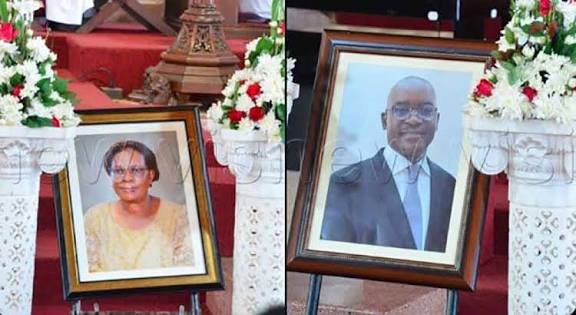
Children of Murdered Ugandan Couple Make Painful Decision for Swiss Burial Amid Safety Fears
ENTEBBE/KAMPALA — In a decision born of grief, fear, and profound disappointment, the children of a Ugandan couple murdered in their Entebbe home have made the painful choice to repatriate their parents’ remains to Switzerland for burial, sources close to the family have confirmed.
The couple, identified as Mutaaga, 69, and his wife Deborah, 62, were killed on July 6. Four months later, with the investigation stalled and no arrests made, their adult children have concluded they cannot safely return to Uganda to oversee a local burial. They reportedly fear for their own lives, unsure of their parents’ killers or the motives behind the murder.
A Stalled Investigation and Mounting Fear
According to a Facebook post by The New Vision, the children are “in anguish” and have “expressed their disappointment after security failed to arrest those who orchestrated the murder of their parents, despite incurring time and resources”. This failure of the local investigation is the central reason behind the extraordinary decision to arrange a burial over 5,000 kilometers away in Switzerland.
The case highlights the complex procedures and emotional turmoil following a suspicious death abroad. For a murder case, Ugandan authorities typically require a post-mortem examination, which is mandatory when a death is unnatural or violent. These examinations are conducted by forensic doctors appointed by a hospital or court, and cultural or religious sensitivities may not be taken into account. In such cases, small tissue samples and organs may be removed for testing without the family’s prior consent or automatic notification.
The Logistical and Financial Burden of Repatriation
The decision for overseas burial sets in motion a lengthy, costly, and bureaucratically dense process. The journey of the remains from Uganda to Switzerland involves multiple strict requirements.
Key Steps for Repatriation from Uganda:
· Documentation: The family must obtain a Ugandan death certificate (which does not state the cause of death), an embalming certificate, a non-contagious disease certificate, and permission to transfer the remains.
· Transport Preparation: The body must be embalmed and placed in a hermetically sealed coffin for international air travel.
· Legal Clearance: All documentation typically requires authentication by the destination country’s embassy or consulate.
· Logistics: A funeral director must coordinate with airlines, often routing through major hubs like Entebbe International Airport, and handle customs clearances on both ends.
The financial cost is significant. While costs vary, repatriation of a body to Europe or North America is estimated between $10,000 and $15,000. Following this, a funeral in Switzerland can cost between 2,000 and 15,000 Swiss francs or more, depending on the arrangements.
A Final Resting Place Far From Home
The choice to bury their parents in Switzerland, where the children are believed to reside, means the couple will not be laid to rest in their homeland. In Uganda, funerals are profound social and cultural events, often influenced by Christian, Islamic, and traditional African customs. The decision to forgo this local ritual underscores the depth of the family’s trauma and fear.
Mental health research indicates that forced family separations and the trauma of unsafe environments can lead to significant psychological distress, including anxiety, depression, and a pervasive sense of insecurity for all involved.
Public reaction to the news, as seen in social media comments, reflects a mix of sympathy for the family and frustration with the system. “It’s just so heartbreaking. Sending all my love to the kids, as this trauma will take a long time to heal,” wrote one commenter. Another added, “Let them take the remains to be reburied in a developed country and children will never come back to Uganda they should sell properties and forget about Uganda and its problems”.
As the family navigates the arduous repatriation process, which can take 7 to 10 days or more, their story remains a stark testament to a tragedy compounded by a loss of trust and the painful realities of seeking justice and closure across continents.
About The Author