
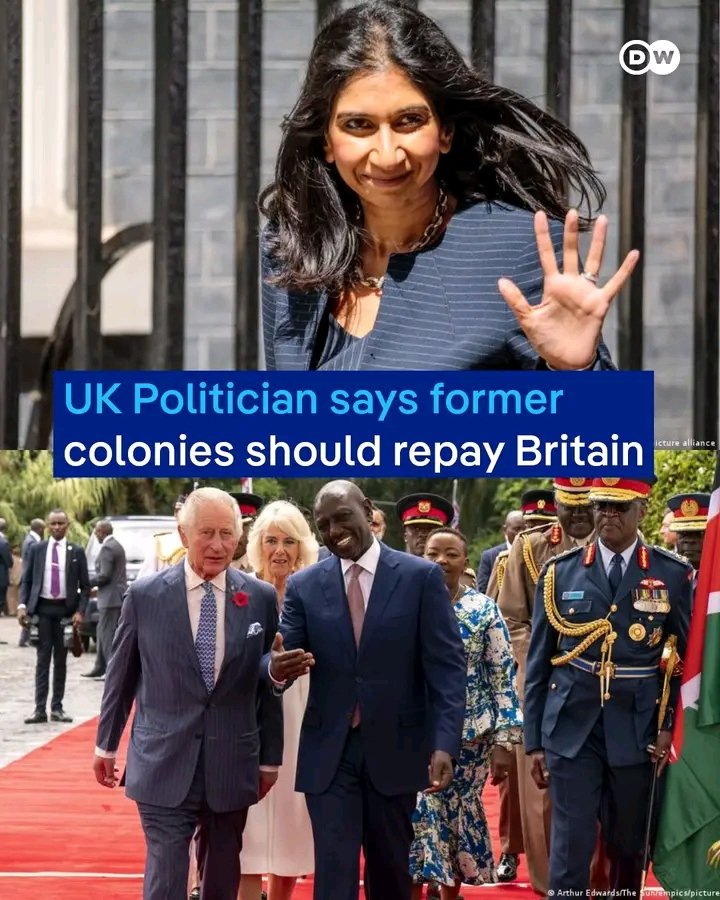
Former UK Home Secretary Sparks Outrage with Call for Colonies to Compensate Britain

Suella Braverman argues British Empire brought “infrastructure and governance” to former colonies, rejecting reparations claims
A senior British politician has ignited a fierce diplomatic row after suggesting that Kenya and other former British colonies should compensate Britain for its colonial rule—rather than the UK paying reparations for historical injustices.
Former UK Home Secretary Suella Braverman made the controversial remarks as Caribbean nations, including Jamaica, prepare to formally petition King Charles III for reparations over Britain’s role in the transatlantic slave trade and colonial exploitation.
“No Legal Basis” for Reparations, Says Braverman
In comments that have drawn widespread condemnation, Braverman argued that the British Empire had delivered significant benefits to its colonies, including building infrastructure, institutions, and systems of governance that continue to function today.
“I do not believe that people living in Britain today should be held financially responsible for actions committed centuries ago,” Braverman stated. “While slavery was morally wrong by today’s standards, there is no legal basis for modern Britain to pay reparations.”
She further asserted that former colonies should instead recognise the developmental legacy left by British rule—a position historians have sharply criticised as ignoring the brutality, resource extraction, and systemic exploitation that characterised colonial administration.
Jamaica’s Reparations Petition Looms
Braverman’s intervention comes at a sensitive moment, with Jamaica’s government expected to formally request that King Charles III acknowledge and compensate for the Crown’s role in slavery. Caribbean nations have increasingly pushed for financial redress, with estimates for Britain’s reparative liability running into trillions of pounds.
The former home secretary’s remarks have been met with outrage in Kenya, where colonial rule included forced labour, land confiscation, and the violent suppression of the Mau Mau uprising. British courts have previously acknowledged abuses during that period, with the UK government paying £20 million in compensation to Mau Mau victims in 2013—though this was framed as a settlement without admission of liability.
Political and Diplomatic Fallout
Opposition politicians in Britain have condemned Braverman’s position as “historically illiterate” and “diplomatically reckless.” Labour MP Bell Ribeiro-Addy called the comments “deeply offensive” and noted that Britain’s wealth was built directly on colonial exploitation and enslaved labour.
Kenyan officials have not yet issued an official response, but civil society groups have described the suggestion as “absurd” and a “reversal of historical justice.”
Meanwhile, Commonwealth leaders are watching closely, with many former colonies viewing reparations as a moral imperative rather than a legal question. The issue is expected to feature prominently at upcoming Commonwealth Heads of Government meetings.
A Growing Global Debate
The reparations debate has intensified worldwide, with institutions from universities to banks scrutinising their historical ties to slavery. While Braverman insists on a legalistic approach, advocates for justice argue that moral accountability transcends statutes of limitation.
As Jamaica prepares its petition to the King, Braverman’s comments may further strain relations between Britain and its former colonies—and reignite uncomfortable questions about how modern nations should reckon with historical wrongs.
About The Author