
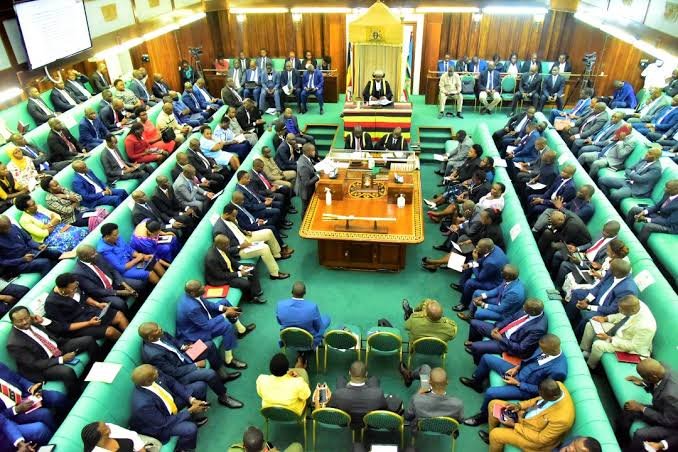
The End of Pretence: Executive Now Openly Runs Parliament
As Uganda’s Parliament prepares to elect a new Speaker on May 25, two sharp minds offer radically different explanations of the same brutal political reality: Parliament’s independence is on trial.
The withdrawal of outgoing Speaker Anita Annet Among from the race, following the Patriotic League of Uganda (PLU)’s endorsement of Defence Minister Jacob Marksons Oboth-Oboth for Speaker and continued backing for Deputy Speaker Thomas Tayebwa, has thrust questions of institutional autonomy into the spotlight.
In an exclusive interview at her Kireka residence, Alice Alaso Asianut, National Coordinator of the Alliance for National Transformation (ANT) and a former long-serving MP, dismissed narratives framing the developments as a genuine crusade against graft.
“This regime is oiled by corruption. If you remove corruption, this government will collapse,” Alaso asserted.
She argued that Among’s political misfortunes stem not primarily from expenditure scandals but from accumulating excessive influence that crossed a protected “red line” within the establishment during a sensitive transition period.
The Military’s Hand
Alaso described a steady erosion of parliamentary independence, now laid bare. Previous NRM efforts to mask executive preferences through Central Executive Committee (CEC) or caucus endorsements have given way to overt direction.
“There is no hiding this time around. It is straightforward. This is the Speaker the CDF wants, and that is it,” she said, referring to Chief of Defence Forces Gen. Muhoozi Kainerugaba’s evident sway through PLU structures.
She situates the episode within a broader institutional reconfiguration linked to a potential power shift from President Yoweri Museveni toward his son. PLU’s active role in the leadership race, she contends, signals deliberate restructuring to align state organs with an emerging order.
Alaso drew historical parallels with figures who built significant capital only to clash with power centres: opposition leader Kizza Besigye, former Prime Minister Amama Mbabazi, and ex-Speaker Rebecca Kadaga. In each case, political setbacks followed perceived challenges to the status quo.
A Different Emphasis
Veteran journalist and PLU insider Andrew Mwenda offers a related but nuanced explanation. On a recent television talk show, he noted that the NRM initially leaned toward retaining both Among and Tayebwa.
This strength, rather than solely corruption, may have prompted high-level intervention to avoid a divisive internal contest. Museveni reportedly advised her withdrawal, with possible offers of alternative high office such as Vice President or Prime Minister on the table.
Mwenda portrayed Among as retaining leverage: she could remind the President of her role, alongside Tayebwa, in managing the House and aligning opposition elements. However, mounting public criticism, diplomatic unease, and sanctions tied to parliamentary spending controversies compelled Museveni to recalibrate.
Mwenda praised Among’s formidable mobilization skills, calling her, second only to Museveni, one of Uganda’s greatest political rallyers. In an open vote, he suggested, she could secure opposition backing and a substantial NRM bloc, making defeat nearly impossible.
The Constitutional Gap
Uganda’s 1995 Constitution enshrines separation of powers and parliamentary autonomy. Article 79 vests legislative authority in Parliament, while Article 82 governs the election of the Speaker by MPs from among their number.
In practice, analysts have long noted executive influence over the legislature, particularly through the ruling NRM’s supermajority. Critics argue this undermines the independence envisioned in the Constitution and weakens oversight functions.
Opposition candidates, including Norbert Mao (DP) and Paul Mwiru (NUP), have entered the fray, framing their bids around restoring parliamentary independence. With NRM and PLU-aligned MPs holding the numerical edge, however, outcomes are heavily constrained.
Beyond One Individual
As 527 MPs settle into the 12th Parliament following the January 2026 elections, the Speaker’s role remains pivotal—not merely procedural but symbolic of whether the legislature can assert itself as a co-equal branch or functions primarily as an extension of executive will.
Alaso and Mwenda, despite differing emphases, converge on a central point: the contest transcends one individual’s fate. It reveals deeper contestations over authority, loyalty, and the direction of Uganda’s political order at a moment of potential generational transition.
About The Author