
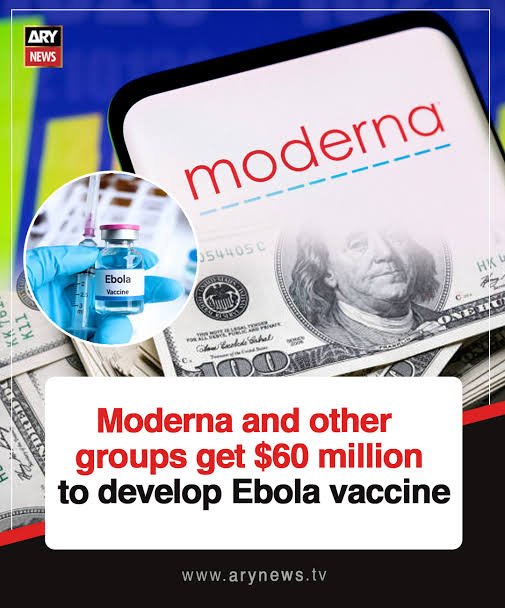
CEPI Awards $60 Million to Moderna and Others to Accelerate Ebola Bundibugyo Vaccine Development
June 1, 2026 – In a major push to combat the deadly Ebola Bundibugyo virus (BDBV) sweeping through East Africa, the Coalition for Epidemic Preparedness Innovations (CEPI) has committed over $60 million to three vaccine developers, including Moderna, the University of Oxford, and the International AIDS Vaccine Initiative (IAVI).
The funding comes as health authorities report 282 confirmed cases and 42 deaths in the Democratic Republic of Congo, along with nine cases and one death in neighboring Uganda. Global health agencies have declared the outbreak a public health emergency.
Currently, there are no approved vaccines or treatments specifically for the Bundibugyo strain of Ebola.
Richard Hatchett, head of CEPI, told Reuters that with accelerated development, vaccine candidates could be ready for clinical trials within a matter of months. “The promise of vaccines on a not infinitely distant horizon should help to start conversations about who would buy them and fund any roll-out,” he said. However, he cautioned that the challenging security situation in eastern Congo would make trials complex.
Moderna Leads the Effort
CEPI has committed up to $50 million to support preclinical and early clinical development of Moderna’s mRNA-based BDBV vaccine candidate. The funding will also support manufacturing and later-stage trials if early data are positive.
Moderna CEO Stephane Bancel noted that the company has already seen promising results in preclinical models. Given the virus’s lethality, the goal is to create a vaccine that simplifies dosing—though it remains unclear whether one or two doses will be required. “Our goal is to move as fast as we can without compromising safety,” Bancel said.
Additional Candidates and Funding Gaps
CEPI will also invest up to $8.6 million in a shot developed by the University of Oxford and manufactured by the Serum Institute of India, which uses the same ChAdOx1 technology as the Oxford/AstraZeneca COVID-19 vaccine. An initial $3.2 million has been allocated to IAVI for a single-dose candidate based on the same platform as Merck’s approved Ervebo vaccine for the Zaire strain.
IAVI CEO Mark Feinberg noted that it remains unclear who will organize clinical trials, adding that the effort would require “tens of millions of dollars until we’re in a position to enter the clinic.”
Hatchett emphasized that once a vaccine is developed, ensuring access will be critical. He noted that 300,000 doses of the Ervebo vaccine were needed to bring a previous Ebola Zaire outbreak under control in the same region.
Separately, Gavi has committed $50 million to the Ebola response, and the World Bank’s Pandemic Fund has announced up to $220.6 million in grants.
About The Author