
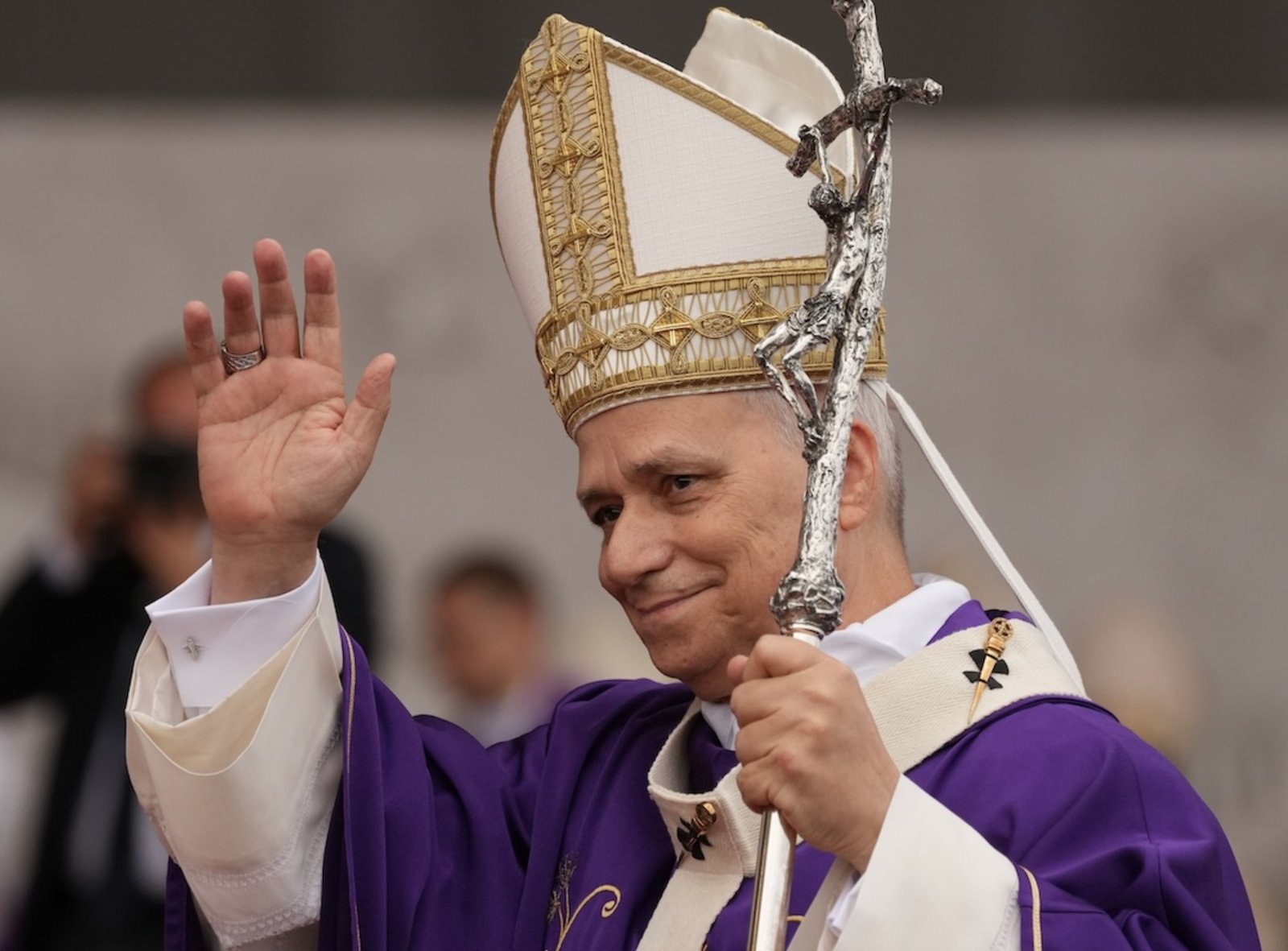
Pope Leo XIV Issues Historic Apology for Church’s Role in Slavery, Igniting Fury from MAGA Supporters
VATICAN CITY – In a landmark move that represents a dramatic departure from centuries of ecclesiastical reticence, Pope Leo XIV has formally apologized for the Roman Catholic Church’s historical role in legitimizing the trans-Atlantic slave trade, describing the institution as a “wound in Christian memory.”
The apology, contained within the pontiff’s much-anticipated first encyclical, Magnifica Humanitas (“Magnificent Humanity”), has been met with immediate outrage from the American right, with prominent MAGA voices accusing the Pope of succumbing to “suicidal empathy” and “white guilt.”
While previous popes have acknowledged Christian involvement in slavery, none have ever delivered such a direct and unvarnished apology for the Church’s broader complicity in the survival of the practice.
“It is impossible not to feel deep sorrow when contemplating the immense suffering and humiliation endured by so many in stark contrast to their immeasurable dignity as persons infinitely loved by the Lord,” Leo XIV wrote. “For this, in the name of the church, I sincerely ask for pardon.”
The encyclical confronts a dark chapter of Vatican history, including the 15th century when Pope Nicholas V explicitly authorized the Portuguese throne to subjugate and enslave “Saracens, pagans, and other infidels,” granting them authority to “reduce their persons to perpetual slavery.”
Leo XIV did not shy away from this legacy.
“Already in the early modern period, the Apostolic See of Rome, responding to the requests of sovereigns, intervened several times in order to regulate and legitimize forms of subjugation, and, in certain cases, including the enslavement of ‘infidels,’” he wrote.
Acknowledging that moral awareness evolves over time, the Pope refused to use historical context as an excuse for the Church’s failures.
“It is true that past events cannot be judged anachronistically, as though the moral criteria that matured over time had always been available,” Leo stated. “Yet neither can we deny or diminish the delay with which both society and the Church came to denounce the scourge of slavery.”
He noted with stark precision that it “took eighteen centuries” for the Church to “explicitly” recognize the “full incompatibility with slavery.”
Reaction and Political Backlash
The reaction on social media was swift and polarized. Many members of the online right expressed fury, accusing the pontiff of undermining Western civilization by apologizing for historical wrongs. Critics who typically defend the Confederacy as an “admirable endeavor” and frame the Civil War as a fight for “states’ rights” have led the charge against the Pope’s statement.
In contrast, historians and theologians praised the move as long overdue.
“For descendants of enslaved persons, this is once again a much needed apology from the pope,” said Anthea Butler, senior fellow at Oxford University’s Koch History Center. She noted that the apology empowers Leo to “speak to the current issues of technological enslavement.”
Connecting Past to Present
Magnifica Humanitas is not solely a document of historical contrition. The encyclical focuses heavily on humanity’s responsibilities as artificial intelligence reshapes the global order. Pope Leo explicitly connected the sins of the past to the emerging threats of the present, warning that new forms of human exploitation are rising in the shadow of technological progress.
The Pope highlighted neocolonialist labor practices in the Democratic Republic of the Congo, where untold masses of men, women, and children are paid next to nothing—or nothing at all—to mine cobalt under inhumane conditions. These rare minerals are essential components for AI chips, creating what the encyclical implies is a modern chain of digital bondage.
“The situation in the Congo is particularly dire,” the text notes, framing modern tech supply chains as a continuation of historical cycles of exploitation.
As world leaders face criticism for failing to confront the ethical challenges posed by AI, Pope Leo XIV is positioning the Church as a bold moral voice. With Magnifica Humanitas, he has not only sought pardon for centuries-old crimes but has also issued a stark warning about the potential for new forms of enslavement in the digital age.
“This constitutes a wound in Christian memory,” Leo added, “one from which we cannot consider ourselves detached.”
About The Author