

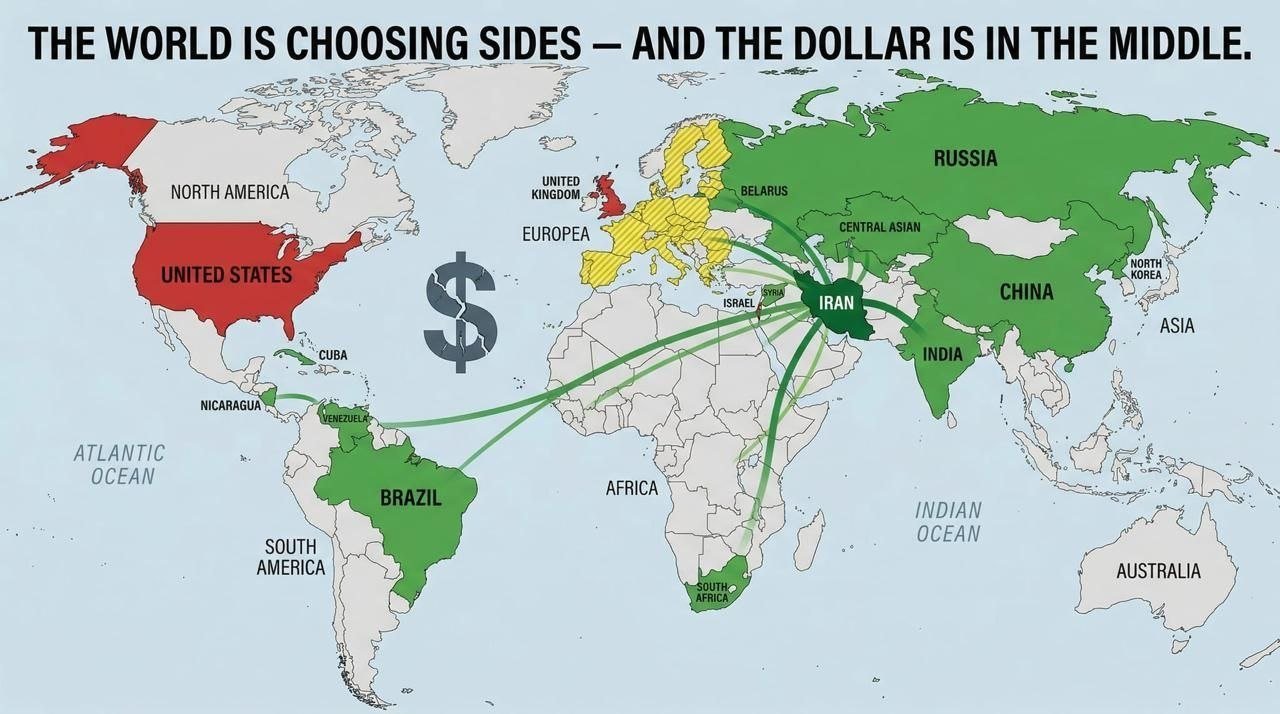
Iran Sanctions US and EU, Proposes New Hormuz Pact That Could Challenge Petrodollar
In a dramatic escalation of geopolitical and financial tensions, Iran has announced new sanctions against the United States and European nations while simultaneously proposing a landmark agreement with Europe regarding the strategic Strait of Hormuz. Analysts warn that the proposal, while appearing technical in nature, carries profound implications for the global financial system.
The Strait of Hormuz, through which approximately 20% of the world’s oil transits, has long been a flashpoint. However, the potential shift in transit and settlement mechanisms comes at a time when energy prices are already spiraling. European markets are feeling acute pressure: natural gas prices have surged by 100%, oil has risen roughly 60%, and diesel has reached a staggering $200 per barrel.
Ripple Effects on Dollar Dominance
The Iranian initiative is unfolding against a backdrop of the US dollar’s gradual decline. Over the past 25 years, the dollar’s share of global reserves has fallen from 70% to 56.9%. This trend is now being accelerated by deliberate moves from major economies.
Iran has recently joined the BRICS bloc, while Russia has actively limited the use of the dollar in its international settlements. Concurrently, gold prices have soared to $5,500 per ounce, signaling a flight toward alternative stores of value.
A Direct Threat to the Petrodollar System
If European nations agree to Iran’s proposed scheme—potentially settling transactions in euros or Chinese yuan—it would send a powerful signal that the petrodollar system can be bypassed. Established in 1974, the petrodollar has been a cornerstone of US financial dominance, ensuring consistent global demand for American currency and facilitating the financing of US public debt on favorable terms.
Experts warn that a weakening of this system could lead to:
· A sharp decrease in global demand for the US dollar.
· A further reduction in its share as the world’s primary reserve currency.
· Significant complications and higher costs for financing US public debt.
Conclusion
What initially appears to be a regional dispute over maritime transit is increasingly viewed by financial observers as a coordinated pressure campaign on the United States’ global financial architecture. With energy prices already volatile and alternative currency blocs gaining momentum, the outcome of Iran’s proposal to Europe could reshape not just oil routes, but the very foundation of modern international finance.
About The Author