
Uganda Unveils Shs84.39 Trillion “No More Sleep” Budget
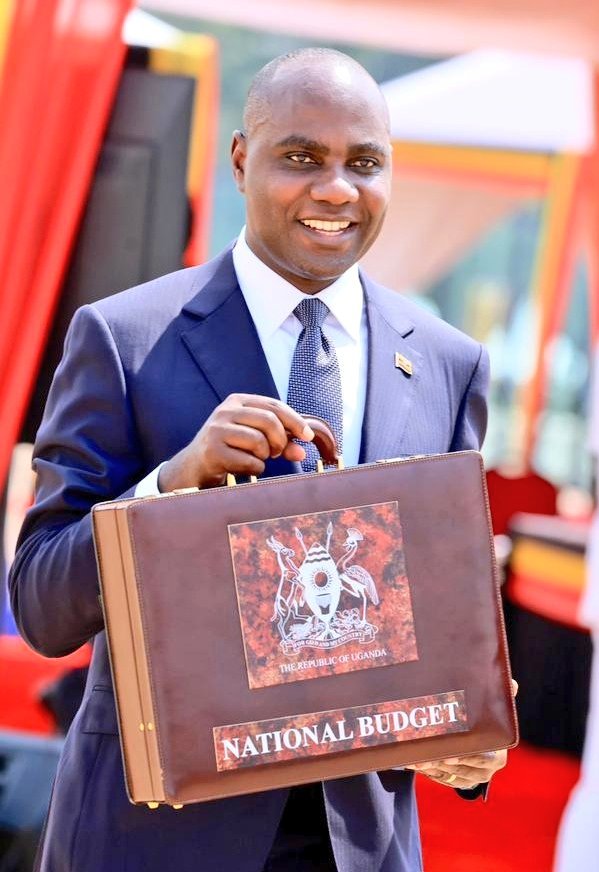
KOLOLO, UGANDA – The Minister of Finance, Hon. Henry Musasizi, has presented the National Budget for the Financial Year 2026/27, a record Shs84.39 trillion fiscal plan designed to launch Uganda into what he called the “Kisanja No More Sleep” era.
Presenting the speech at the Kololo Independence Grounds, Musasizi declared that Uganda has become a “land of opportunity and promise,” with an economy now valued at USD 69 billion. The budget, which is an increase from the previous year’s Shs81.61 trillion, prioritizes production, value addition, and job creation over endless debate.
“The era of planning and debate is over. The era of implementation and results has begun,” Musasizi told the nation. “Every Ugandan must actively engage in wealth creation, and every leader must be accountable for transforming households.”
The Resource Envelope
The total resource envelope for FY2026/27 stands at Shs84.391 trillion. According to the Minister, this will be financed through:
· Domestic Revenue: Shs45.96 trillion (including Shs40.16 trillion in tax revenue, Shs4.02 trillion non-tax revenue, and Shs1.44 trillion petroleum revenue).
· Local Government Revenue: Shs339.8 billion.
· Domestic Borrowing: Shs11.97 trillion.
· External Financing (Projects): Shs11.27 trillion.
· External Financing (Budget support): Shs1.22 trillion.
The government also plans to leverage Public-Private Partnerships (PPPs), venture capital, and Sukuk financing to complement the budget.
Expenditure Priorities: Security, Roads, and Salaries
The allocation breakdown reveals a government balancing recurrent spending with heavy capital investment and debt management.
· Wages and Salaries: Shs9.709 trillion.
· Non-wage recurrent expenditure: Shs33.276 trillion.
· Development expenditure: Shs22.054 trillion (aimed at high-impact investments).
· Domestic debt refinancing: Shs13.967 trillion.
· Debt amortisation: Shs4.181 trillion.
Sectoral Breakdown (Selected Items)
· Security: Shs10.21 trillion (The largest single sector allocation).
· Transport Infrastructure: Shs8.79 trillion.
· Education: Shs6.66 trillion (plus Shs568.65 billion for salary enhancement for primary teachers & artists).
· Health: Shs5.23 trillion.
· Energy Development: Shs2.07 trillion.
· Wealth Creation Programmes: Shs2.49 trillion.
· Agro-Industrialisation: Shs2.26 trillion.
· Manufacturing & Industrial Development: Shs1.03 trillion.
· STI, ICT, and Creatives: Shs1.14 trillion.
· Legislation and Oversight: Shs1.23 trillion.
· Water & Sanitation: Shs1.013 trillion.
· Administration of Justice: Shs665.55 billion.
· Natural Disasters Management: Shs494.08 billion (plus Shs361.88 billion contingency).
The “ATMS” Strategy Takes Center Stage
Musasizi noted that 95.6 percent of discretionary resources have been allocated to the ATMS enablers: Agro-industrialisation, Tourism Development, Mineral-Based Industrialisation, and Science, Technology & Innovation (STI).
“This Budget prioritises production, productivity, value addition, exports, and job creation,” he said, inviting the private sector to take advantage of the opportunities to create wealth.
To support this, the government introduced targeted tax incentives, including a tax holiday for developers of ultra-luxury tourism facilities and an extension of the income tax exemption for Bujagali Energy to support affordable electricity tariffs.
Tax Relief for Citizens and Small Businesses
In a move to boost disposable income and ease compliance, the Minister announced key tax measures:
- PAYE Threshold Increase: The Pay As You Earn (PAYE) threshold has been raised from Shs235,000 to Shs335,000 per month, effectively increasing take-home pay for low-income earners.
- VAT Registration Threshold: The threshold for VAT registration has doubled from Shs150 million to Shs300 million in annual turnover, easing the compliance burden on small businesses.
- Tax Relief: Measures were approved to encourage compliance and help taxpayers clear outstanding obligations.
Mission: A $500 Billion Economy
Concluding his address, Musasizi dedicated the budget to wealth creators, particularly the youth.
“Our mission is clear: produce more, earn more, export more, and lift every household out of subsistence,” he stated.
With first oil on the horizon and the economy projected to grow at double-digit rates, the Minister stressed that investor confidence is rising, fueled by diaspora remittances and active participation in the national transformation.
“I dedicate this Budget to all wealth creators, especially the youth, whose energy, enterprise and innovation will drive Uganda’s transformation into a 500-billion-dollar economy,” Musasizi said.
KnowYourBudget26
About The Author