
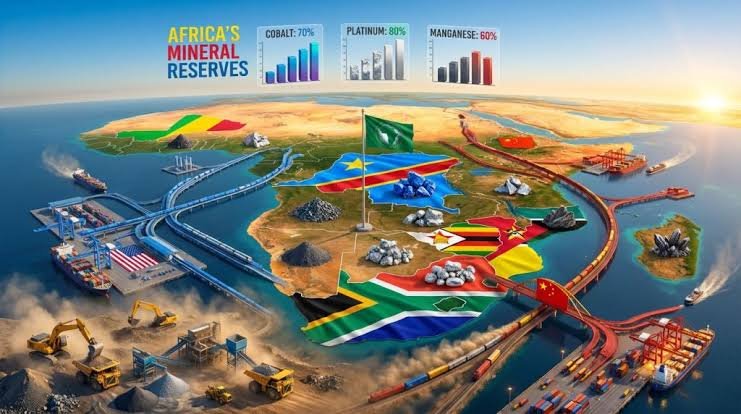
Africa Emerges as Central Arena in US-China Critical Minerals Competition
February 4, 2026 | WASHINGTON D.C. — Top officials from Africa’s richest mining nations are convening in Washington today at the inaugural U.S.-led Critical Minerals Ministerial, marking a significant escalation in the strategic competition between the United States and China for control of the resources essential to the global energy transition and national security.
The high-level meeting, hosted by Secretary of State Marco Rubio, signals a decisive shift in U.S. policy from rhetorical concern to active execution in securing mineral supply chains outside Chinese dominance. The gathering includes presidents, mining ministers, and executives from key African states such as the Democratic Republic of Congo (DRC), Kenya, and Guinea.
A Strategic Pivot: From Aid to Investment
The U.S. strategy represents a fundamental pivot away from traditional aid-driven engagement in Africa toward commercially viable, investment-led partnerships. Washington is now prioritizing African governments that can present verified mineral assets and “bankable projects” to American investors.
This new approach is already in motion. In recent weeks, the Congolese government submitted detailed data on its vast mineral reserves to U.S. authorities, advancing a cooperation framework initiated during the previous Trump administration. President Félix Tshisekedi’s administration has also presented a shortlist of state-owned cobalt, copper, manganese, gold, and lithium assets for American investor assessment.
Key African Nations in the Mineral Spotlight:
· Democratic Republic of Congo: World’s leading cobalt producer and major copper source. Despite ongoing insecurity in the east, the government is actively positioning within the U.S. strategy.
· Kenya: An emerging frontier following Shanta Gold’s discovery valued at over $5 billion.
· Guinea: Home to the Simandou project, one of the world’s largest untapped iron ore reserves, which recently shipped its first cargo to China.
The Chinese Dominance and African Agency
The U.S. push is a direct response to China’s deeply entrenched dominance across Africa’s extractive sectors. From cobalt and copper in the DRC to iron ore in Guinea, Chinese investment and integration set a high bar for American competitors.
However, African leaders are urging a shift from fragmented bilateral deals to a united continental front. At the recent World Economic Forum in Davos, senior officials argued that individual negotiations with powerful trade partners weaken Africa’s bargaining position.
Wamkele Mene, Secretary-General of the African Continental Free Trade Area Secretariat, stated that while the African Union has a continental minerals strategy, its implementation is lacking. “If you take, for example… the fact that individual countries are being pulled to Washington to negotiate individually, that is not in Africa’s interest,” Mene said.
Sierra Leone’s President Julius Maada Bio echoed this, highlighting the paradox where foreign investors are “never shy to come for our resources – even with wars,” yet remain wary of the continent’s investment climate.
Security: The Unignorable Context
The scramble for minerals is unfolding against a backdrop of significant security challenges, which both threatens supply chains and influences geopolitical alignments.
Major Conflict Hotspots (2026):
· Sudan: War risks mass displacement and regional spillover.
· Sahel Region (Mali, Burkina Faso): Insurgent expansion amid weak governance.
· Eastern DRC: Volatile due to armed groups competing over territory and resources.
· Mozambique: Islamist insurgency threatens major energy investments.
Furthermore, the military strength of resource-rich nations adds another layer to the strategic calculus. For instance, the DRC, a central player in the minerals race, possesses the 8th most powerful military in Africa, supported by a manpower pool of over 39 million people. Nigeria, another mineral-rich nation with its own security challenges, ranks 3rd in African military strength.
The U.S. administration’s reported reduction in funding for conflict prevention institutions could leave it more exposed to sudden crises in these fragile yet critical regions.
The Broader Geopolitical Ripple Effects
The minerals competition is accelerating broader geopolitical realignments. Some analysts suggest that tougher U.S. visa and trade policies are driving African nations to seek deeper ties with alternatives like the BRICS bloc.
Zimbabwe, for example, is intensifying its campaign to join BRICS. Foreign Minister Amon Murwira stated the move aims for “deeper integration into the global economy” and aligns with shared goals like de-dollarization. This follows Russia’s announcement of plans to expand visa-free travel to Zimbabwe and other African nations.
Looking Ahead: A Continent at a Crossroads
The Critical Minerals Ministerial is more than a trade meeting; it is a recognition of Africa’s central role in the 21st-century geopolitical and technological landscape. The outcomes will influence whether Africa becomes a mere supplier of raw materials or a empowered partner capturing greater value from its own resources.
As one former U.S. envoy noted, the race is now about which partnerships African governments find most reliable and beneficial. The challenge for all external partners will be to align their strategic interests with Africa’s own developmental aspirations, which experts argue should prioritize long-term, inclusive growth through education, infrastructure, and economic integration over a narrow focus on resource extraction.
This report synthesizes information from U.S. diplomatic announcements, African government statements, and analysis from international risk assessments.
About The Author