

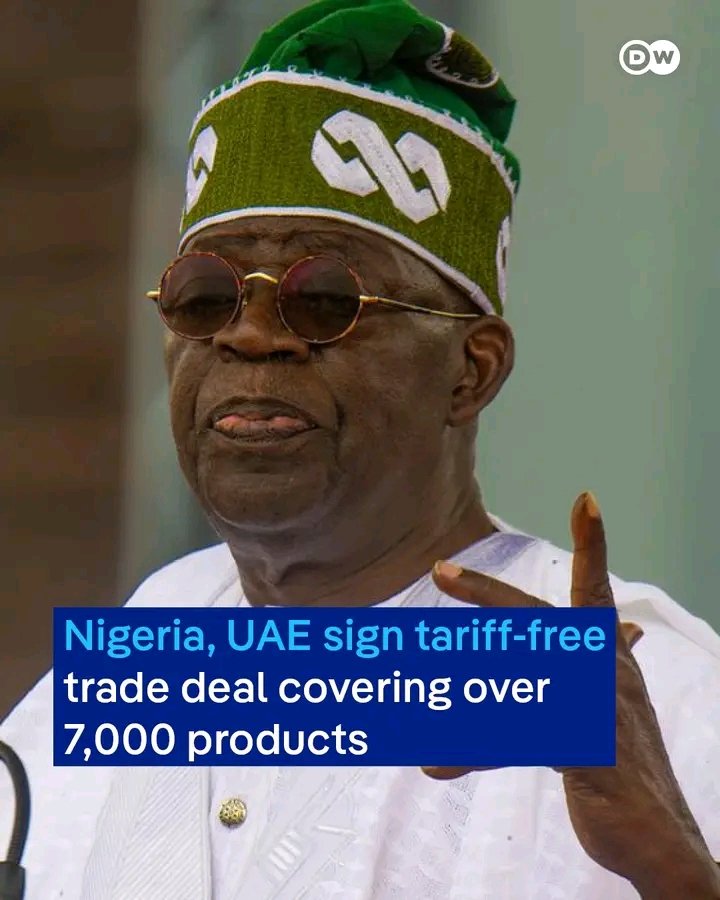
Nigeria and UAE Seal Major Trade Deal, Eliminating Tariffs on Thousands of Goods
Abuja, Nigeria – In a significant boost to bilateral trade, Nigeria and the United Arab Emirates (UAE) have formally signed a Comprehensive Economic Partnership Agreement (CEPA), a pact set to unlock duty-free access for thousands of products between the two nations.
The landmark agreement, announced on Tuesday, targets the elimination of tariffs on a total of 7,315 non-oil products exported from Nigeria to the UAE. This move is designed to dramatically enhance the competitiveness of Nigerian goods in the Emirati market and stimulate export-led growth.
Phased and Immediate Benefits for Nigerian Exports
The tariff removal will be implemented in stages. For key Nigerian exports such as machinery, vehicles, electrical equipment, apparel, and furniture, duties will be phased out over a period of three to five years.
A substantial segment of Nigeria’s export basket receives an immediate boost, however. The deal grants 2,805 products—including cotton, fish, various cereals, fruits, and leather—immediate duty-free access to the UAE market upon implementation.
Reciprocal Access for UAE Imports
In a reciprocal gesture, Nigeria has committed to eliminating tariffs on 6,243 products imported from the UAE. This list prominently includes capital goods and industrial machinery, which are critical for Nigeria’s manufacturing and infrastructure development goals. The move is expected to lower costs for Nigerian businesses seeking high-grade equipment and inputs.
Deepening Strategic Ties
The CEPA represents the culmination of efforts to strengthen economic and diplomatic relations, which had faced challenges in recent years. Analysts view the agreement as a strategic win for both economies: it diversifies the UAE’s investment and trade partnerships in Africa while offering Nigeria a powerful gateway to Middle Eastern and Asian markets.
“This agreement is a game-changer for Nigerian non-oil exports,” said a senior official from the Nigerian Ministry of Industry, Trade, and Investment. “It provides our manufacturers and agro-processors with predictable, preferential access to a high-growth market, incentivizes production, and will ultimately contribute to job creation at home.”
The pact is also seen as a catalyst for increased foreign direct investment from the UAE into Nigeria, particularly in sectors like logistics, agriculture, and energy infrastructure.
With the signing complete, both governments will now proceed with their respective domestic ratification processes to bring the landmark CEPA into full effect.
About The Author