

Titanoboa: Unearthing the Largest Serpent in Earth’s History
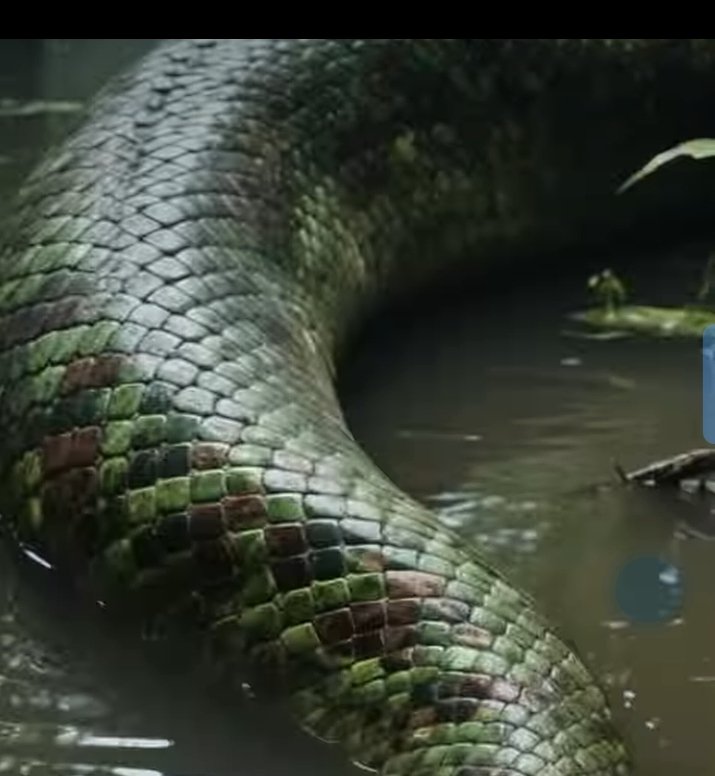
The image you see is a striking digital creation, a glimpse into a world long vanished. It poses a thrilling question: what if the stuff of nightmares was once a reality? The hashtags #spookyearth and #truestory hint at a tale that sounds like myth, but the Titanoboa ( Titanoboa cerrejonensis ) is a very real, scientifically documented creature that slithers through the pages of prehistory as the largest snake ever discovered .
This “titanic boa” was not a fantasy but a 42-foot-long apex predator that ruled a tropical paradise 60 million years ago. Let’s delve into the story of its discovery, its incredible size, and the world it inhabited.
A Discovery in Coal Country
The story of Titanoboa begins not in some remote jungle, but in the Cerrejón coal mines of La Guajira in northeastern Colombia . In the early 2000s, an international team of scientists from the Smithsonian Tropical Research Institute and the University of Florida uncovered a treasure trove of fossils . Among the remains of giant turtles and crocodilians, they found something unexpected: 186 fossils of large thoracic vertebrae and ribs, initially mistaken for those of crocodiles .
It wasn’t until 2009 that a team led by Jason J. Head of the University of Toronto identified these bones as belonging to a novel, giant boid snake. They named it Titanoboa cerrejonensis, honoring both its immense size and the region where it was found . Later expeditions in 2011 even uncovered parts of its skull and teeth, making it one of the few fossil snakes with preserved cranial material and offering deeper insights into its life .
Mind-Boggling Dimensions
So, just how big was it? By comparing the fossilized vertebrae to those of modern constrictors (where body size is reflected in the size of the bones, not the number), scientists were able to construct a picture of this behemoth . Their findings were astounding:
· Length: The average adult Titanoboa is estimated to have reached a length of approximately 13 meters (42.7 feet) . Some estimates, based on a 40 cm (16 in) skull, suggest it could have grown as long as 14.3 meters (47 feet) .
· Weight: This colossal serpent would have tipped the scales at a staggering 1,135 kg (1.25 tons) , with a possible range of 730 to 1,819 kg . Guinness World Records notes it measured about 1 meter (3.3 ft) across at its thickest point .
· Comparison: To put that in perspective, the largest modern snakes, like the green anaconda or reticulated python, rarely exceed 6-7 meters . Titanoboa would have dwarfed them, making a modern anaconda look like a garden snake. Its discovery supplanted the previous record holder, Gigantophis .
The World of a Colossus: Paleobiology and Habitat
Titanoboa lived during the middle to late Paleocene Epoch (around 60-58 million years ago) , a mere 5-10 million years after the extinction of the non-avian dinosaurs . The world was a hothouse, and the site of modern-day Colombia was a massive, humid coastal plain covered in wet tropical forests with sprawling river systems .
Why So Big? The Climate Connection
As a cold-blooded reptile, Titanoboa’s body temperature and metabolism were entirely dependent on its environment. The immense size of Titanoboa serves as a powerful thermometer for the Paleocene climate. To sustain a snake of this magnitude, the tropics needed to be much warmer than previously thought. Scientists estimate that the mean annual temperature in its habitat was around 30-34°C (86-93°F) . This greenhouse climate, with high concentrations of carbon dioxide, was the key that unlocked its gigantic proportions .
Lifestyle and Diet
Given its size, moving on land would have been awkward, if not impossible. Therefore, scientists believe Titanoboa was semi-aquatic, much like modern anacondas, spending most of its time in the large rivers and swamps of its coastal plain home .
Early theories painted Titanoboa as a generalist apex predator, feasting on the giant crocodilians and turtles that shared its environment . However, analysis of its skull has refined this view. The anatomy of its palate, the number of teeth, and their weak attachment to the jawbone all point to a diet specialized in fish . This is similar to modern piscivorous (fish-eating) snakes. It likely patrolled the waters, preying on the large lungfish and other fish found in the fossil record, though it probably wouldn’t have passed up an easy meal of crocodile or turtle when the opportunity arose .
A New Challenger?
For over a decade, Titanoboa reigned supreme as the undisputed king of giant snakes. However, a discovery in 2024 has sparked a new debate. Fossils of a snake named Vasuki indicus from India have been estimated to reach lengths of up to 15 meters (49 feet) , potentially rivaling or even exceeding Titanoboa . While the debate on the absolute “largest” continues among paleontologists, Titanoboa remains the most completely understood and thoroughly studied giant serpent in history.
The image from your post captures the public’s imagination perfectly. The Titanoboa is a powerful reminder that truth can be stranger than fiction, and that our planet’s history is filled with creatures that defy our wildest imaginations. It stands as a testament to the incredible influence of climate on life and the endless wonders still buried beneath our feet.
About The Author