
Taking action for Africa’s agrifood systems amid global uncertainty
Ahead of the 34th Session of the FAO Regional Conference for Africa (ARC34), a call for
practical, collective leadership on food security and nutrition
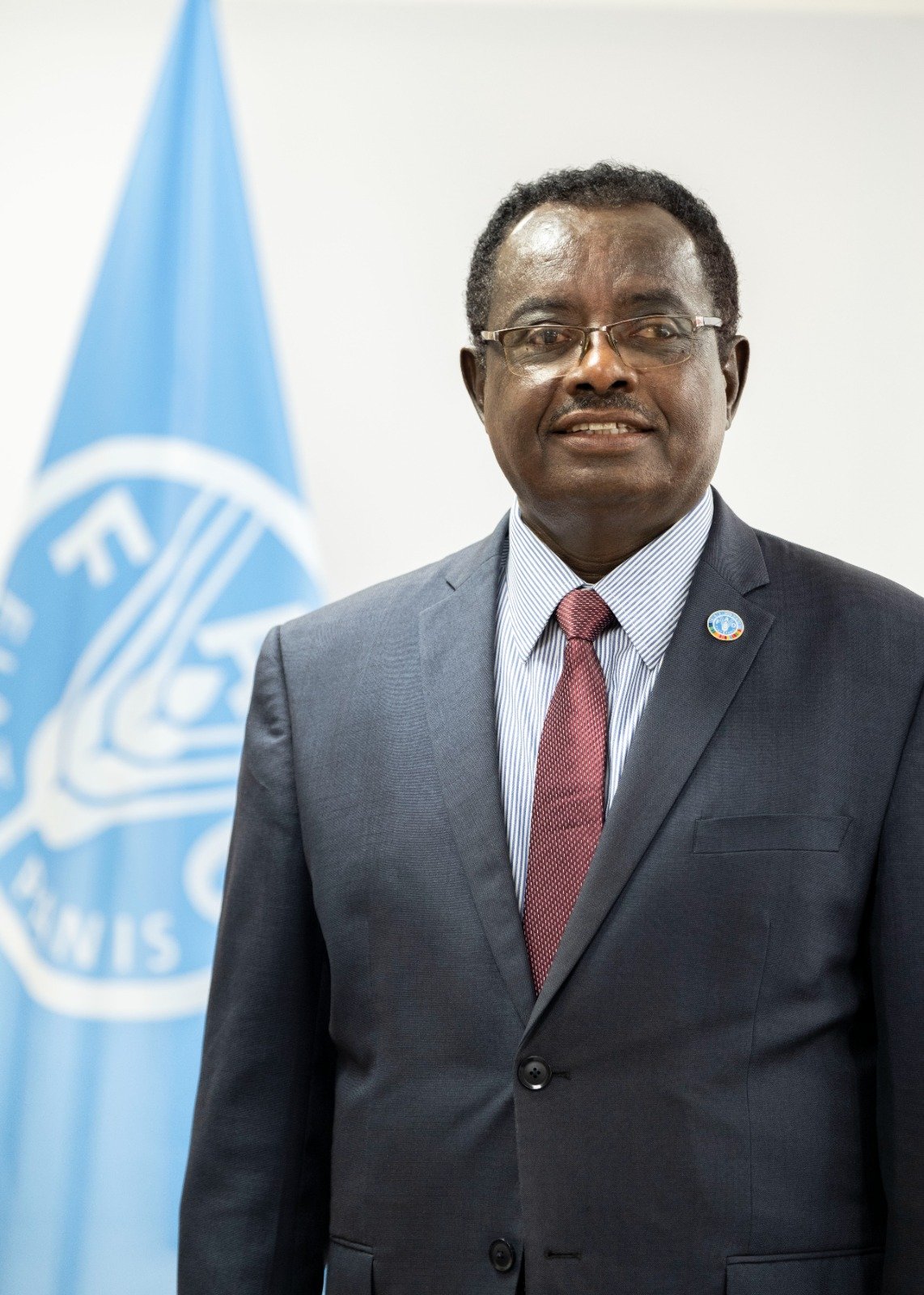
By Abebe Haile-Gabriel, Assistant Director-General and Regional Representative for Africa of the United
Nations Food and Agriculture Organization (FAO).
31 March 2026, Accra – Global shocks keep tightening their grip on Africa’s agrifood systems. Trade
disruptions raise the cost of fertilizer, fuel and freight. Climate variability wipes out harvests. Conflict
displaces farmers from their land. These are real, and they are intensifying. But the most consequential
decisions about Africa’s agrifood future are still made on the continent itself: in national budgets, regulatory
frameworks and investment plans that African governments control.
The 34th Session of the Food and Agriculture Organization’s Regional Conference for Africa, hosted by the
Government of the Islamic Republic of Mauritania in Nouakchott from 13 to17 April 2026, brings together
ministers of agriculture and related portfolios from across the continent. It is a forum where political
commitments are expected to translate into operational priorities. Whether that translation happens, with
sufficient speed and coordination, is the central question.
The numbers leave little room for ambiguity. According to the 2025 State of Food Security and Nutrition in
the World Report, approximately 307 million people in Africa were undernourished in 2024, more than one in
five of the continent’s population. Since 2010, the prevalence of undernourishment has risen by nearly five
percentage points, reversing a decade of progress. Meanwhile, the cost of a healthy diet has climbed to an
average of USD 4.41 per person per day, in purchasing-power-parity terms, putting adequate nutrition out of
reach for a majority of African households.
These are not transient disruptions. They reflect structural failures: chronic underinvestment in rural
infrastructure, fragmented markets, weak extension services and agrifood systems that remain highly
vulnerable to external shocks. Conflict, climate variability and economic slowdowns continue to compound
one another, and the populations they hit hardest (smallholders, pastoralists, women, young people) are
precisely those on whom the continent’s food production depends.
Africa is not short on assets. The continent holds roughly 60 percent of the world’s uncultivated arable land.
Its population is the youngest of any region. It’s agricultural heritage and local knowledge systems, built over
centuries, are adapted to conditions that imported models often fail to address. The question has never
been whether Africa has the resources to feed itself. The question is whether its institutions and investment
priorities are organized to make that happen.
Starting with financing, government expenditure on agriculture across Africa reached approximately USD 16
billion in 2022, continuing a positive trend. But this remains a fraction of what the sector requires.
Meanwhile, credit to agriculture accounts for roughly 2 percent of total bank lending, a figure that has barely
moved in a decade, even as the sector employs nearly half the labour force. Closing this gap demands
more than aspirational targets. It requires stronger policy frameworks for risk-sharing, more effective use of
blended finance, and public investment deliberately structured to crowd in private capital, particularly for the
small and medium agrifood enterprises that anchor local agrifood systems and create jobs.
Innovation matters, but only when it reaches the people who need it. Digital advisory services, improved
seed varieties, smart farming practices, and better market information systems can all raise productivity and
reduce losses. Too often, however, these tools remain confined to pilot projects or accessible only to
commercial-scale operations. The next wave of agricultural innovation in Africa must be designed around
realities of smallholders, particularly women and young people who produce a substantial share of the
continent’s food but remain underserved by extension, credit and technology alike.
Resilience cannot be an afterthought. Climate variability and economic volatility are permanent features of
the landscape, not temporary disruptions to plan around. Every investment in Africa’s agrifood systems,
whether in irrigation, storage, market infrastructure, or value chains, should be stress-tested against climate
projections and designed for durability. This means prioritizing diversified production, sustainable land
management and stronger rural institutions that can absorb shocks without collapsing.
The Regional Conference is where the Food and Agriculture Organization’s Members in Africa set regional
priorities and share the support they need. For ministers of agriculture and related sectors, the task is
concrete. National agricultural investment plans need to be aligned more tightly with agrifood systems
outcomes. Financing mechanisms must be designed to reach the smallholders and agribusinesses that
current systems bypass. And partnerships across government, the private sector and development partners
need to move from memoranda of understanding to measurable delivery.
Credibility in this space is built on results, not declarations. In a context where fiscal space is shrinking and
development finance is increasingly competitive, governments that can demonstrate returns on agricultural
investment, in productivity, in market access, in nutritional outcomes, will attract more of both. Those that
cannot will fall further behind.
There are grounds for confidence. Across the continent, countries are strengthening value chains,
expanding digital services for farmers and mobilizing new forms of financing. These are not theoretical
possibilities; they are operational realities in a number of countries. The challenge is to take what works in
one context and apply the underlying principles, not necessarily the same model, at scale.
Africa’s agrifood systems will continue to operate under external pressure. Input costs will fluctuate, trade
flows will shift, and climate events will intensify. But the response must be rooted in African institutions,
informed by science and innovation, and driven by political will. Hunger and malnutrition are not forces of
nature. They are consequences of choices, about budgets, about policies, about priorities; and they can be
reversed by making different ones.
ENDS
About The Author