
The Ironed Lady: The Enduring Legend of La Planchada, Mexico’s Ghost Nurse
In the pantheon of Mexican folklore, alongside the weeping woman La Llorona and the rogue witch La Bruja, there exists a different kind of spirit. She doesn’t wail in the night or fly through the air. Instead, she walks the silent, sterile corridors of hospitals, her footsteps making no sound. Her uniform is immaculate, starched, and perfectly ironed—a detail that gives her the name by which she is known throughout Mexico: La Planchada, “The Ironed Lady.”
For nearly a century, stories have persisted about a ghostly nurse who appears to patients in their most vulnerable moments. Some say she is a benevolent angel who heals the sick; others whisper that she is a demonic force that comes to claim souls. Her story, rooted in heartbreak and tragedy, has become one of Mexico’s most enduring and beloved urban legends .
The Tragic Origin of Eulalia
The legend of La Planchada is almost always traced back to the same place: the historic Hospital Juárez in Mexico City, known in the early 20th century as the Hospital de San Pablo . It is here that a dedicated nurse named Eulalia is said to have worked.
Eulalia was the model of a perfect nurse. She was passionate about her work, always the first to arrive and the last to leave. She treated her patients with kindness and a smile, and her uniform was always spotless and perfectly pressed . Her life revolved around caring for others, and she was beloved by colleagues and patients alike.
This all changed with the arrival of a handsome young doctor, often named Joaquín. Eulalia fell deeply in love with him, and despite warnings from fellow nurses about his reputation as a womanizer, they began a relationship. Their romance seemed to be the answer to Eulalia’s dreams, and soon they were engaged .
Their happiness was short-lived. Joaquín told Eulalia he had to leave for a medical conference or seminar. Days turned into weeks with no word from him. Consumed with worry, Eulalia was devastated to finally learn the truth: there was no conference. Joaquín had left to marry another woman .
The news shattered Eulalia. Her passion for life and work was replaced by a profound, debilitating depression. She became a ghost of her former self. The nurse who once glided through the halls with a smile now neglected her duties. She was short with patients and, in some versions of the story, her negligence became fatal. It’s said that one night, a patient under her care died as a direct result of her inattention .
Consumed by guilt and a broken heart, Eulalia’s own health deteriorated. She fell gravely ill and was admitted to the very hospital where she had once been a beacon of hope. On her deathbed, overcome with remorse for her failure, she made a solemn promise: she would return to do what she had failed to do in life—care for the sick .
Soon after, Eulalia passed away, but her story was only beginning.
Appearance and Modus Operandi: A Healer or a Harbinger?
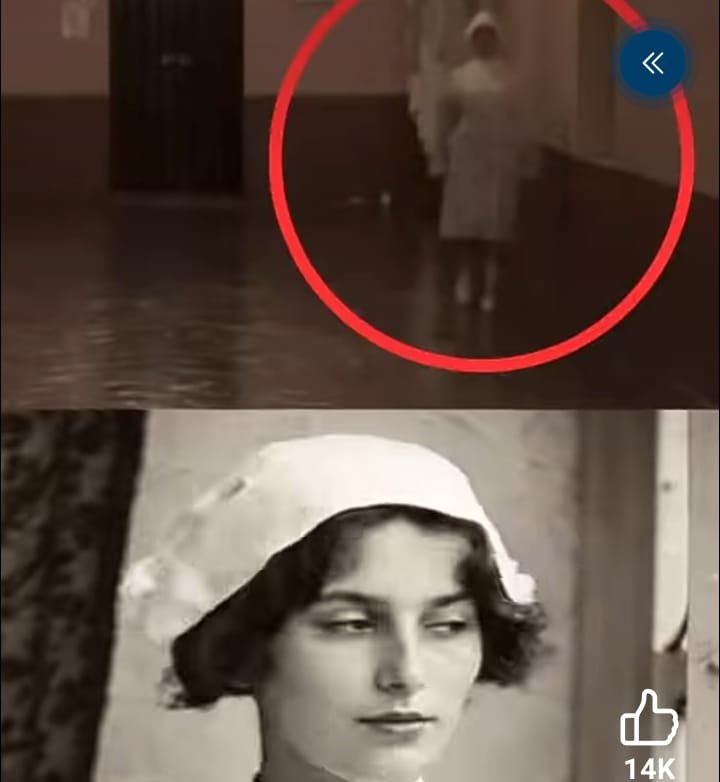
Following her death, patients, nurses, and doctors at Hospital Juárez began to report strange occurrences. They spoke of seeing a woman in an old-fashioned nurse’s uniform appearing in wards late at night. Her most distinguishing feature, noted by all, was her appearance. Despite being a spirit, her uniform was flawless, with sharp, starched pleats and not a single wrinkle—as if it had just been ironed. This is how she earned the nickname “La Planchada” .
Witnesses describe her as a silent figure with a pale face who glides silently through corridors, sometimes appearing to float . Her presence is often said to bring a feeling of intense cold .
The accounts of her behavior, however, are deeply divided, creating two distinct versions of the legend:
· The Benevolent Nurse: In the most popular version, La Planchada is a kind spirit seeking redemption. She appears to patients who are critically ill or have been neglected by the night staff. She gently adjusts their pillows, gives them their medication, and offers comfort. The next morning, these patients often report a mysterious nurse who cared for them, leading to unexpected recoveries. In this interpretation, her eternal service is her penance for the life she failed to save .
· The Demonic Entity: A darker version of the legend paints a more sinister picture. In these stories, La Planchada is a demonic being or a harbinger of death. She is said to appear to terminal patients, not to heal them, but to hasten their end. Some accounts claim she suffocates her victims with a pillow, her cold, cadaveric hands holding it in place until the heart monitor falls silent. In this version, her spirit is fueled by the bitterness and resentment of her betrayal .
The Legend Grows and Spreads
Regardless of which version one believes, the legend of La Planchada has become deeply ingrained in Mexican culture. What started at the Hospital Juárez has since spread to other hospitals across the country, including the Hospital Infantil del Estado de Sonora in Hermosillo . Generations of nurses and doctors have passed down the story, and many night-shift workers will swear they have felt her presence or seen a figure in white out of the corner of their eye .
The story has also found a firm place in pop culture. La Planchada has been featured in folklore archives, podcasts, and YouTube channels. She has appeared in television shows, introducing her story to new generations, and has inspired short films and artwork . She stands alongside other Latin American legends as a prime example of how folklore can evolve in an urban, modern setting .
Why the Legend Endures
The legend of La Planchada endures for many reasons. It is a classic tale of love, betrayal, and redemption, but it is set against the unique backdrop of a hospital—a place of heightened emotion, where the line between life and death is thinnest. The story also serves as a cautionary tale for medical professionals about the importance of dedication and compassion .
For patients and their families, the ghostly nurse offers a dual sense of both fear and comfort. In the lonely, frightening hours of the night, the idea of a spectral nurse watching over you can be either a terrifying thought or a strangely reassuring one. She is a symbol of the ideal caregiver—selfless, dedicated, and eternally present—who remains faithful to her vocation, even in death .
Whether she is a guilt-ridden soul seeking forgiveness or a vengeful spirit enacting a dark purpose, La Planchada continues her eternal rounds, a permanent, silent fixture in the folklore of Mexico.
About The Author