

Iran Will Not ‘Bow Down’ to US Pressure in Nuclear Talks, President Vows
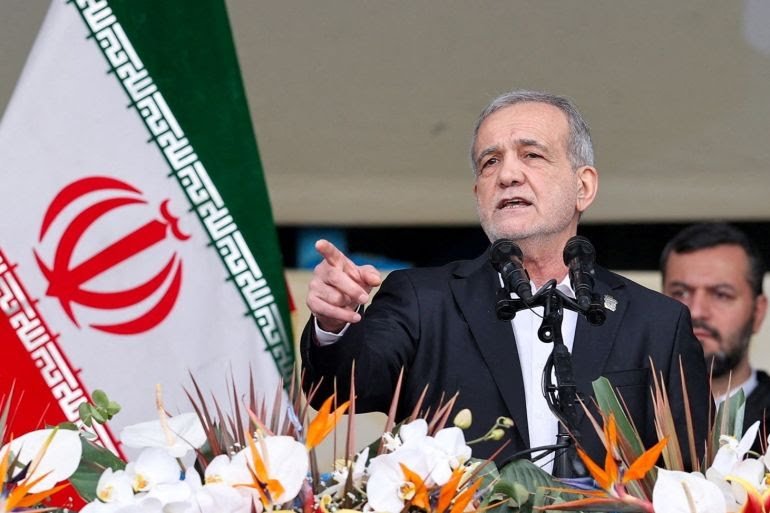
TEHRAN — Iranian President Masoud Pezeshkian has vowed that his country will not “bow down” to pressure from the United States, as diplomatic talks over Tehran’s nuclear programme proceed against a backdrop of escalating military tension in the Gulf.
Pezeshkian’s comments on Saturday come after US President Donald Trump stated he is “considering” limited military strikes to force a deal, while the Pentagon has amassed its greatest air power in the region since the 2003 invasion of Iraq.
“World powers are lining up with cowardice to force us to bow our heads,” Pezeshkian said at a ceremony in Tehran. “Just as you did not bow down in the face of difficulties, we will not bow down in the face of these problems,” he added, addressing members of the Iranian Paralympics team.
The rhetoric underscores the high stakes as the two countries find themselves at a “crossroads once again,” according to Al Jazeera’s Tohid Asadi, reporting from the Iranian capital. Residents there are watching anxiously for signs of diplomatic progress or potential conflict.
“How can anyone not worry about war?” one woman in Tehran told Al Jazeera. “Even if we don’t worry about ourselves, we worry about our children’s future.”
The renewed tensions follow two rounds of indirect talks between Iran and the US this month, held in Oman and Switzerland. While both sides described the discussions in positive terms, they have failed to produce a breakthrough. However, Iranian Foreign Minister Abbas Araghchi struck an optimistic note on Friday, stating that a diplomatic solution appeared within “our reach” and that Tehran was planning to finalize a draft deal in “the next two to three days” to send to Washington.
The military build-up in the region has been rapid. The US has deployed more than 120 aircraft to the Middle East in recent days. The world’s largest aircraft carrier, the USS Gerald R Ford, is en route to join the USS Abraham Lincoln carrier strike group, which is already positioned in the Arabian Sea.
In a letter to the United Nations Security Council on Friday, Iran emphasized that the build-up “must not be treated as mere rhetoric.” The letter stated that while Iran is not seeking “tension or war and will not initiate a war,” any US aggression would be met with a “decisive and proportionate” response.
Trump’s threats have become increasingly specific. On Thursday, he claimed that “bad things will happen” without a “meaningful deal,” later clarifying that Iran had “10, 15 days, pretty much, maximum.” When asked directly on Friday whether he was considering limited military action, Trump told reporters, “I guess I can say I am considering that.”
The prospect of conflict has spooked the international community, with countries including Sweden, Serbia, Poland, and Australia advising their citizens in Iran to leave.
On the streets of Tehran, opinions on the likely outcome are divided. One businessman expressed fatalism, telling Al Jazeera he believed military confrontation was inevitable “because what the Americans want is surrender, and the Iranian state won’t accept that.” He added that business was already suffering.
Another man was more confident in Iran’s position. “The US knows it can’t overpower Iran,” he said. “The US hasn’t truly won a war in any country, say Afghanistan, Iraq or Vietnam. In the end, it will bow to Iran. People shouldn’t worry.”
About The Author