

Russia Condemns Israeli West Bank Measures as Global Backlash Intensifies
Moscow joins Arab states and Western allies in warning that new policies undermine two-state solution
In a significant escalation of diplomatic tensions, Russia has joined a growing international chorus condemning Israel’s newly approved measures to tighten control over the occupied West Bank. The criticism comes as the Israeli security cabinet approved a series of decisions on February 8, 2026, that critics say amount to de facto annexation of Palestinian territory and represent the most far-reaching attempt by Prime Minister Benjamin Netanyahu’s government to advance settlement expansion.
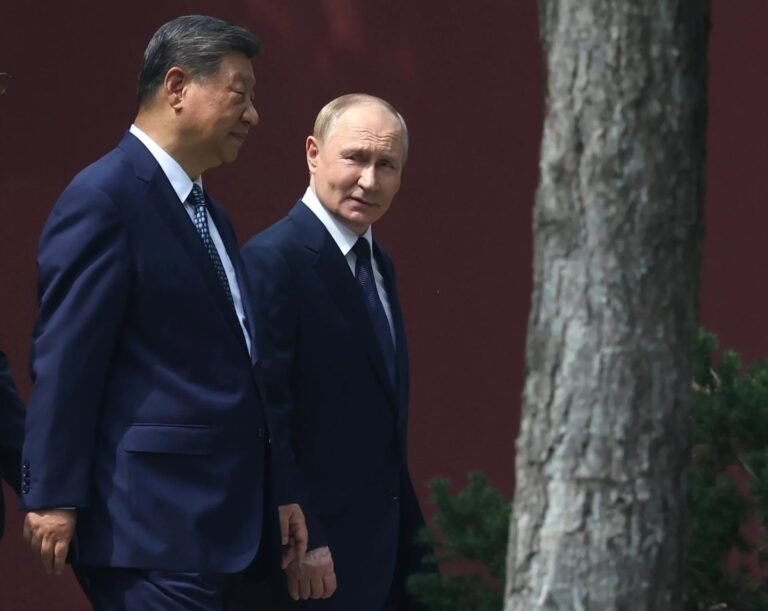
Russian Foreign Ministry Spokeswoman Maria Zakharova stated that “Israel’s new decisions regarding the West Bank deserve condemnation by the international community and cause serious concern,” adding that they represent “an attempt to depart from the spirit and provisions of the Oslo II agreement”. Her comments reflect mounting alarm that the measures could destabilize the region and permanently undermine prospects for a two-state solution.
Core Components of the Controversial Measures
The approved package, pushed by Finance Minister Bezalel Smotrich and Defence Minister Israel Katz, contains several interconnected provisions that collectively reshape the legal landscape in the occupied territory:
Land Acquisition Reforms
· Repealing a Jordanian-era law that prohibited direct land sales to non-Arabs in the West Bank
· Eliminating the requirement for transaction permits that previously provided oversight of real estate purchases
· Declassifying land registry records that have been confidential since the Ottoman period
· Reviving a government mechanism for “proactive” land purchases to secure territory for future settlement expansion
Expansion of Israeli Authority
· Extending Israeli enforcement powers into Areas A and B—regions theoretically under Palestinian Authority control—particularly regarding environmental and archaeological matters
· Transferring planning and building authority in Hebron’s settlement areas and at the Cave of the Patriarchs (Ibrahimi Mosque) from Palestinian to Israeli control
· Establishing an Israeli administration to manage Rachel’s Tomb in Bethlehem, removing it from Palestinian municipal jurisdiction
Impact on Holy Sites
· The Cave of the Patriarchs in Hebron, sacred to Jews, Muslims, and Christians as the burial place of Abraham, Isaac, and Jacob, will now see its management effectively transferred to Israeli authorities.
· Palestinian experts warn this represents the “Judaization” of the site “by law, not just by force”.
Violation of Oslo Accords and Palestinian Response
The measures represent a direct challenge to the framework established by the Oslo Accords, which divided the West Bank into distinct administrative zones:
· Area A (approximately 18%): Full Palestinian civil and security control
· Area B (approximately 22%): Palestinian civil control with Israeli security control
· Area C (approximately 60%): Full Israeli civil and security control
By authorizing Israeli enforcement actions in Areas A and B, the new decisions “contravene the Oslo Accords,” according to international observers. The Palestinian Authority (PA), which under those agreements holds sole authority for civilian matters in Areas A and B, described the moves as an “unprecedented escalation” and “illegal”.
Palestinian President Mahmoud Abbas’s office condemned the measures as “dangerous decisions” designed to “deepen attempts to annex the occupied West Bank” and called them a “blatant violation” of the Oslo Accords. The PA has called for immediate intervention by the United States and United Nations Security Council.
International Reaction and Regional Implications
The global response has been swift and largely critical, creating rare diplomatic alignment between Western nations, Arab states, and Russia:
Arab and Muslim World Response
Eight Muslim-majority countries—Saudi Arabia, Jordan, Qatar, Indonesia, Egypt, Turkey, Pakistan, and the United Arab Emirates—issued a joint statement condemning “the illegal Israeli decisions and measures aimed at imposing unlawful Israeli sovereignty”. They warned the measures would “fuel violence and conflict” in the region.
Western Positions
· United States: A White House official reiterated that President Donald Trump “does not support Israel annexing the West Bank” and emphasized that “a stable West Bank keeps Israel secure”.
· United Kingdom: Strongly condemned the move, stating that “any unilateral attempt to alter the geographic or demographic makeup of Palestine is wholly unacceptable and would be inconsistent with international law”.
· European Union: Called the measures “another step in the wrong direction” and suggested sanctions were “still on the table,” including possible suspension of parts of the EU-Israel trade agreement.
United Nations
UN Secretary General Antonio Guterres expressed grave concern, with his spokesperson stating the measures are “driving us further and further away from a two-state solution”. The UN maintains that “all Israeli settlements in the occupied West Bank, including East Jerusalem, and their associated regime and infrastructure, have no legal validity and are in flagrant violation of international law”.
On-the-Ground Consequences and Future Outlook
The practical implications of these measures are already becoming apparent. According to reports from Hebron, within hours of the decisions’ announcement, settlers raided a mosque east of Bethlehem, assaulted an elderly Palestinian man, and delivered demolition notices to Palestinian communities. Israeli watchdog group Peace Now warns that the changes will create an “open market” for settlers while exposing Palestinian landowners to pressure and extortion.
Perhaps most significantly, Israeli officials have been remarkably candid about their intentions. Finance Minister Bezalel Smotrich declared the changes would “fundamentally change the legal and civil reality” and boasted they would end prospects for a potential Palestinian state. Energy Minister Eli Cohen acknowledged the measures implement “de facto sovereignty” and “establish a fact on the ground that there will not be a Palestinian state”.
With Netanyahu scheduled to meet with President Trump in Washington, and the Israeli government facing elections later in 2026, these measures appear timed to create “irreversible facts on the ground” before potential political shifts. As Russia’s Zakharova concluded, “We call on the Israeli authorities to reconsider the planned steps aimed at changing the ‘status quo’ in the West Bank, thus avoiding a further escalation of the dangerous situation”.
The international community now faces a critical test of whether condemnation alone can reverse what many are calling the effective annexation of occupied territory, or whether stronger measures will be required to preserve even the possibility of a two-state solution to the decades-old conflict.
About The Author