The Great AI Distillation: How a Technical Standard Became a Geopolitical Flashpoint
The relationship between the American and Chinese artificial intelligence sectors shifted this week from fierce competition to open confrontation. On Monday, San Francisco-based startup Anthropic leveled serious allegations against three of China’s most prominent AI labs—DeepSeek, Moonshot AI, and MiniMax—accusing them of orchestrating a massive, systematic campaign to extract data from its Claude model .
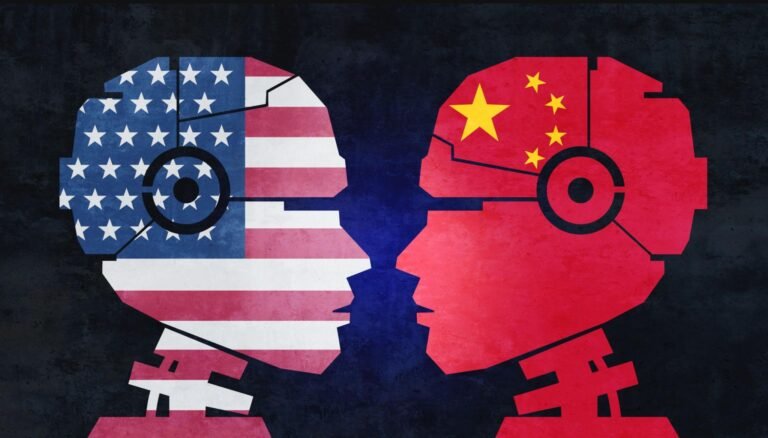
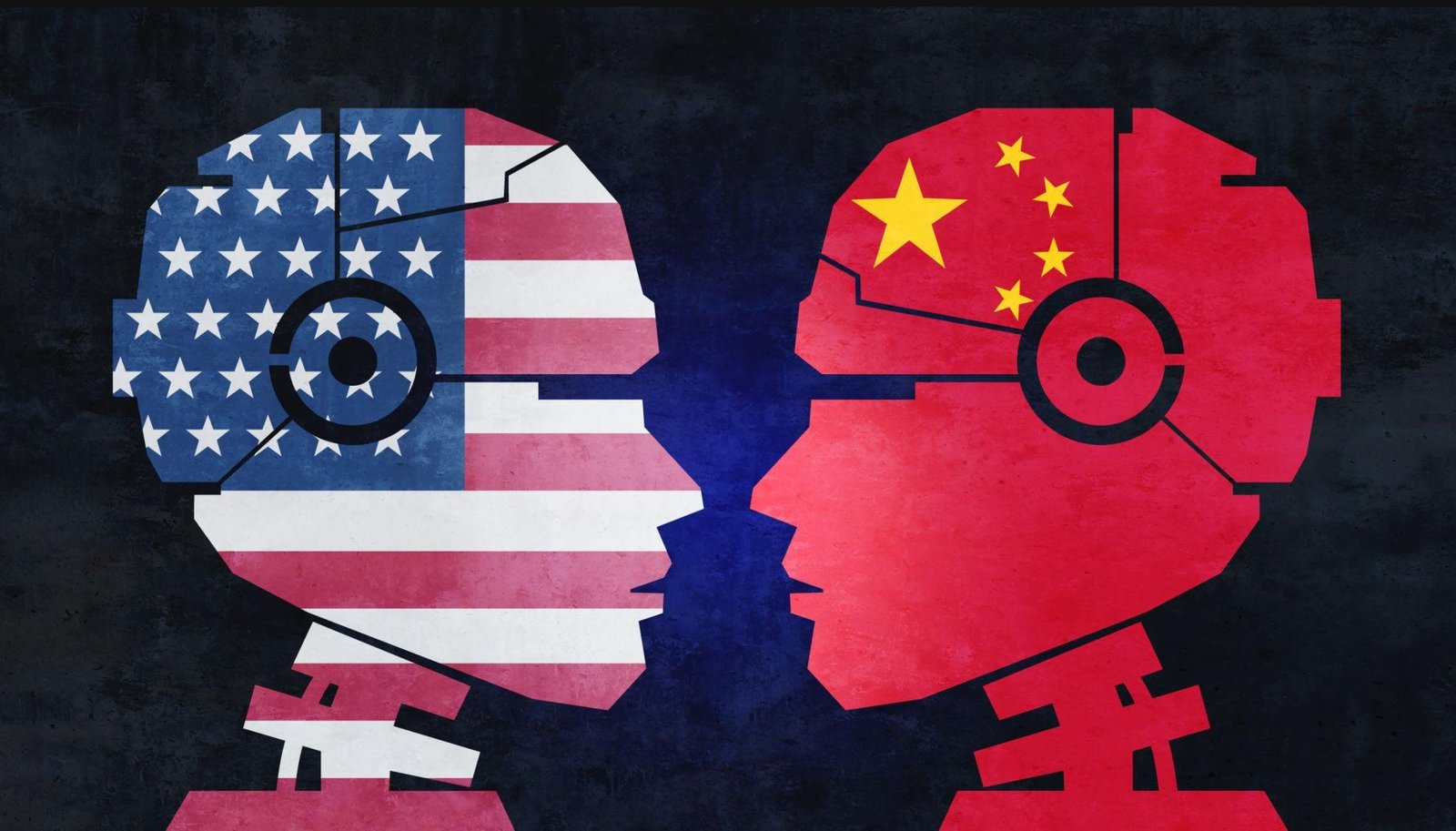
According to a detailed blog post by Anthropic, the companies utilized approximately 24,000 fraudulent accounts to generate over 16 million conversations with Claude. The goal, Anthropic alleges, was a process known as “distillation”—using the outputs of a powerful model like Claude to train smaller, rival models quickly and cheaply . While the industry acknowledges the practice, the scale and method of the alleged operation have escalated a commercial dispute into what many are calling the opening salvo of an “AI Cold War.”
The Anatomy of the Alleged Operation
Anthropic claims its detection systems identified distinct patterns of abuse that went far beyond normal customer use. The company described the campaigns as highly coordinated, utilizing “hydra cluster” architectures—networks of proxy services designed to resell access to AI models while masking the identity of the end users .
· MiniMax was identified as the most aggressive actor, generating more than 13 million exchanges. Anthropic claims it detected the campaign while it was still active, giving them visibility into a full “distillation life cycle.” When Anthropic released a new model, MiniMax allegedly pivoted within 24 hours, redirecting nearly half its traffic to probe the updated system .
· Moonshot AI allegedly conducted over 3.4 million exchanges, focusing on agentic reasoning, tool use, and computer vision. Anthropic stated that request metadata matched the public profiles of senior Moonshot staff .
· DeepSeek, the company that rattled Silicon Valley last year with high-performance, low-cost models, was implicated in more than 150,000 exchanges targeting complex reasoning tasks and attempts to generate “censorship-safe alternatives” to sensitive queries .
The Standard Practice Paradox
At the heart of the controversy lies a definitional battle over what constitutes fair competition. Anthropic is unequivocal in its stance: this was a violation of its terms of service and regional access restrictions, as the company does not offer commercial access to Claude in China .
However, industry experts are quick to point out that distillation itself is not a “shadowy trick”—it is a standard engineering technique used globally to optimize AI performance . Major players like Google, Microsoft, and Meta utilize distillation to make their models more efficient. It does not copy source code or replicate internal architectures; it essentially allows a student model to learn from the teacher model’s behavior .
The distinction, therefore, is not about the existence of the technology, but about the rules of engagement. Anthropic argues that the use of fraudulent accounts to bypass geographic restrictions constitutes theft of intellectual property .
From Contract Violation to National Security
Perhaps the most significant shift in this dispute is the language used to frame it. Anthropic has explicitly linked the distillation activities to U.S. national security risks. The company warned that models trained via distillation might not retain the safety guardrails designed to prevent misuse in areas like biological weapons development or mass surveillance .
“The window to act is narrow, and the threat extends beyond any single company or region,” Anthropic stated, signaling that this is no longer just a legal matter but a strategic one .
This framing aligns with the broader policy shifts of the Trump 2.0 administration, which has prioritized technological dominance over regulatory oversight. As noted by analysts at Tsinghua University”s Center for International Security and Strategy, the U.S. is adopting a “technology nationalist” stance, viewing AI through the lens of “competitive interdependence” and seeking to decouple from Chinese advancements . A senior Trump administration official reinforced this, telling Reuters that DeepSeek’s latest model, allegedly trained on Nvidia’s Blackwell chips, represents a clear violation of U.S. export controls .
The Double Standard Debate
Critics of the U.S. position point to a stark inconsistency in the narrative. American AI companies have built their empires on the back of vast, often unfiltered, web scraping.
· Anthropic itself recently settled a copyright lawsuit, Bartz v. Anthropic, for a staggering $1.5 billion after admitting to using a “library” of pirated e-books to train its Claude models .
· OpenAI faces a barrage of lawsuits from The New York Times, authors, and media outlets over the use of their copyrighted material without consent .
In those instances, the practice was defended by the industry as “innovation” and protected under the “fair use” doctrine. Now, when Chinese firms allegedly use a similar method—querying a model to learn from its outputs—it is framed as a geopolitical emergency and theft .
“From evaluation to labeling,” writes CGTN in a recent analysis, “when Chinese AI breakthroughs emerge, they are often not judged on performance benchmarks… but on the origin of their developers. As a result, Chinese AI is treated not as a competitor to be measured, but a ‘threat’ to be contained” .
A Divided Future
The reaction from the Chinese firms has been muted, with representatives from DeepSeek, Moonshot, and MiniMax declining to comment on the record . However, the broader message from Beijing is clear. China’s embassy in Washington responded by stating that Beijing opposes “drawing lines based on ideology and泛化 national security concepts” .
What we are witnessing is the rapid balkanization of the digital world. AI is no longer being treated as mere software; it is being viewed with the same geopolitical gravity as semiconductors, nuclear technology, or advanced weapons systems .
The core question is no longer about the legality of distillation. It is about whether the United States can successfully “ring-fence” a technology that is, by its nature, replicable and diffuse. In an era where models, research papers, and talent flow across borders, the attempt to control AI capability may be less about protecting innovation and more about protecting a precarious lead.
As one AI observer noted, “You cannot unspread intelligence.” The world is now watching to see if the rivalry results in two separate, incompatible AI universes—or if a framework for coexistence can be found before the cold war turns hot.
About The Author