
UN General Assembly Overwhelmingly Passes Resolution on Slave Trade as ‘Gravest Crime Against Humanity’; Ugandan Diplomat Rebukes Opponents
The United Nations General Assembly has passed a landmark resolution recognizing the trafficking of enslaved Africans and racialized chattel enslavement as the gravest crime against humanity, with only three countries voting against the measure.
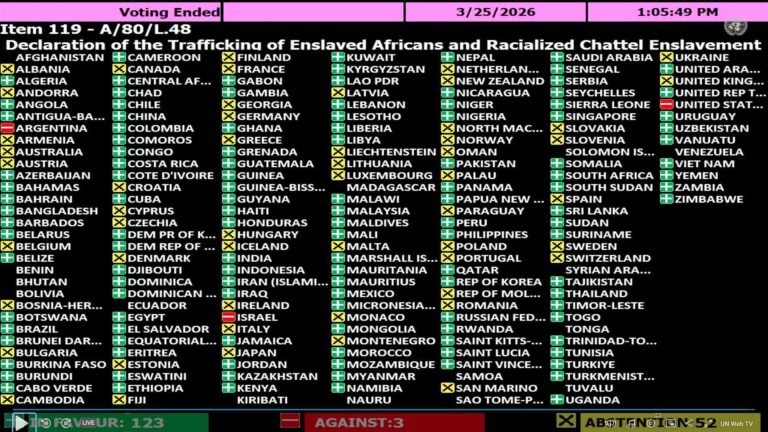
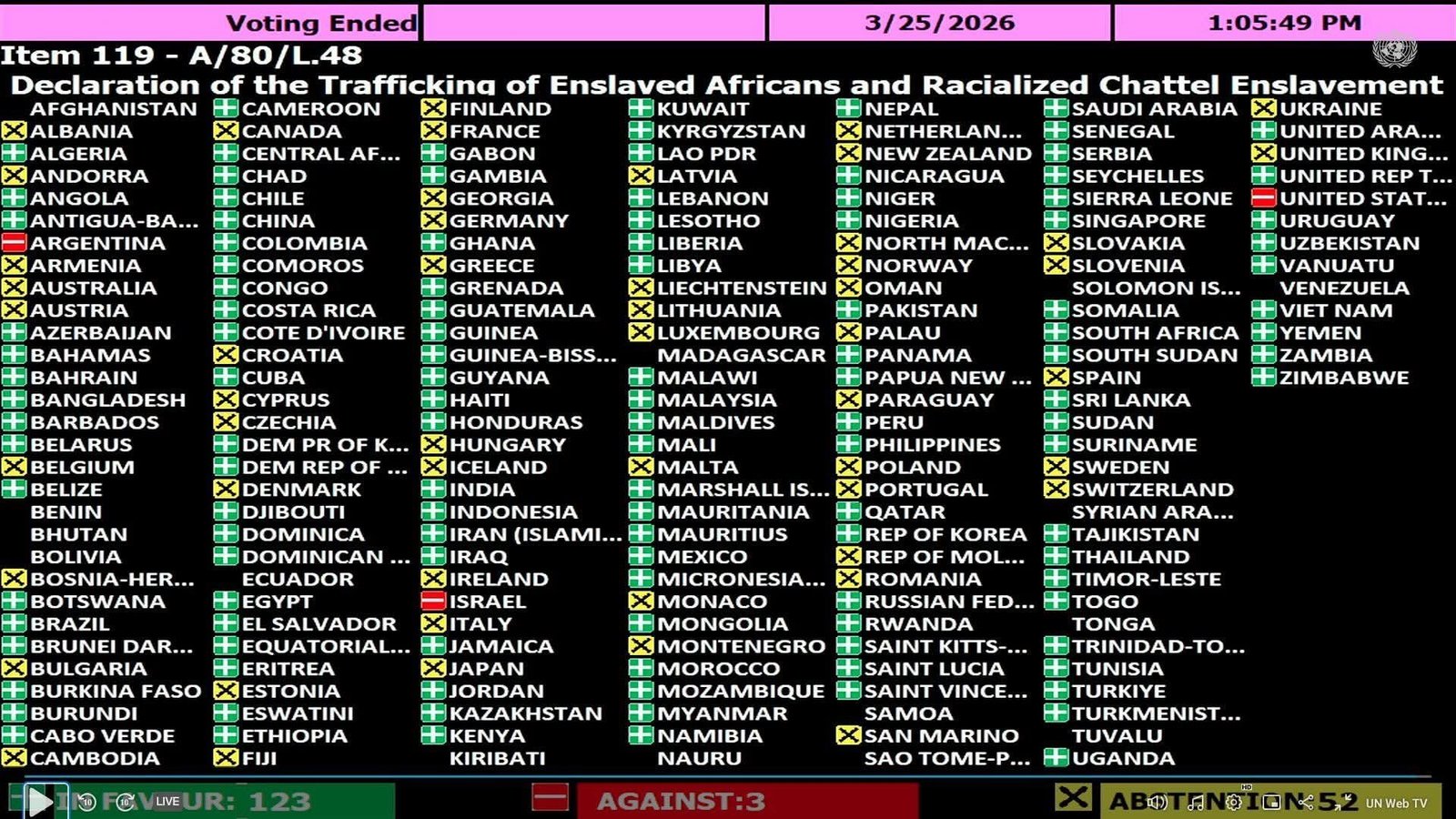
The resolution, listed as Item 119 – A/80/L.48, titled “Declaration of the Trafficking of Enslaved Africans and Racialized Chattel Enslavement,” received near-unanimous support from the 193-member body. According to the voting record, the final tally showed only three nations in opposition.
A photograph of the official voting results, circulated from the assembly floor, lists the names of member states spanning Afghanistan to Zimbabwe, with the vast majority recorded in favor. The document prominently notes “AGAINST: 3” at the conclusion of the list, though the specific identities of the dissenting countries were not immediately legible in the published image.
The vote marks a significant moment in the UN’s efforts to address historical injustices linked to the transatlantic slave trade, framing the practice not merely as a historical wrong but as the most severe crime against humanity.
The resolution’s passage drew sharp commentary from Ambassador Adonia Ayebare, who reacted to the vote in a post on the social media platform X.
“If our European Friends and other partners cannot support this common sense and historical United Nations General Assembly resolution on slave trade as the gravest crime against humanity, how can they expect us to support resolutions that concern them?” Ayebare wrote.
He added a pointed warning regarding diplomatic reciprocity, stating, “The UN committee rooms and the GA plenary hall have a long memory.”
Ayebare’s remarks reflect growing frustration among some member states, particularly from Africa, over what they perceive as a double standard in international forums—where resolutions concerning their historical grievances or contemporary interests are often opposed by Western nations who nonetheless seek support for their own geopolitical priorities.
The resolution’s overwhelming adoption, with only a handful of dissenting votes, underscores the broad international consensus on the historical condemnation of chattel slavery, while the diplomatic friction highlighted by Ayebare points to lingering divisions over how that history translates into modern political alliances within the United Nations system.
The General Assembly is expected to hold further discussions on the implementation and commemorative aspects of the resolution in upcoming sessions.
About The Author