
Who Will Lead Uganda’s Opposition Next?
As NRM endorses Speaker Among, opposition benches face critical leadership decision
With the ruling National Resistance Movement’s Central Executive Committee having endorsed incumbent Speaker Anita Among and Deputy Speaker Thomas Tayebwa for the incoming 12th Parliament, attention has now shifted to Uganda’s opposition benches.
The National Unity Platform (NUP), widely expected to retain the largest bloc of opposition MPs, must soon choose a Leader of the Opposition capable of mounting credible checks on government power following the contentious January 15, 2026 general elections.
Ssenyonyi emerges as frontrunner
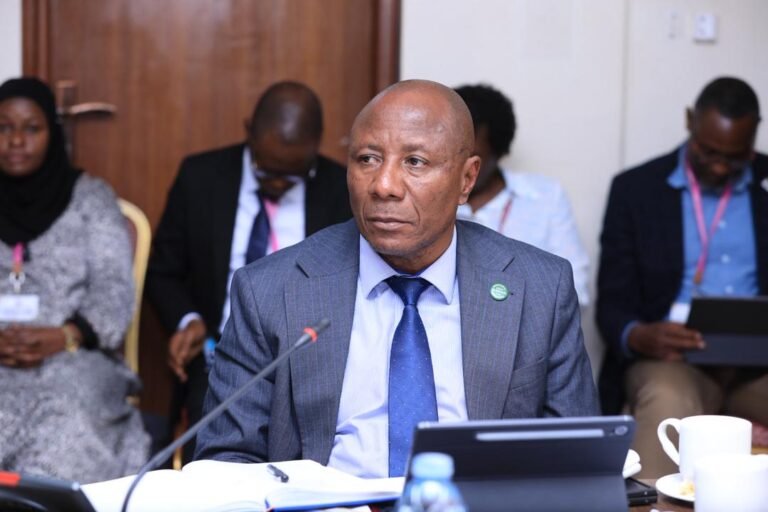
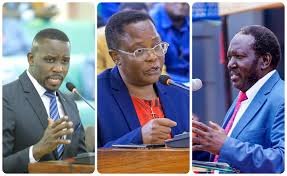
Incumbent Leader of the Opposition Joel Ssenyonyi, re-elected MP for Nakawa West, remains the frontrunner. Senior party figures and former opposition leaders have thrown their support behind him, citing his visibility, resilience under pressure, and ability to connect with the public.
However, others argue that parliamentary seniority and institutional know-how should take precedence in what promises to be a complex legislative term.
The weight of the office
The position is not merely ceremonial. Under Section 6(b) of the Administration of Parliament Act (Cap. 257), the Leader of the Opposition is elected internally by the party holding the highest number of opposition seats. That leader then appoints and chairs a shadow cabinet tasked with scrutinising government policy, proposing alternatives, and influencing legislation.
The role was formally created following the 2005 constitutional amendment that restored multi-party politics. Since then, Uganda has had seven Leaders of the Opposition: Prof. Morris Ogenga Latigo (FDC, 2006–2010), Nathan Nandala Mafabi (FDC, 2011–2013), Philip Wafula Oguttu (FDC, 2013–2015), Winifred Kiiza (FDC, 2015–2018), Betty Aol Ochan (FDC, 2018–2021), Mathias Mpuuga (NUP, 2021–2024), and Joel Ssenyonyi (NUP, 2024–present).
Former leaders weigh in
Former Leader of the Opposition Winnie Kiiza has issued one of the strongest endorsements for continuity. “In my own assessment, Honourable Joel Ssenyonyi has played that role very well, and I wouldn’t hesitate to recommend him to the National Unity Platform once again,” she said.
“He possesses the qualities that will continue steering the opposition to the next level.” Kiiza added that the current political climate demands a “solid” leader: “To have a Parliament with a lot of members who are there with stolen support, you need a leader of opposition who is solid.”
Betty Aol Ochan, who led the opposition in the 10th Parliament, echoed the call for continuity. “When someone is doing their job very well, I see no reason why they shouldn’t allow him to continue,” she said. “Parliament is a very tempting space, and selecting a Leader of the Opposition should actually factor in those other aspects.”
She noted Ssenyonyi’s track record of withstanding pressure: “I have not seen where they were confronted and stopped.”
Other contenders in the mix
Several veteran legislators are also in the conversation. John Baptist Nambeshe, Betty Nambooze (re-elected MP for Mukono Municipality), and Paul Mwiru — all experienced NUP lawmakers with years on the floor — are viewed by some as strong alternatives.
Proponents of experience argue that deep institutional knowledge is essential for navigating parliamentary procedure and building cross-party alliances in a House still scarred by post-election disputes.
Early tallies show NUP consolidating its position as the dominant opposition force, securing seven of Kampala’s 10 seats and over 50 confirmed constituencies nationwide, reinforcing the party’s decisive say in the selection.
What’s next
The 12th Parliament’s new MPs are scheduled to be sworn in between 13 and 15 May 2026. Whoever emerges as Leader of the Opposition will immediately face the task of assembling a shadow cabinet and setting the tone for accountability in President Yoweri Museveni’s new term.
About The Author