
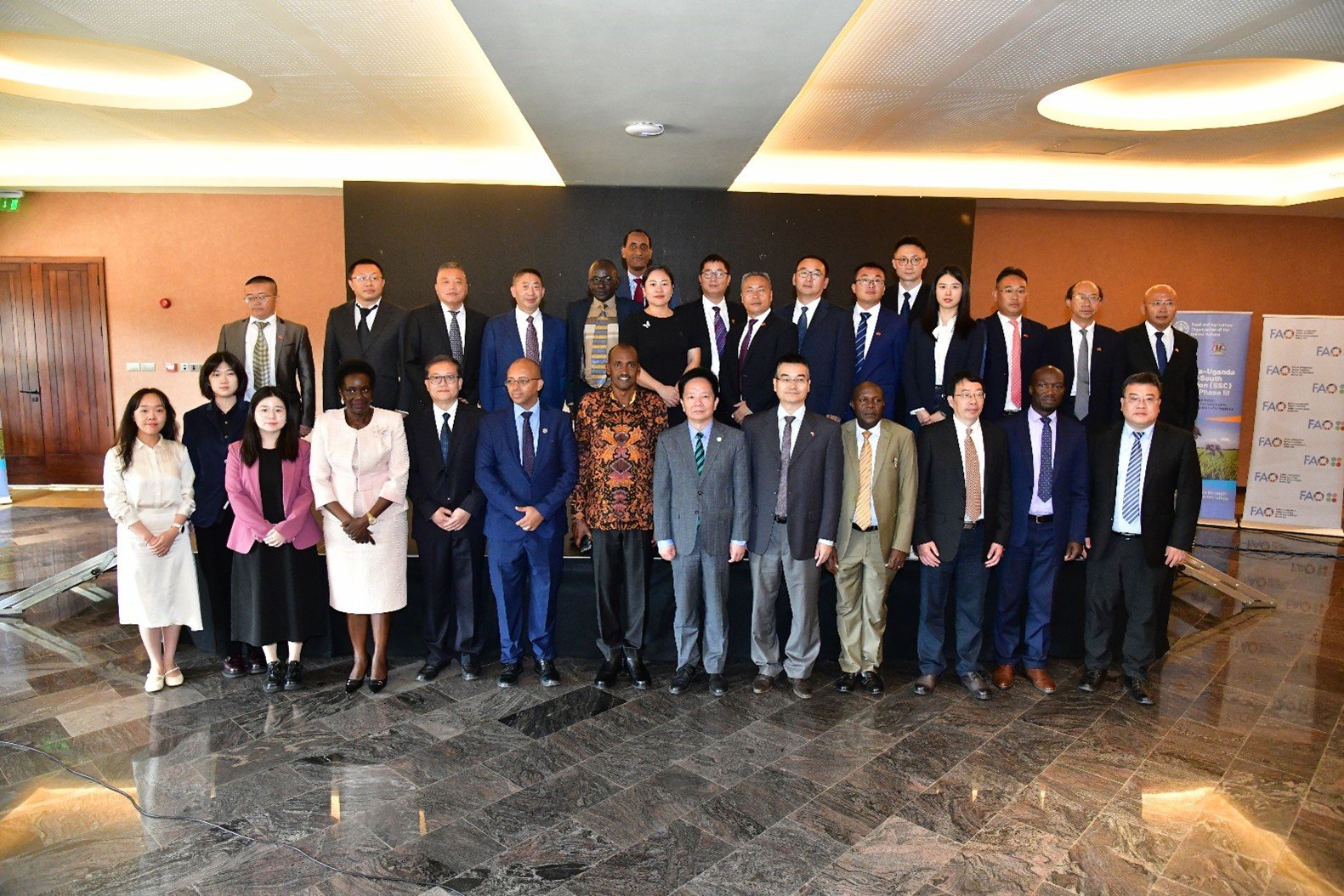
The Government of Uganda, the People’s Republic of China, and the Food and Agriculture Organization of the United Nations (FAO) today celebrated the successful completion of Phase III of the FAO-China-Uganda South–South Cooperation (SSC) project, marking another milestone in a long-standing partnership to transform agrifood systems and improve rural livelihoods.
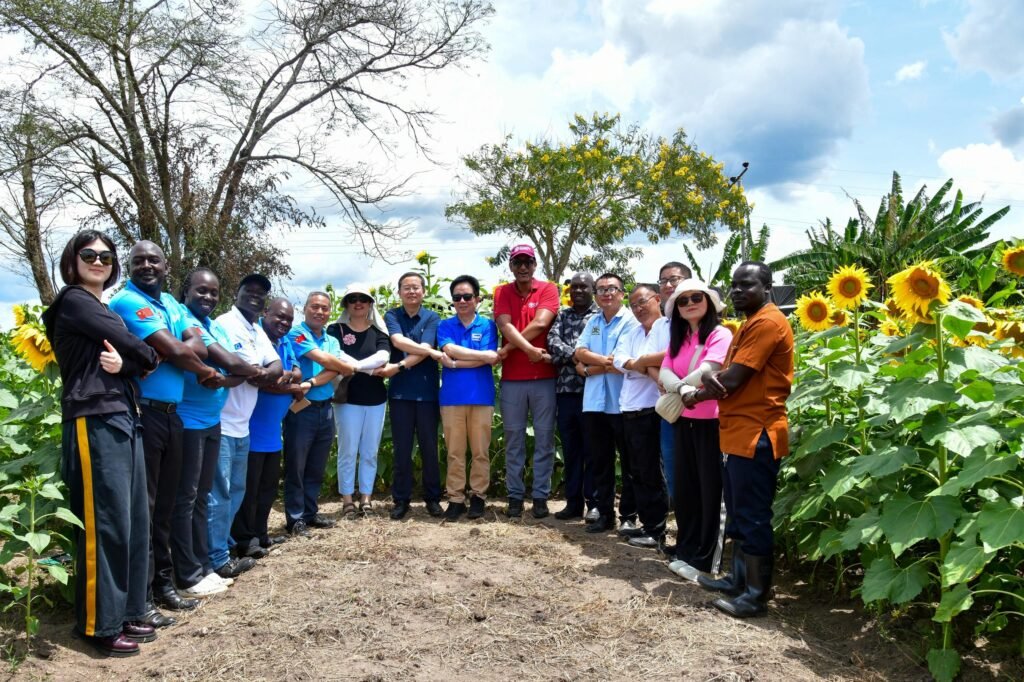
The project was implemented with the financial support of USD 3 million from the Chinese Government and USD 1.6 million from the government of Uganda (as part of the USD 9.6 million Unilateral Trust Fund established for the project). Over the past three years, the project has directly impacted more than 100,000 farmers, proving that peer-to-peer technical exchange is a premier engine for rural prosperity.
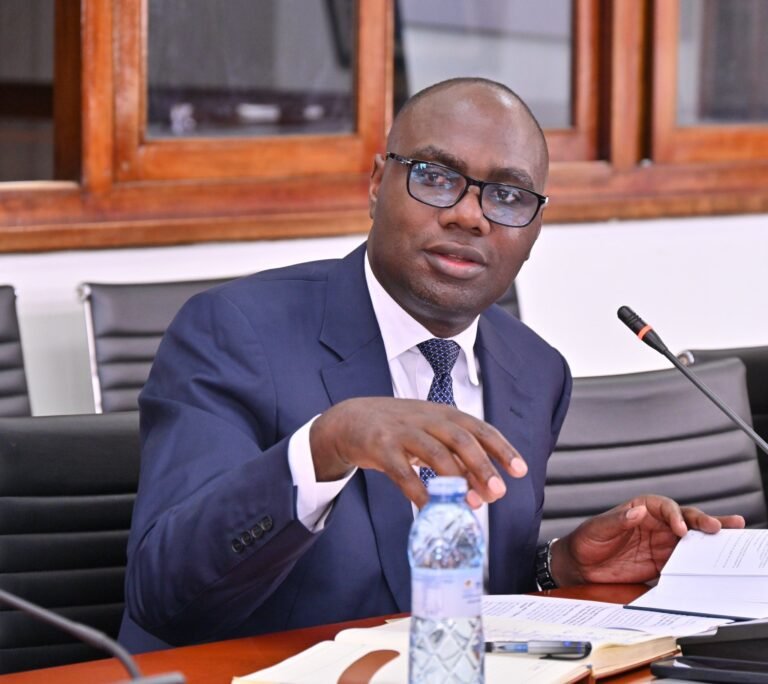
The project, implemented from June 2022 to May 2026, officially closed during a high-level workshop in Kampala. Presided over by the Hon. Frank Tumwebaze, Minister of Agriculture, Animal Industry and Fisheries, the event highlighted a historic shift in development financing: Uganda became the first developing nation to co-finance such a project through a Unilateral Trust Fund, signaling a new era of national ownership in international partnerships.
“The South–South Cooperation Project stands as a flagship of collaboration, demonstrating how countries of the global South can share knowledge and technology to transform agrifood systems for mutual benefit. Its achievements are a testament to a strong and mutually beneficial partnership between Uganda and China” said Hon Frank Tumwebaze, the Minister for Agriculture, Animal Industry and Fisheries.
Hon Frank underscored the importance of the project, saying that, “it directly supports Uganda’s priorities on agro-industrialization, food security and rural livelihoods, strengthening key value chains and opening new market opportunities for our farmers.”
Over the past four years, the initiative has demonstrated the power of practical cooperation, connecting expertise, innovation, and local knowledge to deliver tangible results for farming communities. From high-yield rice and resilient foxtail millet varieties to improved livestock breeds and integrated rice–fish farming systems, the project has introduced solutions that are already changing how farmers produce, adapt, and earn, through the on-site technical support by the long-term Chinese experts dispatched by the Ministry of Agriculture and Rural Affairs of China.
More than 200 crop varieties were introduced and tested, with four, one hybrid rice and three foxtail millet varieties, now officially released for commercial production. In demonstration sites, hybrid rice yields reached up to 6.9 tonnes per hectare, while foxtail millet yielded up to 4.2 tonnes per hectare, offering farmers more reliable and profitable options.
Equally significant has been the project’s investment in people. Through hands-on training, technical exchanges, and the dissemination of practical guides, farmers, extension workers, and institutions have strengthened their capacity to sustain and scale these innovations.
Speaking at the event, Anping Ye, FAO’s South-South and Triangular Cooperation Division Director emphasized that the Uganda partnership stands out globally as a model of effective SSC, anchored in strong national leadership, mutual respect, and shared commitment.
Uganda’s financial contribution to Phase III through a Unilateral Trust Fund is historic, making it the first developing country to co-finance a project under the FAO–China SSC Program.
This partnership demonstrates what is possible when countries share knowledge as equals,” said Mr Anping Ye, “The results we celebrate belong to the farmers who have embraced these new technologies and Uganda’s commitment to co-financing the project.
The concluding workshop also provided a platform for farmers, district leaders, and stakeholders to showcase innovations, exchange experiences, and highlight the project’s real-world impact at the community level.
Mr Guo Libin, Secretary of the CPC Committee, Deputy Director-General (Director General level) of Foreign Economic Cooperation Centre (FEEC), MARA of China emphasized that SSC strengthens national capacity, promotes knowledge sharing and delivers mutual benefits. He encouraged partners to build on lessons learned and highlighted the importance of sustaining momentum through continued collaboration.
Mr. Fan Xuecheng, Chargé d’Affaires ad Interim at the Embassy of China in Uganda highlighted that the China–Uganda–FAO partnership represents a global model of successful SSC. He emphasized that collaboration among developing countries can generate effective solutions to food security, poverty reduction and inclusive growth.
The United Nations Resident Coordinator, Mr. Leonard Zulu, emphasized the importance of partnerships built on equality.
“We have seen how technical cooperation, when embedded in national institutions and aligned with local realities, can strengthen the foundations of transformation. Not just increasing productivity, but enabling farmers, extension systems, and value chains to function more effectively and sustainably,” he said.
Scaling for Sustainability
While the project officially concludes, partners emphasized that this is not an end but a transition to scale, with a strong focus on embedding proven South–South Cooperation technologies into Uganda’s national extension system, strengthening value chains and private sector engagement to ensure farmers have reliable markets for their increased production, and establishing innovation hubs to sustain research, knowledge exchange and collaboration between Uganda and China.
“Our task now is to ensure these results endure—by institutionalizing what works and enabling farmers and national systems to carry this momentum forward and scale it across the country,” said Ezana Kassa, FAO Representative in Uganda.
About the FAO-China-Uganda SSC Project
The project is a flagship initiative of the FAO-China South–South Cooperation Programme. It facilitates the transfer of Chinese agricultural expertise and technology to help Uganda achieve its national development goals and transform its agrifood systems.
Resources
Rice-fish farming in the Land of Milk and Honey
ENDS
Read the story online here.
About The Author