
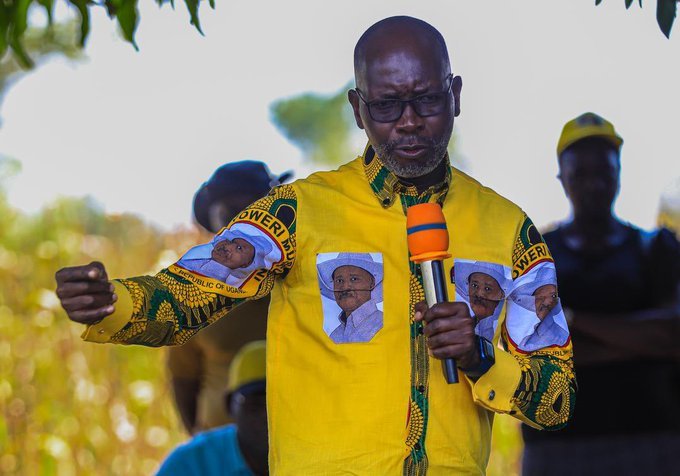
NRM Official Vows Long-Term Rule Amidst Election Defeat, Points to Museveni’s Son and Grandchildren
In a striking declaration of political continuity, Government Chief Whip Hamson Obua asserted the enduring dominance of the National Resistance Movement (NRM) while conceding his recent parliamentary seat loss. The comments were made following his defeat to Fred Jalameso of the opposition Uganda People’s Congress (UPC) in the Ajuri County constituency.
Speaking to media, Obua dismissed any suggestion that the NRM’s strength was waning. “I want to assure you that NRM is not UPC. We are strong enough and we are here to stay,” he stated emphatically.
He then outlined a vision of leadership succession stretching decades into the future. “After Museveni, we have his son Muhoozi, and Muhoozi also has his children who can lead this country,” Obua declared, referencing President Yoweri Museveni, who has been in power since 1986, and his son, Muhoozi Kainerugaba, a senior military officer and increasingly prominent political figure.
The remarks have ignited immediate debate, focusing on the concept of hereditary political succession within the ruling party. Obua’s statement is one of the most direct public assertions from a senior NRM figure framing the Museveni family as the central pillar of Uganda’s future leadership.
The context of the comments underscores their significance. They came not from a position of strength, but in the wake of a significant local electoral setback for the ruling party. The loss of Ajuri County to a resurgent UPC candidate, Fred Jalameso, points to shifting political dynamics in some regions, even as the NRM maintains a firm grip on national power.
Political analysts suggest Obua’s message serves a dual purpose: to project unwavering confidence in the NRM’s institutional permanence and to solidify the narrative around Muhoozi Kainerugaba as the inevitable successor, a topic that has been the subject of widespread public speculation but is often handled with ambiguity by the party.
Opposition groups have condemned the statement as indicative of a monarchical system antithetical to democratic principles. The UPC, celebrating its victory, has positioned itself as a party offering a democratic alternative.
As Uganda looks toward future national elections, Obua’s candid succession plan, delivered from the backdrop of an electoral defeat, is likely to fuel further discussion about power, dynasty, and democracy in the East African nation.
About The Author