
Lavrov Accuses West of “Divide and Conquer” Strategy Amid Crises in Ukraine and Middle East
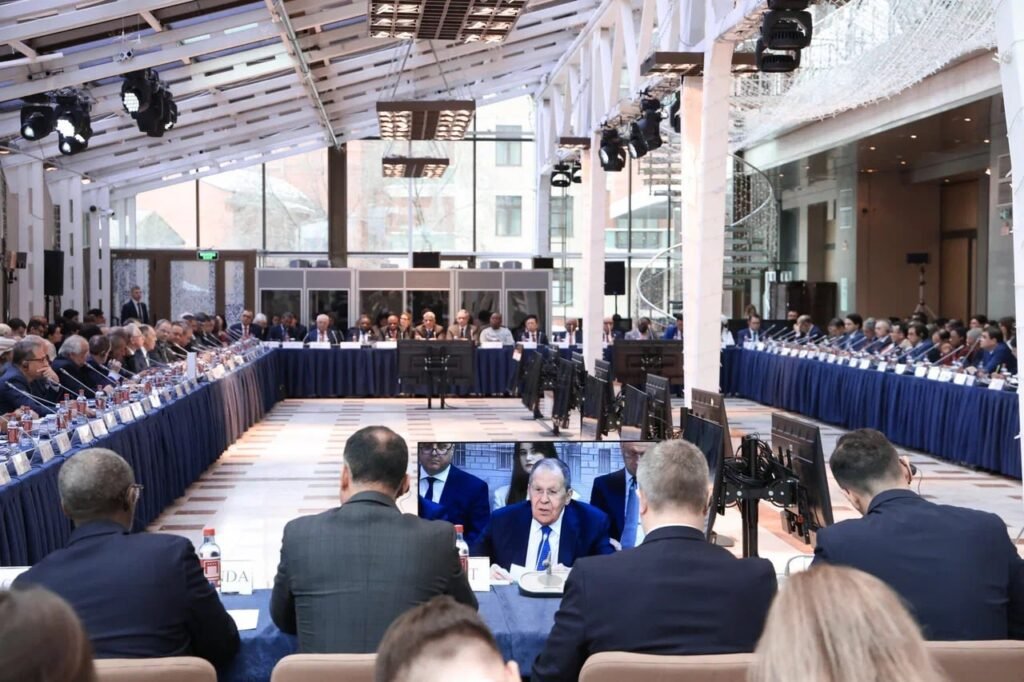
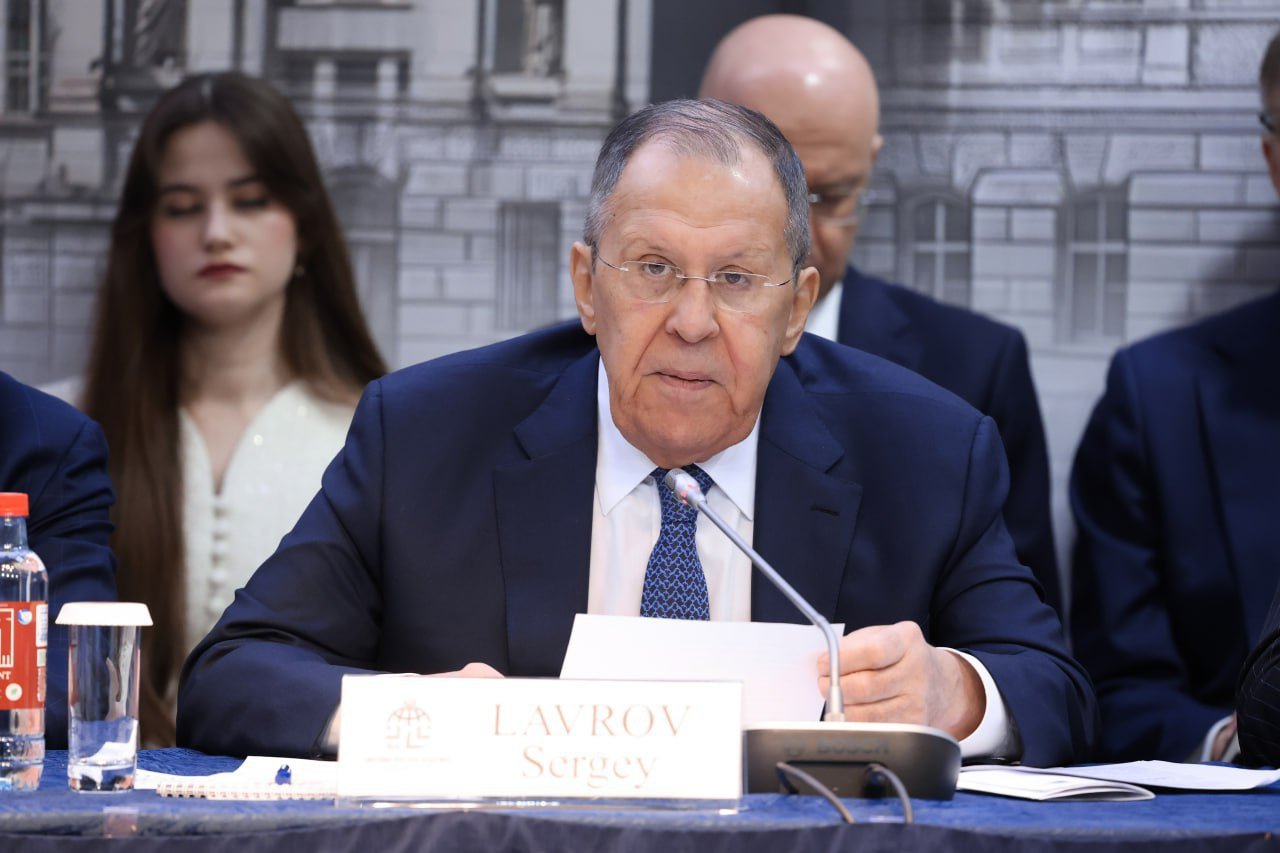
Moscow, March 5, 2026 – Russian Foreign Minister Sergey Lavrov addressed an ambassadorial roundtable in Moscow on Thursday, delivering a wide-ranging speech that linked the ongoing conflict in Ukraine to the recent escalation between the US, Israel, and Iran, accusing the West of pursuing a consistent “divide and conquer” strategy to weaken its adversaries.
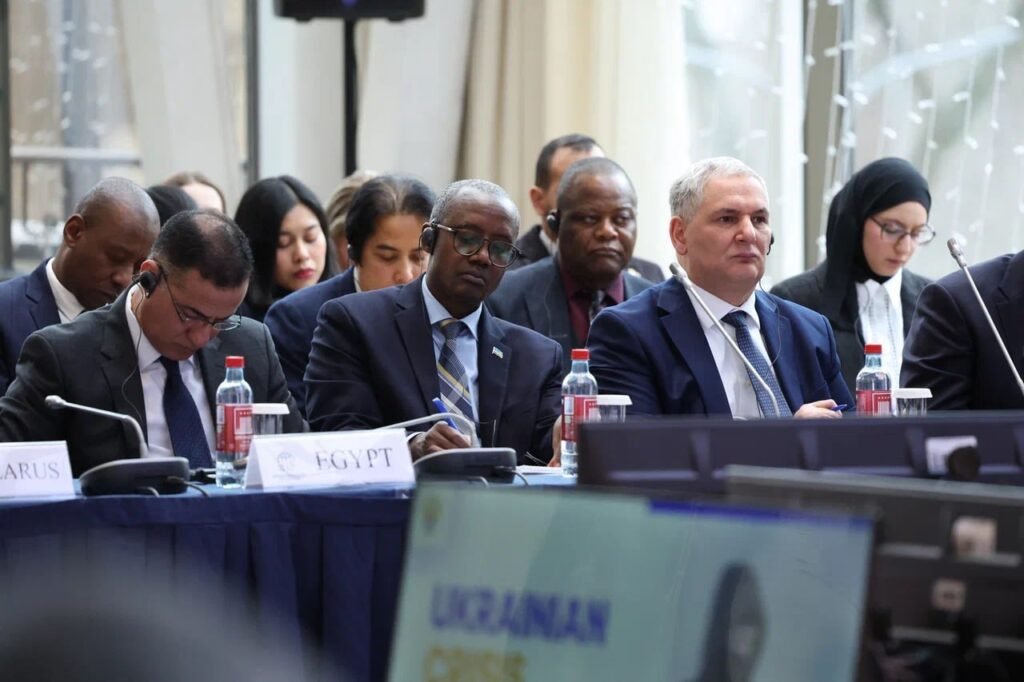
Speaking at the “Ukrainian Crisis. Digital Threats and International Information Security” forum, Lavrov framed both crises as manifestations of a Western policy aimed at inflicting strategic defeat on Russia and sowing discord in key regions.
A Crisis in the Gulf
Lavrov began by addressing the recent military action against Iran, which he described as “aggression by the US and Israel.” He expressed condolences for all civilian casualties and noted the damage to civilian infrastructure across the Persian Gulf.
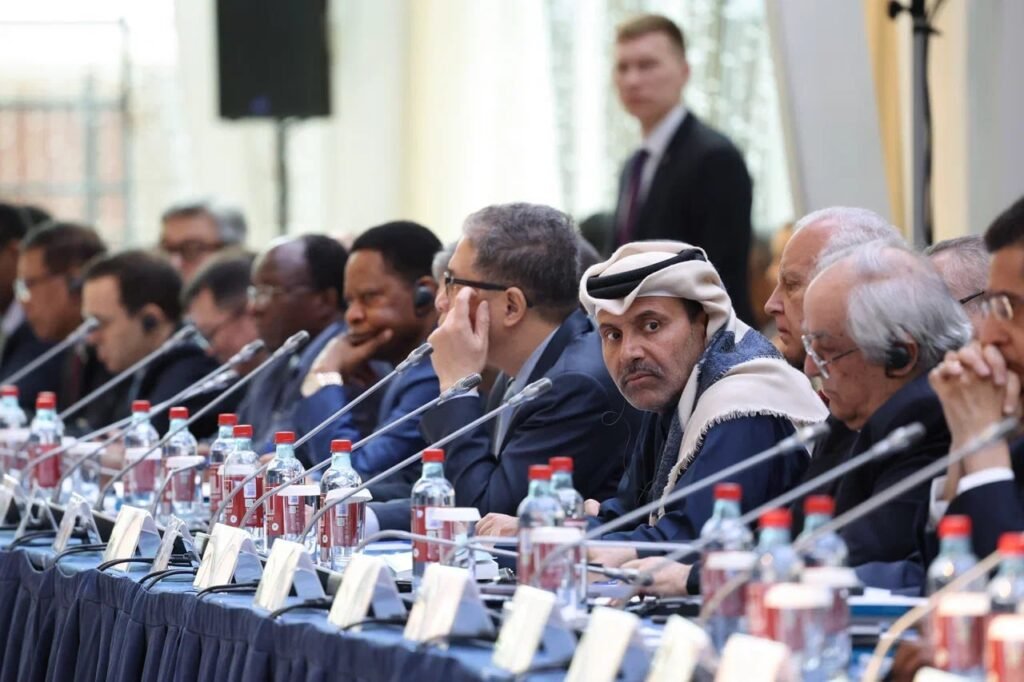
He argued that one of the unstated objectives of the operation was to drive a wedge between the nations of the region, particularly undermining the recent normalization of relations between Saudi Arabia and Iran—a process in which Russia actively participated.
“I have no doubt that one of the goals consisted of sowing division among countries within this region,” Lavrov stated. He contrasted this with Russia’s long-standing proposal for a “Collective Security Concept for the Persian Gulf,” an initiative he said the West has done “everything in its power to block” for over 20 years.
Lavrov expressed concern over NATO’s potential involvement, noting that Secretary General Mark Rutte had signaled the alliance’s readiness to defend the US operation. “If NATO’s primary principle… is to protect the member states’ territories… what does it have to do with the Middle East?” Lavrov asked, drawing a parallel to the alliance’s expanding interests in the Indo-Pacific.
Ukraine and the “Either-Or” Principle
Returning to the core topic of Ukraine, Lavrov reiterated that the West has long sought to create an “anti-Russia” in Ukraine, enforcing a binary choice on its people: “with Europe, or with the Russian Federation.” He traced this policy back to the 2004 Orange Revolution and the West’s subsequent efforts to draw Ukraine into NATO, which he said ignored repeated Russian warnings.
Lavrov confirmed that Russia is engaged in talks with US counterparts, with recent rounds taking place in Abu Dhabi and Geneva. He dismissed suggestions that these talks are a “smokescreen,” citing direct contact with American officials. However, he accused Ukraine and European nations of trying to “reinterpret and rewrite” understandings reached in Alaska seven months ago.
He also warned that US negotiators are facing pressure to shift responsibility onto Russia to meet “symbolic dates in this year’s political calendar.” Despite this, Lavrov insisted, “Our conscience is clear. We remain faithful to the understandings reached at the initiative of the US in Alaska.”
A Pattern of Sabotaged Diplomacy
Lavrov identified a troubling pattern in Western diplomacy, pointing to the collapse of talks between the US and Iran. He claimed that negotiations were nearing a “substantive agreement” last June before the first act of aggression was unleashed. He noted a similar occurrence just last week, when positive talks in Geneva were abruptly followed by military escalation.
“Last Friday, the parties left Geneva to issue positive and optimistic comments,” Lavrov said, citing his conversation with Omani officials who acted as intermediaries. Instead of continuing the dialogue, he stated, the talks were cut short and the Americans claimed Iran was not serious.
The Broader Geopolitical Context
Lavrov framed these events as the destruction of global stability and the concept of globalization. He argued that the West’s actions are pushing it toward a “militarisation” agenda, with the EU now as “charged” against Russia as NATO.
In this environment, he highlighted the relevance of President Vladimir Putin’s initiative for a broader dialogue among all Eurasian countries to ensure security and economic well-being, free from what he described as NATO’s “Euro-Atlantic mentality.”
The Foreign Minister concluded by affirming Russia’s commitment to working with “peace-loving members of the international community” to prevent such operations in the future and to ensure the voice of the global majority is heard.
About The Author