
Ghana’s President Calls for Unified West African Front Against Extremism, Labeling it a “Spreading Cancer”

ACCRA, Ghana – In a significant diplomatic move, Ghanaian President John Mahama has proposed a new regional initiative to combat the escalating threat of violent extremism in the Sahel, which he described as a “cancer” spreading throughout West Africa.
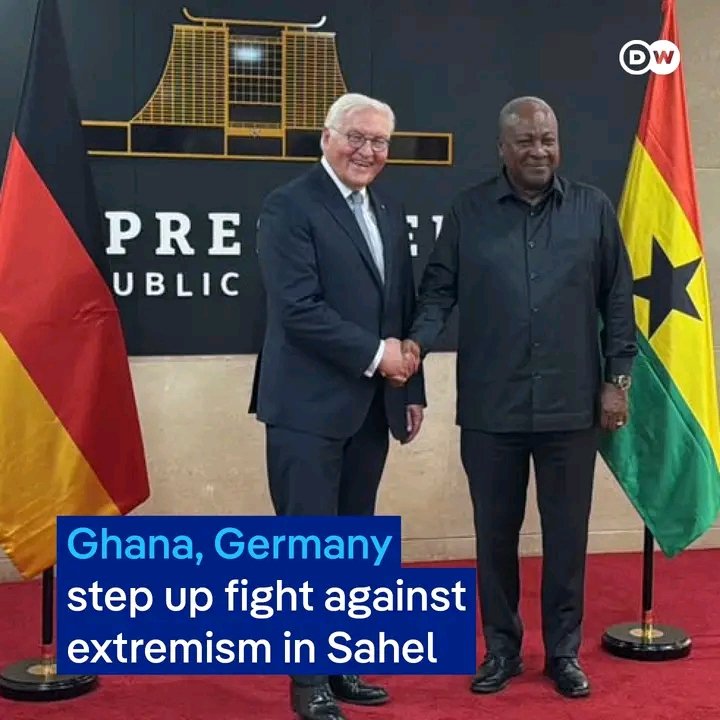
The call for action came during high-level talks in Accra with visiting German President Frank-Walter Steinmeier. President Mahama emphasized the urgent need for a broader, more inclusive security framework to address the growing instability.
“The instability in the Sahel is a spreading cancer that threatens the entire region,” Mahama stated, underscoring the transnational nature of the threat. He argued that the existing regional coordination has been critically weakened following the withdrawal of Mali, Niger, and Burkina Faso from the Economic Community of West African States (ECOWAS).
To counter this, Mahama’s proposed initiative would involve both member states of ECOWAS and non-member nations in the Sahel, aiming to foster a united front against jihadist groups that have gained significant ground in recent years.
German President Frank-Walter Steinmeier expressed strong support for the initiative and commended Ghana’s diplomatic leadership in the region. He reaffirmed Germany’s commitment to backing regional counter-terrorism efforts, highlighting the international dimension of the conflict.
“The stability of West Africa is of paramount importance, and Germany stands ready to support our partners in this fight,” President Steinmeier said.
Beyond security concerns, the two leaders also discussed avenues for deeper bilateral cooperation. The talks covered migration, skills development, and climate action. President Mahama specifically advocated for the creation of more legal migration pathways for skilled Ghanaian workers seeking opportunities in Germany, framing it as a matter of mutual benefit.
The meeting in Accra signals a concerted effort to revitalize a coordinated regional response to a security crisis that increasingly threatens coastal West African nations previously considered more stable.
About The Author