
Kazakhstan and Uzbekistan Forge a New Era of Strategic Partnership in Central Asia

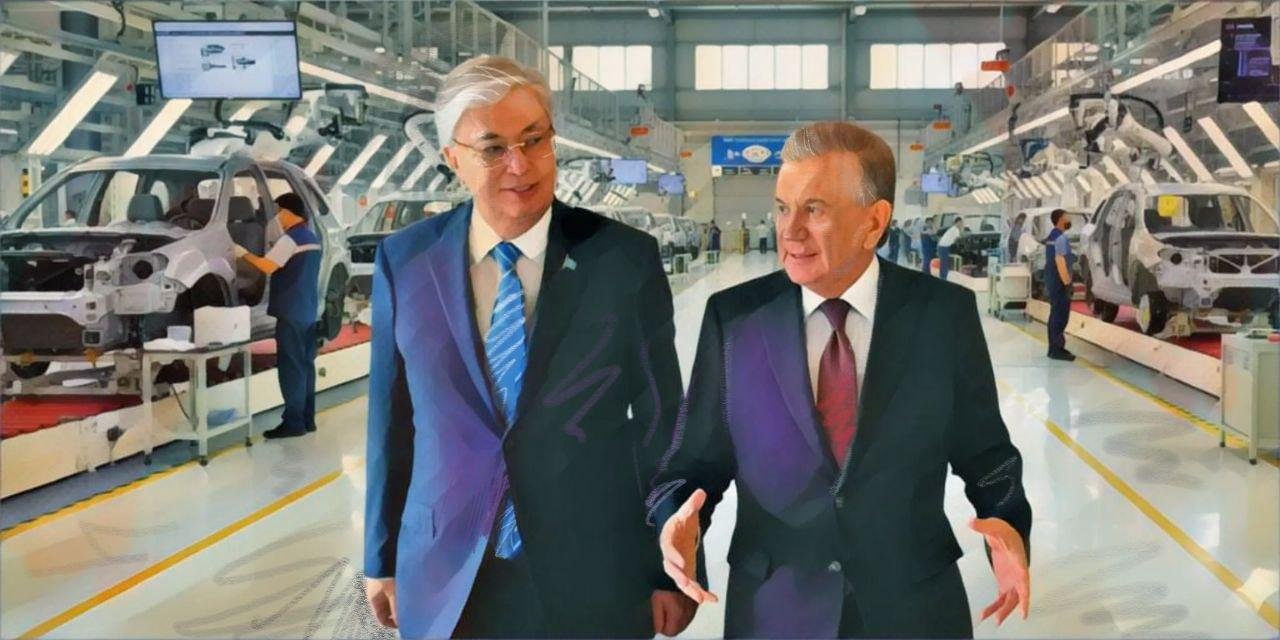
In a significant shift from historical tensions, Kazakhstan and Uzbekistan are charting a new course for Central Asia, moving away from rivalry and toward a deep strategic partnership. This transformation was underscored during Kazakh President Kassym-Jomart Tokayev’s state visit to Tashkent on November 14-15, where the two nations launched joint projects worth $1.3 billion and reaffirmed their ambition to increase bilateral trade to $10 billion by 2030 .
The visit, which included the second meeting of the Supreme Interstate Council, highlighted a commitment to economic integration and regional stability, signaling a transformative era for the entire Central Asian region .
From Soviet-Era Rivalry to Strategic Alliance
The relationship between Central Asia’s two largest nations has not always been so cordial. Historical competition dates back to the Soviet era, driven by personal rivalries between republican leaders and economic specialization that created distinct identities—Kazakhstan as a grain hub and Uzbekistan as a cotton producer .
After the collapse of the Soviet Union, this rivalry intensified as Presidents Nursultan Nazarbayev and Islam Karimov were widely viewed as competing for regional leadership. For decades, disputes over boundaries, water, and natural resources created friction that some analysts believe hindered regional cooperation, including efforts to preserve the Aral Sea .
“Contrary to all kinds of speculation by so-called ‘experts,’ Kazakhstan and Uzbekistan are by no means rivals or even competitors, but strategic partners, reliable allies, walking together on the path of progress and development,” President Tokayev stated following the meetings .
His sentiment was echoed by President Shavkat Mirziyoyev, who emphasized, “As close friends and neighbors, we sincerely rejoice in Kazakhstan’s successes” .
Concrete Economic Cooperation
The newfound partnership is yielding substantial economic成果. Bilateral trade between the two countries has reached $4 billion since the beginning of the year, putting them on track toward their $10 billion goal for 2030 .
The two leaders virtually launched seven major projects across multiple sectors during the visit. These include:
· The “Central Asia” International Industrial Cooperation Centre near the border crossing points of Atameken and Gulistan, designed to speed up cargo delivery and reduce logistics costs .
· A new petrochemical complex for alkylbenzene production in Uzbekistan’s Kashkadarya region .
· The “Silkway Central Asia” multipurpose logistics center in the Tashkent region .
· Mutual hospitality investments, with the “Astana” hotel complex in New Tashkent and the “Tashkent” hotel complex in the Kazakh capital .
Beyond these launches, the two nations have prepared a large-scale Industrial Cooperation Program with a total value of over $8 billion, encompassing projects in chemical, infrastructure, logistics, and agro-industrial sectors .
A Broader Regional Shift
The bilateral partnership reflects a broader trend toward regional consolidation. On November 16, Tashkent hosted the VII Consultative Meeting of the Heads of State of Central Asia, attended by leaders of Kazakhstan, Uzbekistan, Kyrgyzstan, Tajikistan, and Turkmenistan. In a historic move, Azerbaijan was officially admitted as a full member of the consultative forum .
This expanding cooperation underscores what analysts describe as a preference for “regional consolidation over integration” . Unlike formal integration that might involve supranational structures, Central Asian states are focusing on practical cooperation while preserving sovereignty.
President Tokayev emphasized this vision at the regional summit, noting that “Central Asia has entered a period of profound transformation” and calling for enhanced coordination in trade, transport, and technology . He proposed establishing a regional research center for rare earth metals in Astana and called for a Central Asian declaration on the responsible use of artificial intelligence .
Complementary Economies, Shared Challenges
Analysts note that the two economies are increasingly complementary rather than competitive. Kazakhstan brings strengths in energy resources, logistics, and mineral wealth, while Uzbekistan offers a large labor force, expanding manufacturing base, and industrial capacity .
This synergy is evident in their coordinated infrastructure strategies. Kazakhstan is focusing on land transit and rail modernization, having signed a $4.2 billion locomotive contract with U.S. company Wabtec . Meanwhile, Uzbekistan is positioning itself as an air connectivity hub, with Uzbekistan Airways ordering 14 Boeing 787-9 Dreamliner aircraft to expand its route network .
Despite the positive momentum, structural challenges persist. Water management remains a sensitive issue, though both sides are now addressing it through cooperation rather than conflict. During the visit, they signed an Agreement on the Joint Management and Use of Transboundary Water Bodies, reflecting the importance of coordinated management of shared resources .
A Symbolic Gesture
The strengthening ties were symbolized by President Mirziyoyev conferring Uzbekistan’s highest state award, the Order “Oliy Darajali Dustlik” (“High-ranking Friendship”), on President Tokayev. The Kazakh leader said he accepted the honor as a manifestation of respect “for himself and for the people of Kazakhstan” .
The visit concluded with the adoption of a joint statement and the signing of 17 bilateral documents covering energy, geology, water management, customs coordination, healthcare, tourism, and youth cooperation, laying the groundwork for continued partnership .
As Kazakh political scientist Gaziz Abishev noted, “Petty, quarrelsome rivalry is the mindset of the short-sighted. Kazakhs and Uzbeks have set themselves higher goals, to develop Central Asia into a region of prosperity and global relevance” .
With their combined economic heft and coordinated vision, Kazakhstan and Uzbekistan are positioned to anchor a more connected and resilient Central Asia, transforming a region once characterized by competition into one defined by cooperation and shared ambition.
About The Author