
The Prophetic Threat: Revisiting bin Laden’s Chilling 1997 CNN Interview
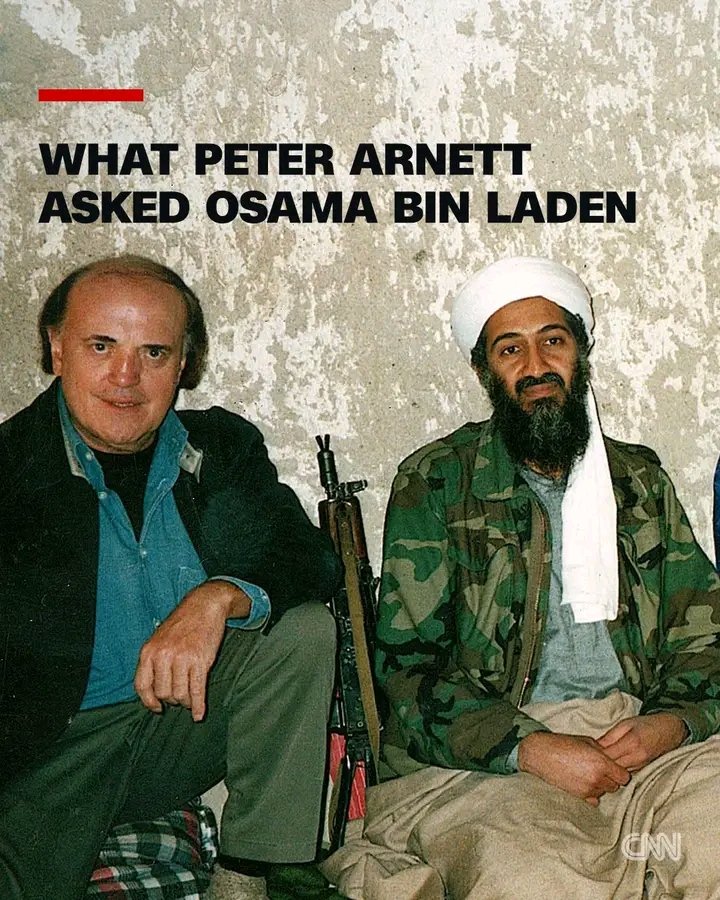
On a bitterly cold March night in 1997, high in the mountains of eastern Afghanistan, a small CNN team sat surrounded by well-armed al-Qaeda fighters in a mud hut. Veteran correspondent Peter Arnett looked at their leader and asked a deceptively simple question: “What are your future plans?”
The tall, quiet Saudi exile, Osama bin Laden, replied: “You’ll see them and hear about them in the media, God willing.” It was a chilling, prophetic statement that the world would come to understand with horrific clarity over the next four years.
This interview, facilitated by producer Peter Bergen, was bin Laden’s first television appearance with Western media, a deliberate choice by the al-Qaeda leader to use CNN as his platform to declare war against the United States. At the time, however, its full significance was not widely recognized.
The Path to the Interview
The 1997 interview was the result of weeks of careful negotiation. Peter Bergen had spent considerable time in London building trust with bin Laden’s associates, including his de facto media advisor, Khalid al-Fawwaz. Bergen’s pursuit was driven by a conviction that bin Laden was connected to the 1993 World Trade Center bombing, which he believed was a “dress rehearsal” for something larger.
The CNN team faced extraordinary security measures. They were stripped of their equipment, blindfolded, and driven through remote terrain into Afghanistan. Al-Qaeda itself provided the camera that filmed the historic exchange. Bergen recalls that bin Laden’s circle was deeply paranoid, suspecting the journalists of being intelligence agents, and treated their leader with immense reverence, hanging on his every word.
The Message and The Messenger
During the interview, bin Laden explicitly laid out his rationale for jihad. He criticized American foreign policy, specifically U.S. support for Israel and Middle Eastern allies like Saudi Arabia. This directly contradicted the later claims by President George W. Bush that America was attacked because of its “freedoms”.
Arnett was the ideal journalist for this confrontation. He was a Pulitzer Prize-winning reporter whose fearless coverage of the Gulf War, where he remained in Baghdad as American bombs fell, had made him a global celebrity and earned him a reputation for fairness. Bergen believes this reputation was crucial in CNN securing the exclusive interview over competitors like the BBC and CBS “60 Minutes”.
A Warning Unheeded
Initially, the interview “landed with a thud”. While some within the U.S. government were interested in bin Laden, it was a very small group. Bergen himself admitted he wasn’t sure if bin Laden would follow through on his threats.
This perception changed with terrifying speed. Bin Laden made good on his promise through the media:
· 1998: Al-Qaeda’s near-simultaneous bombings of U.S. embassies in Kenya and Tanzania killed more than 200 people.
· 2000: The attack on the USS Cole in Yemen killed 17 American sailors.
· 2001: The September 11 attacks killed nearly 3,000 people, transforming global politics and initiating the “Global War on Terror”.
In hindsight, Bergen notes that the al-Qaeda leader had even hinted at earlier, lesser-known victories, like the 1992 bombing of hotels in Yemen housing American servicemen.
The Journalist’s Legacy
Peter Arnett, who died in December 2025, was remembered as a “newsman’s newsman”. His career, spanning from the rice paddies of Vietnam to the deserts of Iraq, was defined by a commitment to report from the heart of conflict. He shared a piece of wisdom with Bergen in the war zones of Afghanistan that the younger journalist never forgot: “Never do anything for fun in a war zone”.
The 1997 interview stands as a grim milestone. It was a clear declaration of war delivered to a global audience, a warning from the future architect of 9/11 that was tragically underestimated. It underscores the critical role of investigative journalism in bringing hidden threats to light, even when the full meaning of the message only becomes clear in the devastating reflection of history.
About The Author