
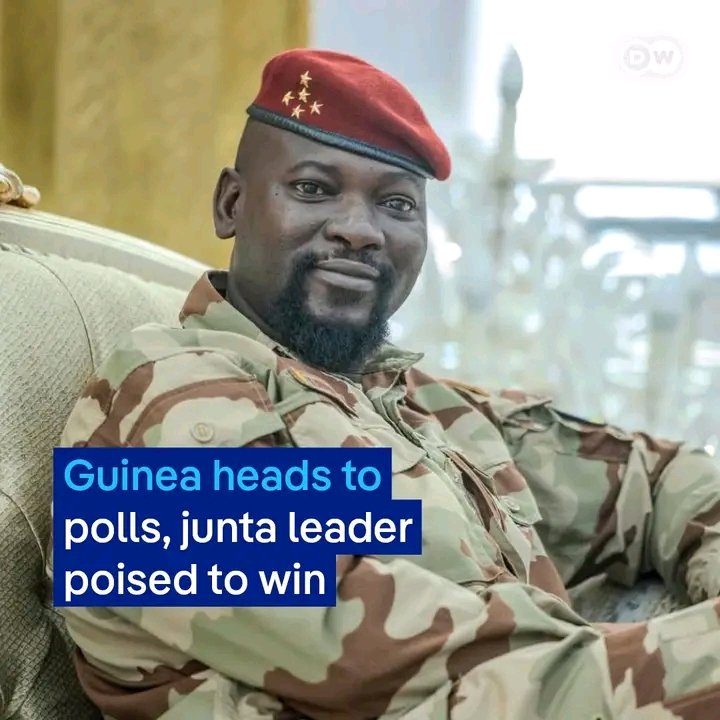
HEADLINE: Guineans Head to Polls in First Post-Coup Election, Junta leader favored to win.
Voters in Guinea are casting ballots on Sunday in the country’s first presidential election since a military coup deposed former President Alpha Condé four years ago. The vote is widely seen as a pivotal test for the ruling junta’s promised transition to civilian rule, though critics allege the process is skewed to guarantee victory for junta leader and incumbent President Mamadi Doumbouya.
Doumbouya, a former special forces colonel who seized power in September 2021, is the clear frontrunner. He faces eight other candidates, with his main challenger considered to be Yero Baldé of the Democratic Front of Guinea (FDG). However, opposition figures and civil society groups have consistently accused Doumbouya of systematically stifling dissent, detaining opponents, and restricting freedoms since the coup, creating an uneven political playing field.
“The conditions for a fair, transparent, and inclusive election do not exist,” said a spokesperson for a coalition of opposition parties in the lead-up to the vote. “The public media is monopolized, and the climate of fear persists.”
The election unfolds against a backdrop of severe economic hardship for many Guineans. Despite the nation’s vast reserves of bauxite, iron ore, gold, and diamonds, the World Food Program reports that more than half the population faces acute food insecurity. Voters express a desire for stability and economic improvement above all else.
“I am voting for peace and for work,” said Mariam Diallo, a trader in the capital, Conakry. “We need a leader who will put the country’s wealth to work for its people.”
Approximately 6.7 million registered voters are eligible to participate. Guinean authorities have stated that provisional results are expected within 48 hours of the polls closing. International observers are monitoring the process closely.
The government has framed the election as the culmination of a promised transition. “This Sunday, the Guinean people are choosing their future president in a transparent and democratic vote,” a junta spokesman stated last week.
Regardless of the outcome, the next administration will face immediate and immense challenges: revitalizing a struggling economy, reconciling a divided nation, and navigating the public’s high expectations for tangible change after years of political turmoil.
About The Author