
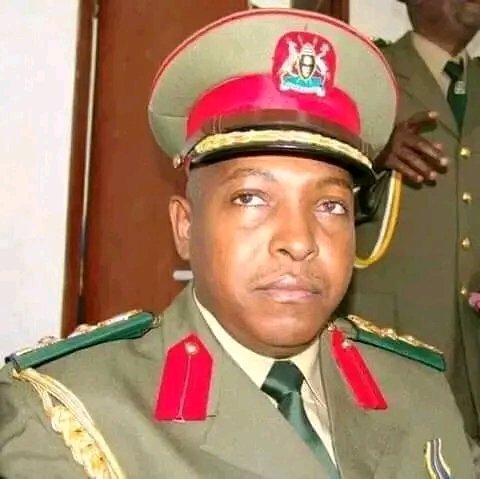
Brigadier Noble Mayombo: A Legacy of Power, Controversy, and Unanswered Questions
KAMPALA, UGANDA – The story of Brigadier Noble Mayombo is one of meteoric rise, formidable influence, and a sudden, shrouded end that continues to resonate in Uganda’s political landscape. From a law student turned guerrilla fighter to a top military intelligence chief and government permanent secretary, his life was a testament to loyalty and service within President Yoweri Museveni’s system, a journey cut tragically short at age 42.
Early Life and Rapid Ascent
Born in 1965 into the Toro Kingdom’s Babiito Royal Clan,Mayombo’s path seemed set for academia. After attending prestigious schools like Ntare School, he was admitted to Makerere University to study law. However, in 1985, he left his studies to join the National Resistance Army (NRA) in its final push for power. Following the NRA’s victory in 1986, he returned to complete his law degree, later earning a Master’s in Human Rights Law.
His legal acumen and loyalty propelled him. At just 29, he was the youngest member of the Constituent Assembly that drafted Uganda’s 1995 constitution, where he was noted as a formidable debater. He later served as the army’s representative in parliament.
The Apex of Influence and Controversy
Mayombo’s closeness to power was epitomised when he served as President Museveni’s Aide-de-Camp(ADC), with a famous image capturing him tying the President’s untied shoelaces. His rise through military ranks was swift, culminating in his appointment as Director of Military Intelligence.
It was in this role that his legacy became intertwined with controversy. His tenure was marked by serious allegations from human rights groups, including the use of torture and “safe houses” to detain suspects beyond legal limits. He played a central public role in accusing then-opposition leader Dr. Kizza Besigye of leading a rebel group, the People’s Redemption Army (PRA), confronting him directly on a popular radio talk show—a move widely seen as damaging Besigye’s presidential bid.
By late 2005, he had been promoted to Brigadier and appointed Permanent Secretary to the Ministry of Defence, simultaneously chairing the board of the state-owned New Vision Group.
Sudden Illness and Mysterious Death
The end came abruptly.On April 27, 2007, Mayombo was admitted to a private Kampala hospital with acute pancreatitis. His condition deteriorated rapidly. With President Museveni’s authorization, he was flown on the presidential jet to Nairobi’s Agha Khan Hospital, where he died on May 1, 2007.
The sudden death of such a powerful, young figure sent shockwaves through the nation and sparked immediate speculation of foul play, including poisoning. In response, the government launched an investigation led by a three-person team of medical and military experts.
An Unresolved Legacy
Despite the team submitting its report to President Museveni in November 2007,the detailed findings have never been made public, leaving a persistent cloud of mystery over his death.
Mayombo was accorded a state funeral at Kololo Airstrip, attended by regional dignitaries and the nation’s top leadership, before being buried in his ancestral Kabarole District. He was survived by his father, widow, six children, and siblings.
Today, Brigadier Noble Mayombo is remembered as a complex figure: a brilliant legal mind, a fiercely loyal soldier who reached the pinnacle of Uganda’s security apparatus, and a man whose final chapter remains an official secret, emblematic of the opaque nature of power. His story endures as a compelling narrative of service, controversy, and unanswered questions in modern Ugandan history.
About The Author