
DRC Assumes UN Security Council Seat, Vows to Press for Action on Eastern Conflict
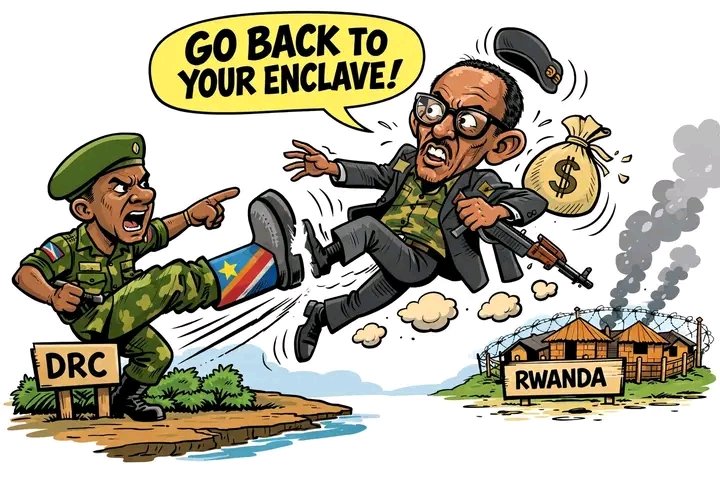
New York, January 2026 — The Democratic Republic of the Congo (DRC) has formally taken its seat as a non-permanent member of the United Nations Security Council for the 2026-2027 term, marking its first return to the body in 35 years. The move grants Kinshasa a powerful platform at the heart of global security decision-making as it seeks to translate longstanding international concern over the war in its eastern provinces into concrete action against neighboring Rwanda.
The DRC was elected in June 2025 with an overwhelming 183 out of 187 votes in the UN General Assembly, joining Bahrain, Colombia, Latvia, and Liberia as new members around the Council’s iconic horseshoe table. Congolese officials have framed the two-year term as a critical opportunity to keep the escalating crisis—which Kinshasa describes as a “war of aggression waged by Rwanda”—at the forefront of the international agenda.
A Council Defined by Division
The DRC assumes its seat at a time of significant geopolitical tension within the Security Council. The body, which holds primary responsibility for international peace and security and can issue legally binding resolutions, has seen a marked increase in deadlock. The use of the veto by the five permanent members (P5)—China, France, Russia, the United Kingdom, and the United States—has become more frequent, rising to eight times in 2024 alone, reflecting widening global rifts. This climate of division poses both a challenge and a necessity for the DRC as it seeks to build consensus for stronger measures.
The Diplomatic Battlefield: Accusations and Mediation
The conflict in eastern DRC, centered in the mineral-rich provinces of North and South Kivu, is characterized by a complex web of armed groups, foreign involvement, and a dire humanitarian crisis affecting millions. At its core is the resurgence of the M23 rebel group, which the DRC, Western nations, and UN experts accuse Rwanda of backing with troops, weapons, and political direction.
· The DRC’s Position: Congolese representatives consistently argue before the Council that Rwanda must be held accountable. They point to Security Council Resolution 2773, adopted in February 2025, which calls on the Rwanda Defence Forces (RDF) to cease support for M23 and withdraw from Congolese territory immediately and without conditions.
· Rwanda’s Denials and Counterclaims: Rwanda denies direct military involvement and frames its actions as a legitimate security response to the presence of Hutu militias like the FDLR (Democratic Forces for the Liberation of Rwanda) in eastern DRC. In Council debates, Rwandan officials have requested that external actors support ongoing African-led mediation processes rather than impose punitive measures.
· Fragile Peace Efforts: The diplomatic landscape is crowded. The United States facilitated a peace agreement between the DRC and Rwanda in June 2025, while Qatar has mediated talks between Kinshasa and the M23. Furthermore, African Union processes were streamlined in 2025 with the merger of the Nairobi and Luanda initiatives. Despite these efforts, UN Special Envoy Huang Xia noted that ceasefires have repeatedly broken down and the security situation has continued to deteriorate.
The DRC’s Agenda: From Words to Action
With a direct voice on the Council, the DRC is now positioned to move beyond condemnation and advocate for enforceable measures. Its strategy is expected to focus on several key fronts:
- Pushing for an Arms Embargo and Targeted Sanctions
A primary objective will be to rally support for more robust punitive measures against Rwandan entities and individuals. The U.S. has already signaled a willingness to consider such steps; in December 2025, U.S. officials stated they were reviewing “all tools at its disposal, including sanctions” to ensure compliance with peace accords. The DRC will likely seek a formal Council-mandated arms embargo on Rwanda and targeted financial and travel sanctions against officials and military leaders allegedly orchestrating support for M23. - Disrupting the “Conflict Minerals” Economy
Analysts and UN reports have long identified the illicit exploitation of the DRC’s vast mineral wealth—including cobalt, coltan, and gold—as a primary driver and financier of the conflict. The DRC is expected to press for Council action to dismantle these supply chains. This could involve:
· Enhanced Due Diligence: Mandating stricter international oversight of mineral imports from the Great Lakes region.
· Financial Tracking: Imposing restrictions on financial institutions involved in laundering the proceeds from conflict minerals. The European Union imposed sanctions on Rwanda’s Mines, Petroleum and Gas Board in 2024 in an attempt to disrupt these illegal supply chains.
· Public Naming of Networks: Using Council reports and sanctions committees to expose companies and trading hubs implicated in smuggling. Reports indicate that a significant portion of gold smuggled from the DRC is laundered through Rwanda and Uganda, despite Rwanda’s limited domestic reserves.
Significant Challenges on the Path to Consensus
The DRC’s diplomatic push will face substantial hurdles within the Security Council’s charged political environment.
· The Veto Power: Any resolution for sanctions or an arms embargo would be subject to veto by the P5. Russia has historically been a vocal supporter of Rwanda in Council deliberations. China also emphasizes African-led solutions and colonial root causes, often cautioning against external pressure.
· Competing Global Crises: As noted by analysts, the Congolese issue risks being sidelined by other international emergencies, from the Middle East to tensions in Venezuela.
· The “A3” Caucus: The DRC will serve alongside Liberia and Somalia in the African trio (A3) on the Council. This bloc traditionally works to bridge positions between African interests and the P5. However, building a unified African position can be complex, as seen in 2025 when the “A3 Plus” group opposed a proposed Council statement explicitly referencing the “Rwanda-backed M23”.
The Stakes for Regional Stability
The conflict’s human cost is staggering, with over 7 million people displaced and widespread atrocities documented by UN investigators. The capture of strategic cities like Uvira by M23 in late 2025 raised fears of a wider regional war, drawing in Burundi and threatening the stability of the entire East African Community.
As the DRC settles into its seat at the horseshoe table, its mission is clear: to convert the Council’s unanimous condemnations into actions that alter the economic and military calculus of the conflict. Success, however, will depend not just on the strength of its arguments but on its ability to navigate the deepest fissures of international diplomacy. The coming months will test whether the world’s most powerful security body can move from expressing “real hope” to enforcing a real peace.
About The Author