
Trump’s Capture of Maduro Marks Assertion of U.S. Power, Sparks Global Precedent Fears
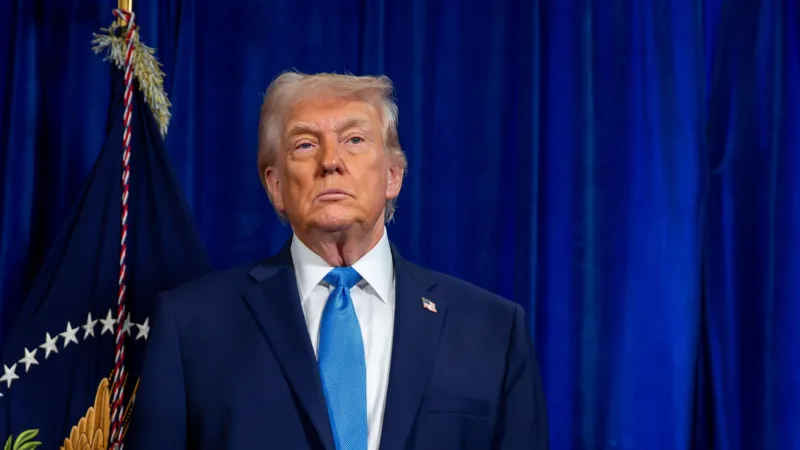
In a dramatic military operation, U.S. forces have captured Venezuelan President Nicolás Maduro, an action President Donald Trump says will place the United States in control of the country “until a safe, proper and judicious transition” can be achieved.
The operation, launched from Trump’s Mar-a-Lago club in Florida, resulted in Maduro being taken into U.S. custody without a single American casualty. Trump declared that the U.S. would now “run” Venezuela, backing his words with the threat of “boots on the ground” if necessary.
A New Doctrine for the Hemisphere
Trump framed the intervention as an evolution of the 19th-century Monroe Doctrine, dubbing it the “Donroe Doctrine.” “American dominance in the Western hemisphere will never be questioned again,” he stated, issuing veiled warnings to the leaders of Colombia and Mexico and suggesting Cuba is also on the agenda.
The U.S. plans to install Maduro’s Vice-President, Delcy Rodríguez—who Trump said had pledged cooperation—as an interim leader. However, he dismissed the country’s recognized opposition figures, including Nobel laureate María Corina Machado and 2024 election favorite Edmundo González.
Oil and “Reimbursement”
Trump openly cited Venezuela’s vast mineral wealth, particularly oil, as a motive. “We’re going to be taking out a tremendous amount of wealth out of the ground… and it goes also to the United States of America in the form of reimbursement,” he said.
Global Repercussions and Warnings
The move has drawn sharp international criticism and raised alarms about the precedent it sets. China condemned the action as a “hegemonic act” that violates international law and sovereignty.
Most strikingly, U.S. Senator Mark Warner, Democratic vice-chair of the Senate Intelligence Committee, warned that the operation could empower authoritarian regimes worldwide. “If the United States asserts the right to use military force to invade and capture foreign leaders it accuses of criminal conduct, what prevents China from claiming the same authority over Taiwan’s leadership? What stops Vladimir Putin from… abduct[ing] Ukraine’s president?” he said.
Uncertain Future and Historical Echoes
While many Venezuelans opposed Maduro’s autocratic rule, analysts warn that regime change by force carries major risks. The International Crisis Group had previously warned that Maduro’s fall could trigger violent instability, a concern echoed in past U.S. war-games.
The U.S. record on forced regime change—from Iraq and Afghanistan to Haiti—suggests the political aftermath is often more challenging than the military operation. In Venezuela, armed factions, criminal networks, and a entrenched, corrupt ruling structure remain formidable obstacles.
A Rule-Based Order Under Strain
The action deals another blow to the international rules-based order. European allies, including the UK, have struggled to respond, emphasizing support for international law without explicitly condemning the U.S., a clear breach of the UN Charter.
As Maduro faces trial in New York, the world watches whether Trump’s assertion of unilateral power marks the beginning of a new, turbulent era of intervention—and how other global powers may choose to interpret this precedent.
About The Author