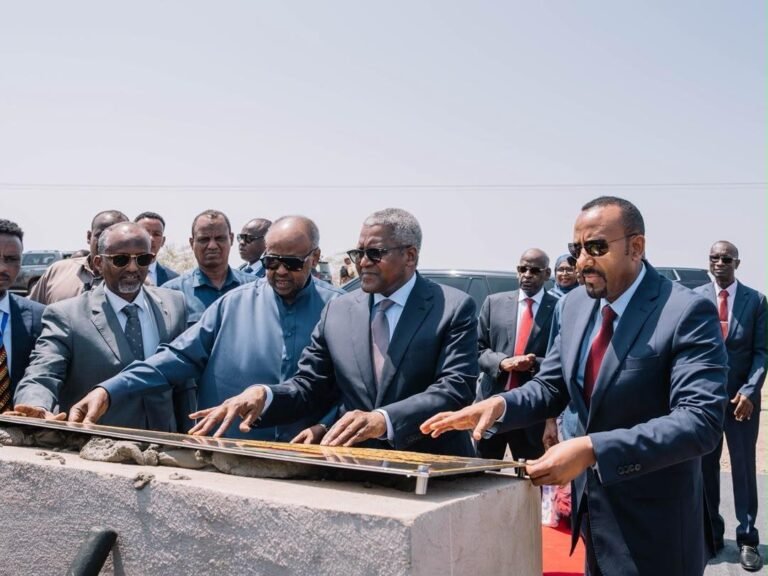


Ethiopia Breaks Ground on $12.5 Billion Aviation Megaproject, Set to Be Africa’s Largest Airport
BISHOFTU, Ethiopia – Ethiopia has commenced construction on a colossal new international airport in the town of Bishoftu, a $12.5 billion endeavor poised to become the continent’s largest aviation hub. Led by the state-owned Ethiopian Airlines, the project underscores the country’s ambition to solidify its position as Africa’s premier aviation powerhouse.
Located approximately 45 kilometers southeast of the capital, Addis Ababa, Bishoftu International Airport is scheduled for completion in 2030. The scale of the facility is staggering: it will feature four parallel runways, parking space for 270 aircraft, and the capacity to process up to 110 million passengers annually. This capacity would dwarf that of the current primary gateway, Addis Ababa Bole International Airport, by more than fourfold.
Prime Minister Abiy Ahmed Ali hailed the project as a transformative investment. “This new airport will become the largest aviation infrastructure project in Africa’s history,” he stated, emphasizing its critical role in helping Ethiopia meet rapidly growing air traffic demand and sustain its economic expansion.
Financing for the mega-project is a collaborative effort. Ethiopian Airlines will cover approximately 30% of the costs. The remaining majority is to be funded by international lenders. The African Development Bank (AfDB) is playing a leading role, having pledged $500 million and spearheading broader fundraising initiatives with other financial institutions.
The announcement has sparked discussion across the continent about which other nations require similar large-scale aviation investments to unlock economic potential and improve global connectivity. Analysts frequently point to Nigeria as a prime candidate. As Africa’s most populous nation and largest economy, its main gateway, Murtala Muhammed International Airport in Lagos, is chronically overstretched. The airport, designed for significantly fewer passengers, faces severe congestion, operational challenges, and has long been seen as a bottleneck for the country’s growth and its ambition to be a regional hub.
A new, modern, and capacious airport in the Lagos area—such as the long-proposed Lekki Airport—is widely regarded as an urgent infrastructure necessity. It would not only alleviate current pressures but also catalyze trade, tourism, and investment, better connecting Nigeria’s massive economy to the world, much like Ethiopia’s project aims to do.
The Bishoftu project signals a new era of infrastructure ambition in Africa, with aviation at its core. As Ethiopian Airlines continues its remarkable expansion, this airport provides the physical foundation for its—and the region’s—future growth, while setting a benchmark for other nations to consider.
About The Author