
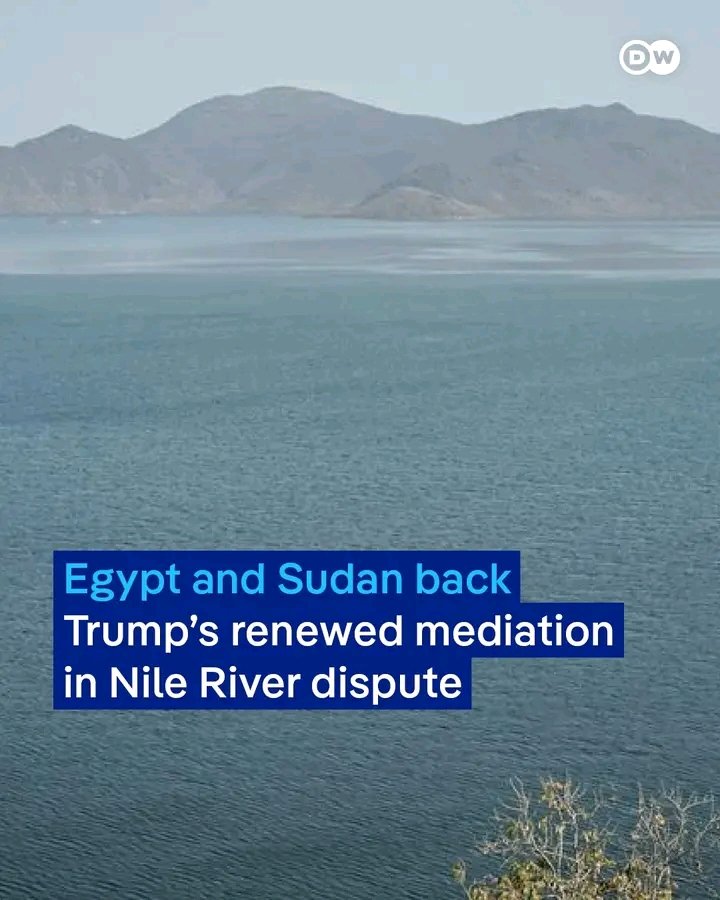
Egypt, Sudan Welcome Trump’s Renewed Mediation Offer in Nile River Dispute
CAIRO/KHARTOUM — The leaders of Egypt and Sudan have publicly expressed support for U.S. President Donald Trump’s offer to revive mediation efforts aimed at resolving the protracted and contentious dispute over the Nile River waters with Ethiopia.
The conflict centers on Ethiopia’s construction and filling of the Grand Ethiopian Renaissance Dam (GERD), a massive hydroelectric project on the Blue Nile. Downstream nations Egypt and Sudan fear the dam will severely restrict their vital water supplies, while Ethiopia considers it essential for its development.
Trump, who facilitated talks between the nations during his first term in office, has recently signaled a renewed interest in brokering negotiations. Previous U.S.- and African Union-led talks collapsed in 2020 after Ethiopia withdrew from the discussions, leading to a prolonged diplomatic stalemate.
In response to Trump’s overture, Egyptian President Abdel-Fattah El Sissi stated on social media that Egypt “remains committed to serious and constructive cooperation with the Nile Basin countries to reach a binding legal agreement on the rules for filling and operating the GERD.” His comments underscore Cairo’s long-standing demand for a legally enforceable deal to safeguard what it calls an “existential” water share.
Similarly, Sudan’s military leader, Gen. Abdel-Fattah Burhan, welcomed the initiative in a post on X (formerly Twitter). He described Trump’s move as “a step toward achieving sustainable and satisfactory solutions for all parties,” highlighting Khartoum’s concerns over the dam’s safety and its impact on Sudan’s own water infrastructure.
The coordinated endorsements from Cairo and Khartoum place the spotlight back on Addis Ababa, which has not immediately commented on the latest development. Ethiopia has consistently asserted its right to develop the Blue Nile and has proceeded with consecutive fillings of the GERD reservoir despite the absence of a comprehensive agreement.
Analysts suggest that while the public support from two key downstream nations creates a new diplomatic opening, the path to a resolution remains fraught with technical and political complexities. The involvement of a high-profile figure like Donald Trump adds an unpredictable element to the already volatile negotiations, the outcome of which is critical for the water security and stability of over 250 million people across the Nile Basin.
About The Author