
Trump Announces “Framework Deal” on Greenland, Easing Transatlantic Tensions
January 22, 2026 — In a sudden reversal, U.S. President Donald Trump announced a “framework of a future deal” regarding Greenland on Wednesday, temporarily defusing a spiraling crisis with European allies that had threatened economic and diplomatic rupture. The announcement, made after a meeting with NATO Secretary-General Mark Rutte at the World Economic Forum in Davos, Switzerland, was accompanied by Trump’s withdrawal of tariff threats against eight European nations.
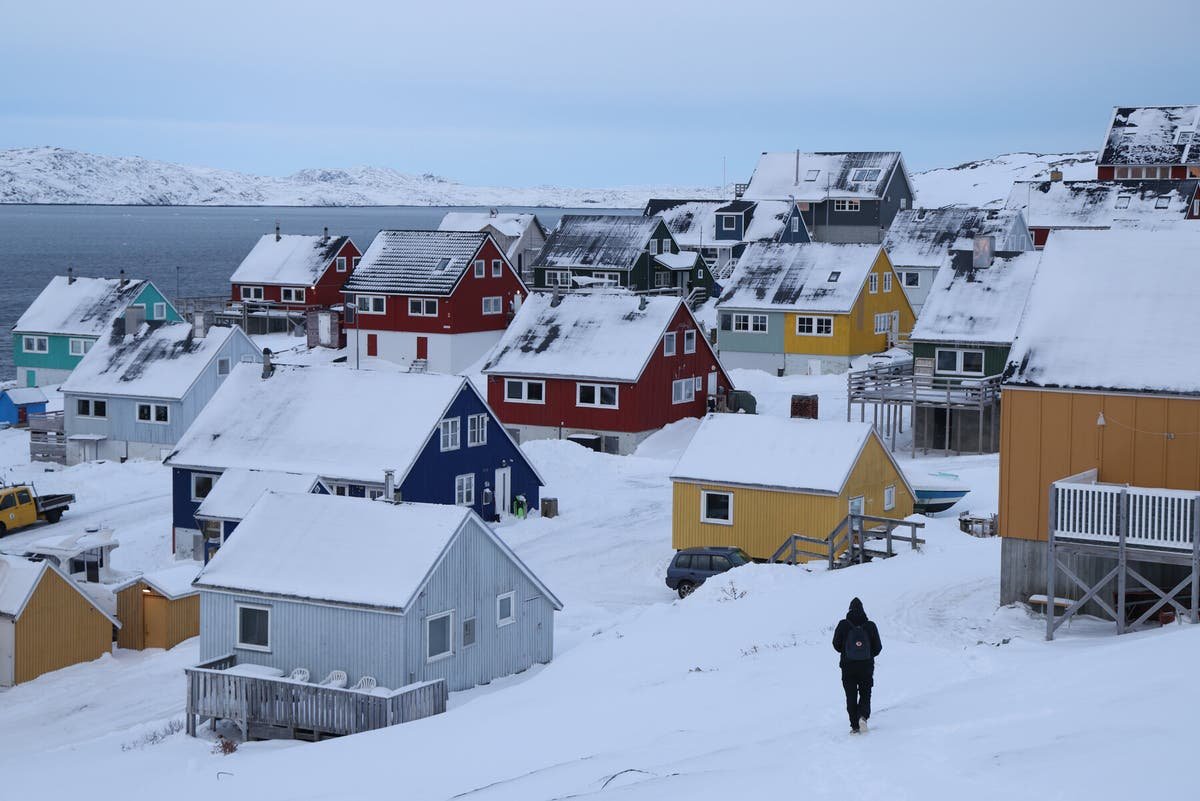
While European leaders expressed relief, the declaration was met with profound skepticism in Greenland, firm assertions of sovereignty from Denmark, and widespread confusion over what, precisely, had been agreed upon.
From Ultimatum to “Framework”
The crisis erupted when President Trump, who has repeatedly expressed a desire for the United States to “own” Greenland, threatened to impose a 10% tariff on imports from eight European allies—Denmark, Norway, Sweden, France, Germany, the United Kingdom, the Netherlands, and Finland—unless they dropped objections to a potential sale. He had previously refused to rule out using military force to seize the vast, resource-rich Arctic island.
Following his meeting with Rutte, Trump declared on his Truth Social platform that he had formed the “framework of a future deal with respect to Greenland and, in fact, the entire Arctic Region”. He later described it to Fox Business as granting the U.S. “total access” with “no end, no time limit”.
Relief and Deep Skepticism in Europe
European leaders, who had convened an emergency EU summit in response to the tariff threats, welcomed the de-escalation.
· German Chancellor Friedrich Merz stated he was “very grateful” Trump had stepped back from his original plans.
· Danish Foreign Minister Lars Løkke Rasmussen noted, “The day ended better than it started,” and expressed willingness to discuss American security concerns.
· NATO’s Mark Rutte framed the talks as focusing on strengthening Arctic security to counter Russian and Chinese activity, suggesting a new NATO security mission could be ramped up “quite fast,” potentially early in 2026.
However, relief was tempered by deep-seated wariness. An EU diplomat told Reuters that “nothing much changed,” and Europeans were “fed up with all the bullying”. Major questions lingered over the deal’s substance, as multiple sources confirmed no written document exists memorializing the agreement.
Unwavering “Red Lines”: Denmark and Greenland Respond
The most forceful reactions came from the nations directly involved, which underscored that they had not been party to the Trump-Rutte discussions.
· Denmark’s Position: Prime Minister Mette Frederiksen was unequivocal: “We can negotiate on everything political; security, investments, economy. But we cannot negotiate on our sovereignty”. She emphasized that only Denmark and Greenland could make decisions about the territory.
· Greenland’s Position: Prime Minister Jens-Frederik Nielsen said he was not privy to the deal’s details but was ready for a “peaceful dialogue.” He laid out clear conditions: “We have some red lines… We have to respect our territorial integrity. We have to respect international law, sovereignty”. Aaja Chemnitz Larsen, a Greenlandic MP in the Danish parliament, stated the idea of NATO negotiating over Greenland’s sovereignty or minerals was “completely out of the question”.
What Might Be in the “Framework”?
Although details remain vague and contested, officials and reports suggest the discussions revolve around updating a 1951 defense pact between the U.S. and Denmark that grants the U.S. military broad access to Greenland.
Reported potential elements include:
· Sovereign U.S. Bases: Creating pockets of U.S.-sovereign territory for military bases in Greenland, similar to British sovereign base areas in Cyprus.
· Arctic Security Mission: Establishing a significant new NATO mission (dubbed “Arctic Sentry”) to increase the alliance’s presence in the region.
· Resource Exclusion: Formally blocking non-NATO countries, specifically Russia and China, from obtaining mining rights to Greenland’s vast rare earth mineral deposits.
NATO officials denied Rutte discussed ceding sovereignty or minerals with Trump, while Danish officials stated there have been no direct talks on granting sovereign land. Rutte himself denied discussing mineral exploitation with the president.
Market Reactions and Underlying Motivations
The geopolitical drama had immediate financial consequences. Trump’s more aggressive threats on Tuesday triggered a sharp selloff in U.S. markets, which then rebounded after his conciliatory framework announcement. Some analysts noted Trump has a history of escalating threats and pulling back when markets fall, a pattern once dubbed “Taco”—”Trump Always Chickens Out”.
Analysts point to multiple drivers for Trump’s obsession with Greenland:
· Strategic Security: Its location is crucial for missile defense and monitoring threats from the Arctic. Trump specifically mentioned integrating Greenland into his proposed “Golden Dome” missile defense system.
· Economic Resources: Greenland holds significant deposits of rare earth minerals critical for modern technology.
· Great Power Politics: Some experts suggest it aligns with a “Donroe Doctrine,” a Trump-era variation of the Monroe Doctrine, asserting U.S. dominance in its perceived sphere of influence, which includes Greenland.
Broader Implications and a Wounded Alliance
The episode has left transatlantic relations deeply wounded. At the same time, the war in Ukraine continues, and President Volodymyr Zelenskyy used his Davos speech to chastise European allies for disarray and timidity.
While immediate conflict has been avoided, the path forward is fraught. Negotiations are expected to continue in a trilateral format between the U.S., Denmark, and Greenland. Any final deal will need to navigate the unequivocal sovereignty “red lines” drawn in Copenhagen and Nuuk, while satisfying an American president who has claimed he is “getting everything we want”.
As one European diplomat put it, the crisis has shown that the transatlantic partnership’s future depends not on “domination and for sure not coercion,” but on “trust and respect”. Restoring that trust will be the most challenging negotiation of all.
About The Author