
‘An Invisible Blockade’: How Insurance Fears Are Doing What Iran’s Navy Could Not
DUBAI— Twenty million barrels of oil passed through the Strait of Hormuz yesterday. Today, the number may be zero.
Not because of mines in the water. Not because of missile strikes on tankers. But because of a phone call.
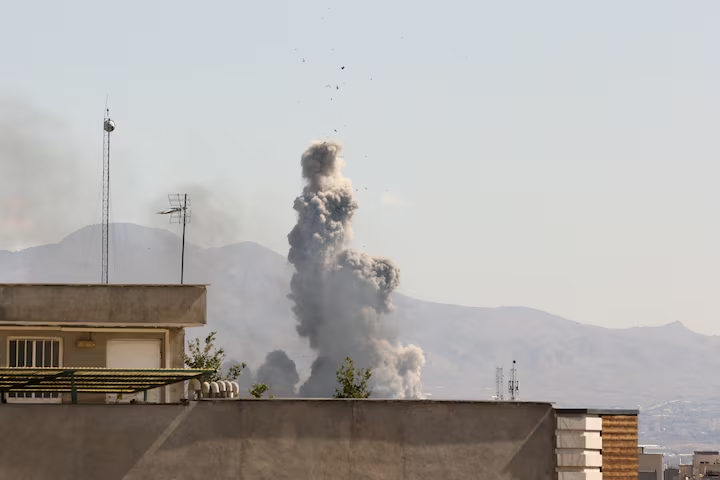
Hours after the launch of Operation Epic Fury—the strike that killed Iran’s supreme leader—war risk underwriters at Lloyd’s of London began canceling policies for strait transits. According to the Financial Times, premiums are surging by as much as 50 percent.
To understand the math of paralysis, consider the baseline: War risk typically sits at 0.25 percent of a vessel’s hull value. For a $100 million supertanker, that is $250,000 per voyage. At current peak escalation rates, that cost skyrockets to $1 million per transit. For vessels linked to American or Israeli interests, underwriters are declining to offer any price at all. No price. No policy. No passage.
The maritime traffic jam began not with an explosion, but with an inbox notification.
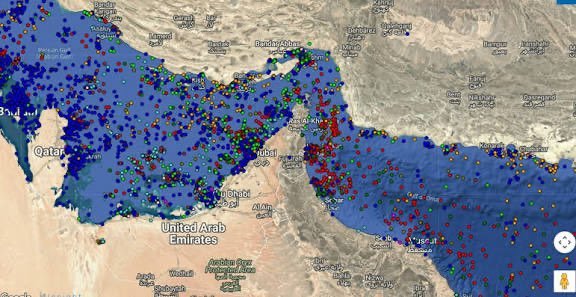
The KHK Empress, loaded with Omani crude and bound for Basra, executed a U-turn mid-strait and rerouted toward India. The Eagle Veracruz, carrying two million barrels of Saudi crude destined for China, halted at the western approach. The Front Shanghai stopped off Sharjah with Iraqi crude meant for Rotterdam. Japan’s Nippon Yusen ordered its entire fleet to avoid Hormuz. Greece advised its merchant armada to reassess transit. Hapag-Lloyd suspended all movements.
None of these vessels were fired upon. Every one of them got the same call.
The 21-Mile Chokepoint
The Strait of Hormuz is a geological accident. More than fifty million years ago, the Arabian plate collided with the Eurasian plate, compressing the Persian Gulf into a basin that drains through a bottleneck just twenty-one miles wide at its narrowest point.
Through that slit flows 21 percent of the world’s petroleum and 20 percent of all seaborne liquefied natural gas. One-fifth of industrial civilization’s energy supply is forced through a passage bordered on one side by the country whose leader was killed yesterday morning.
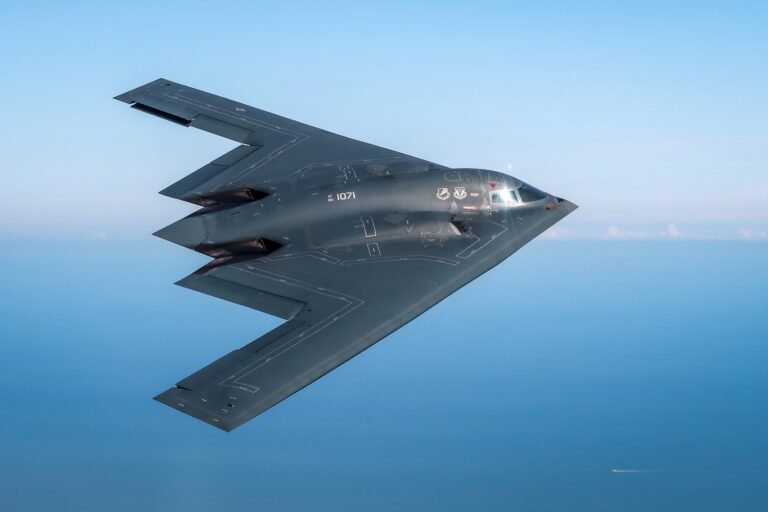
The United States Navy has spent decades preparing for a kinetic closure of the strait. The USS Abraham Lincoln carries enough Tomahawk missiles to sink every IRGC patrol boat in 48 hours. In 1988, Operation Praying Mantis crippled Iran’s operational naval forces in just eight hours. The Fifth Fleet has war-gamed this scenario endlessly.
None of that matters.
Aircraft carriers cannot force an underwriter to rewrite a policy. Tomahawks cannot lower a premium. The most powerful navy in human history cannot compel a Lloyd’s syndicate to deem a Very Large Crude Carrier (VLCC) transiting Iranian coastal waters an acceptable risk on a Saturday afternoon—not while missiles are landing in Dubai.
The Economic Calculus
The market is already pricing in the unthinkable. Goldman Sachs estimates Brent crude could peak at $110 per barrel. JPMorgan projects a range of $120 to $130. At those levels, every airline bleeds cash. Every central bank watches three years of inflation-fighting unravel overnight.
Bypass pipelines from Saudi Arabia and the UAE can handle roughly three million barrels per day. Hormuz handles twenty million. The math does not close.
Iran has apparently grasped a truth that has eluded Pentagon planners for decades: You do not need to close a strait. You just need to make it uninsurable.
In doing so, Tehran has turned the world’s most powerful navy into a spectator, watching as the private sector erects a blockade more effective than any minefield.
About The Author